We use cookies to ensure that we provide you with the best experience on our website. By clicking “Accept” you agree to our use of cookies and continue browsing on this site.
Written By : Priyanka Gounder & Rutu Bhanusali
Written By : Priyanka Gounder & Rutu Bhanusali
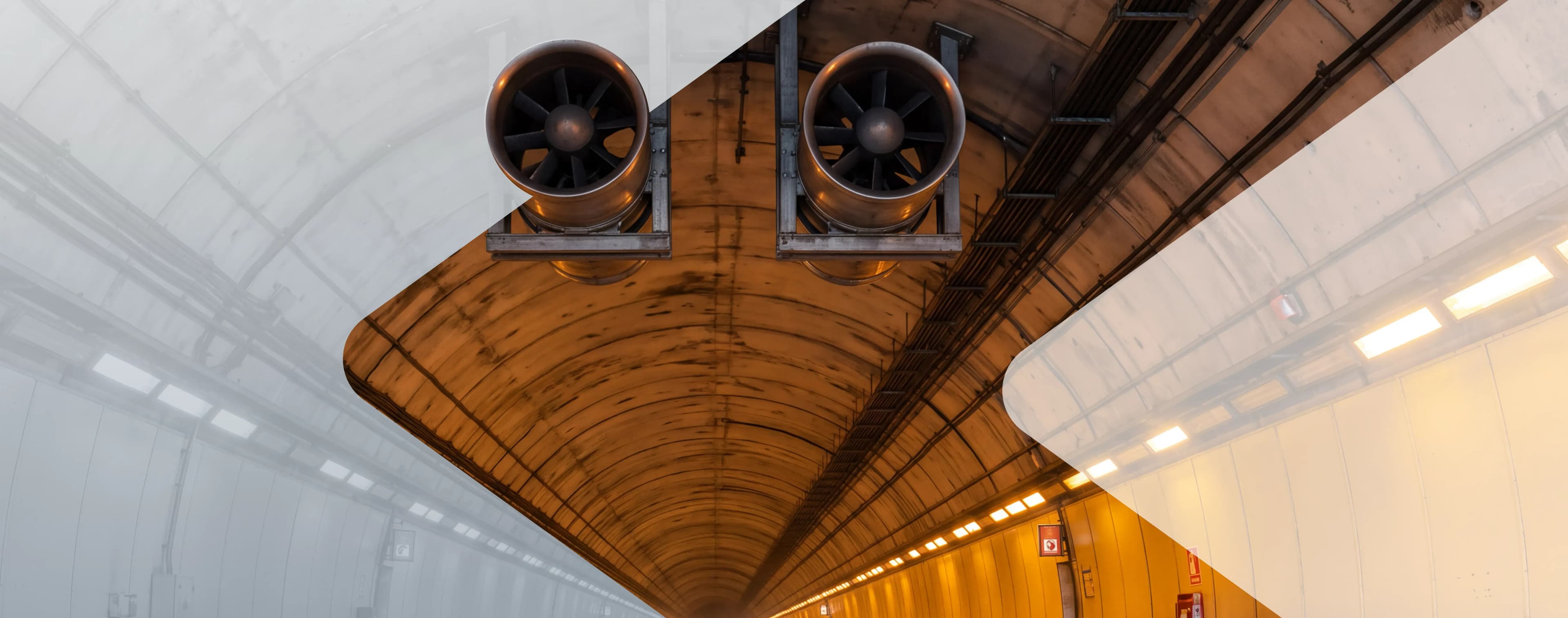
Road and tunnel environments are among the most pollutant-dense spaces in infrastructure. Inside a tunnel, carbon monoxide accumulates with no atmospheric dilution to carry it away. At a highway toll plaza, operators breathe diesel exhaust at idle for an entire shift. On a construction corridor, workers are exposed to a mix of respirable silica, diesel particulate, and fugitive dust. These environments lack monitoring systems for their specific pollution challenges. The reason is not negligence; standard ambient air quality monitoring was never built for them. A framework that assumes atmospheric dilution, measures a general pollutant basket, and sites instruments for a regional picture produces data that is nearly useless inside a tunnel, misleading at a portal, and blind to the occupational exposures of the people who work there.
This whitepaper provides the missing design logic. Its central output is a monitoring framework that answers three operational questions for any given road or tunnel environment: which pollutants to prioritise, where to place the sensors, and what thresholds to operate against. A tunnel interior is governed by carbon monoxide accumulation and ventilation-controlled residence time; an open corridor by nitrogen dioxide and a steep near-road gradient; a construction portal by respirable particulate and worker exposure. Each produces a different, defensible monitoring specification.
The pollutant and dispersion details in this paper justify those specifications. Threshold values are drawn from the governing standards: the World Health Organisation's 2021 air quality guidelines for the ambient case, the World Road Association (PIARC) and India's IRC SP 91:2019 for in-tunnel design, and occupational exposure limits for the workforce, and the framework shows, environment by environment, which of them actually binds. The specifications are the point.
Schedule a call with our team of experts and get a customised solution for your air quality monitoring requirement.