
Summary
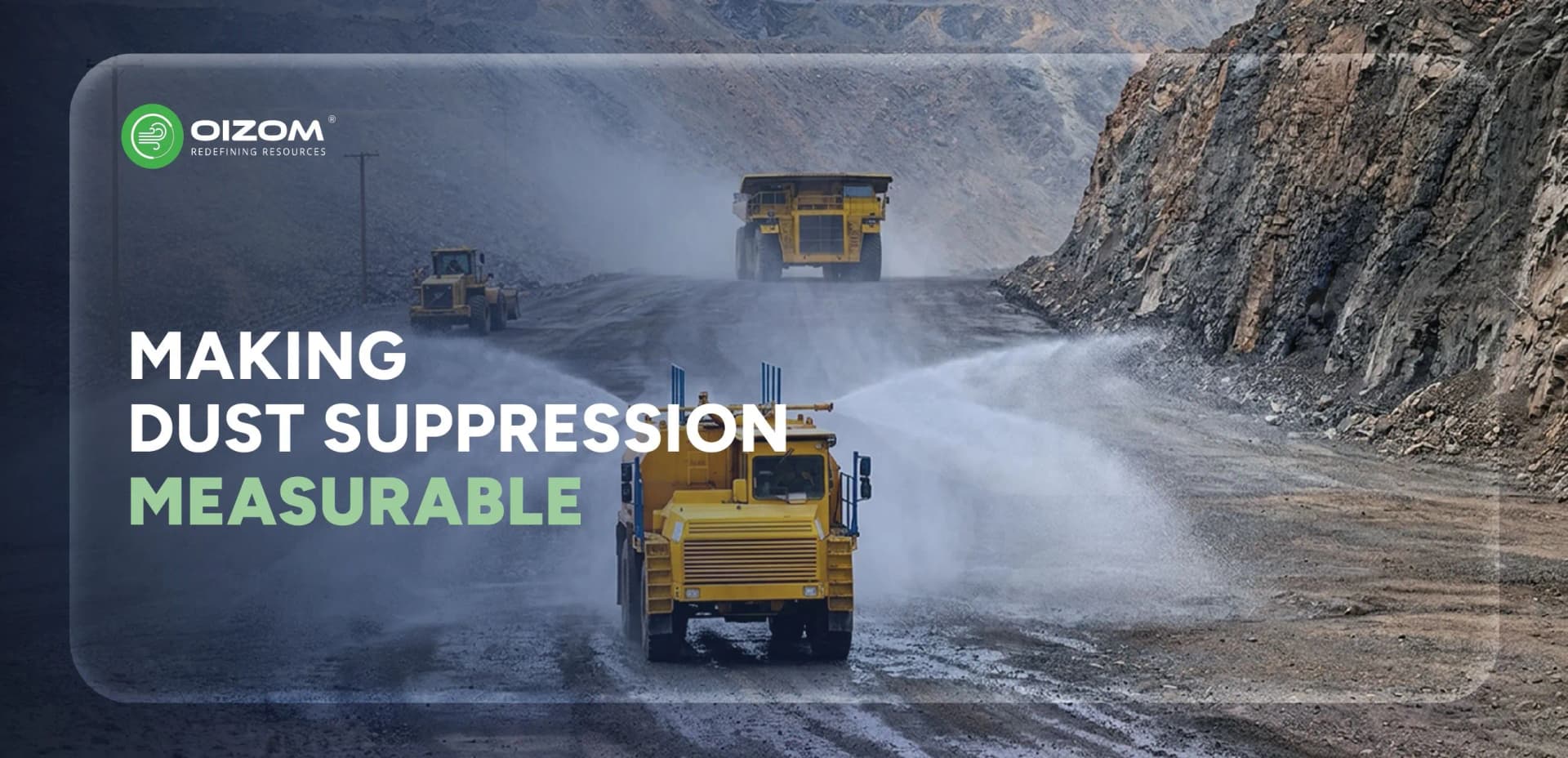
Dust control in mines combines proven controls with real-time monitoring. The main sources of dust are drilling and blasting, loading and hauling, and crushing and grinding; each releases fine, often silica-bearing particles that threaten miners’ lungs and nearby communities. The core methods are engineering controls (ventilation, water suppression, enclosure), administrative controls (wet drilling, scheduling, maintenance), and personal protective equipment. The most effective solution adds real-time dust monitoring, which shows where and when levels rise, can trigger suppression automatically, and confirms the controls are working. This guide covers each source, method, and solution, with real mine deployments.
Introduction
Mining is one of the most critical sectors in many different countries. This industry includes a variety of operations related to extracting, managing, and processing naturally occurring solid minerals from the earth's surface. Mining can obtain coal, diamonds, metal ores, and other commercially valuable materials. The massive volume of dust produced by coal mining creates respiratory concerns for workers and maintenance challenges for machinery.
Dust can also contribute to explosions. Every year, people are injured or killed as a result of accidents or health problems caused by coal dust exposure. Mining businesses can significantly reduce these risks by implementing stringent dust-suppression safety measures. We'll explore innovative technologies and environmental practices that promise a future where mining is safer for workers and neighbouring communities.
The Importance of Dust Control in Mines
Mining companies must monitor and control dust emissions because dust is produced at every stage of the mining process: mine construction, extraction, processing, storage, and transportation. Government agencies in the United States, Canada, and the European Union set and regulate particulate-emission limits. As more mines open in developing countries, air quality concerns will inevitably arise.
Mining dust control is more than a technical problem; it is a critical safeguard for human health and environmental integrity. Mining reveals vital resources hidden beneath the Earth's crust, but it comes at a cost: a constant layer of fine dust that covers mine areas. This dust, far from being an inconvenience, is a severe threat to miners and neighbouring ecosystems.
Therefore, implementing a robust dust monitoring system like Oizom’s Dustroid provides real-time data to inform control measures for a multifaceted necessity – safeguarding miners’ health, protecting local communities, and upholding responsible resource extraction. Effective dust control fulfils a moral obligation and makes economic sense. It can reduce healthcare costs, enhance worker productivity, and decrease absenteeism, ultimately contributing to a more sustainable mining industry.
In 2019, China recorded 248 mining fatalities, India 96, and the USA 12, so China’s toll was roughly 20 times the USA’s and about 2.6 times India’s.
Sources of Dust in Mines
During many extraction and processing steps for rock and mineral products, dust particles are created and can become airborne. To combat this issue effectively, you must understand its origins. We’ll delve into the three primary sources of dust in mines: drilling and blasting, loading and hauling, and crushing and grinding.
Drilling and blasting
This method of breaking rock for excavating purposes involves the controlled use of explosives and other techniques such as gas pressure blasting and pyrotechnics. Drilling and blasting are most frequently used in mining, quarrying, and other engineering operations. A rock cut is the end product of rock blasting. Each explosion sends a massive dust cloud into the air, filled with silica and other harmful minerals, posing a severe respiratory threat.
Loading and hauling
The shattered rock moves after blasting. Loaders are massive devices that gather waste and transport it to haul trucks. As shovels scrape rock and trucks cross complex terrain, this activity generates a lot of dust. Truck movement and transferring material to conveyor belts continue the cycle of dust creation, putting workers and nearby people at risk.
Crushing and grinding
The next stage involves processing the rock to extract valuable minerals. Crushers break rock into smaller fragments, and grinding then reduces the crushed material further, producing finer products. Each step releases a fine dust cloud that contaminates the air and poses inhalation risks.
Understanding the specific contributions of drilling and blasting, loading and hauling, and crushing and grinding to dust generation is critical to designing effective control measures. By focusing on these hotspots, we aim to create a healthier, safer mining environment and reduce the environmental impact of these activities.
Methods of Dust Control in Mines
A multi-tiered solution comprising engineering controls, administrative processes, and personal protective equipment (PPE) is needed to limit this risk. Let’s look at several significant dust-control measures in mines:
Engineering controls
These measures aim to prevent or minimize dust at its source and serve as the first defence against mine dust.
- Ventilation: Proper ventilation systems, essential for dust dilution and removal, use powerful fans to bring in fresh air and exhaust ducts to evacuate dust-laden air properly.
- Water Suppression: Use water sprays on stockpiles and highways and when operating machinery and cutting equipment to reduce dust. To suppress dust, use an ingredient in water sprays and modify the spray’s droplet size according to the dust particle’s length.
- Encapsulation: Isolating dusty processes like crushing units or grinding mills minimizes environmental impact. Use enclosures (e.g. covered conveyors, enclosed cabs on vehicles, plant and equipment). This can involve enclosing operations or creating harmful pressure zones to contain dust.
- Automation: Using remotely controlled machinery reduces direct human exposure to dust, replacing manual operations with safer, distant alternatives.
Administrative Controls
These practices focus on reducing human exposure through organizational and procedural changes.
- Work Practices: Implementing wet drilling, scheduling dust-intensive tasks during off-peak hours, and Reducing the length and magnitude of dust exposure (e.g., worker rotation, job task adjustments).
- Maintenance: Keeping ventilation systems and equipment in good repair and diligent housekeeping is crucial for effective dust control. Ensure regular maintenance and housekeeping of vehicles and mine workings.
- Monitoring: Regular dust level checks, using advanced air quality monitors like Oizom’s Dust monitoring, allow for prompt action and compliance with safety regulations.
Personal Protective Equipment (PPE)
As the last line of defence, PPE is vital for individual protection.
- Respiratory Protection: Choosing the best respiratory protection for the job (e.g., P1 or P2, full face, half face, powered air, or purifying) based on dust type and concentration is essential.
- Ensure training, comfort and fit testing are provided before use. Respirators should not be shared.
- Maintain and store respiratory protective equipment properly.
Monitoring-Led Dust Control
Suppression sprays, ventilation, and enclosures reduce dust at the source, but none of them tells a mine whether dust is actually under control. Real-time monitoring shows operators where and when particulate levels rise, so water, extraction, or work schedules change at the right moment instead of on a fixed routine, and it creates a compliance record. Because monitoring is separate from the suppression equipment, the same data can trigger sprinklers, mist cannons, dust collectors, or filters already on site.
At TATA Joda East Mines, Dustroid tracks PM1, PM2.5, PM10, and PM100 in real time and activates dust suppression whenever particles exceed set thresholds, helping the mine find dust hotspots and optimise its suppression resources.
Case Studies
Case Study 1: Northern Coalfields Limited (NCL) and Dustroid
Northern Coalfields Limited (NCL) is a subsidiary of the world's largest coal producer, Coal India Limited. NCL is India’s largest producer of composite (coal + OBR), contributing more than 1/10th of the country's energy supply. The company was established in 1985 and received one of India’s highest awards, ‘Mini Ratna’, in 2007. It dispatched over 115 million tonnes of coal in 2020-21. It is headquartered in Singrauli and employs more than 16,226 people worldwide.
Implementation: Oizom, with ISO TECH, offered Dustroid Lite to NCL for monitoring dust levels around the coal mines. Dustroid can accurately detect PM2.5, PM10, PM100, temperature, and humidity in real-time. It can also be customised to detect and monitor wind speed and direction, so NCL can track the direction dust is carried. This helps them identify the source of dust emissions and make appropriate decisions that best suit their needs. Dustroid also comes equipped with data analysis and visualisation software that allows the NCL to track historical data and trends in dust emissions from the coal mines. It also has a robust, compact, lightweight body, making it easy for the NCL to move the Dust monitor to different places as needed.
Outcomes: NCL can now monitor dust levels and the direction from which they originate around the coal mines. Oizom’s smart, robust, and accurate dust monitoring system has helped NCL reassure nearby city residents that breathing conditions are safe. Dustroid’s compact, lightweight design enables hassle-free installation and relocation across the coal mine site.
Case Study 2: Saudi Comedat Mining and Polludrone
Saudi Comedat Mining Co. Ltd (SCM) is one of the leading mining corporations in the Arabian Peninsula. Established in 2007 and headquartered in Saudi Arabia, it is a preferred contractor for open-pit mining in the region. They offer complete mining services, including designing and planning mine operations, constructing mine infrastructure, and implementing environmental mitigation measures in remote and challenging locations. Saudi Comedat combines the contract mining expertise and track record of Comedat (Jordan) and Kier (U.K.) and CMCI’s strategic business alliance within Saudi Arabia.
Implementation: Oizom, with Saudi Envirozone, offered a customised Polludrone to meet all the requirements of Saudi Comedat Mining Co. Ltd. Polludrone can monitor hazardous gases emitted from mining sites, such as SO2, NO2, O3, CO, CO2, NH3, and H2S. Polludrone can also monitor other air pollutants and environmental parameters linked to sandstorms, such as PM2.5, PM10, wind speed, wind direction, temperature, and humidity. It also comes equipped with Data Analytics & Visualisation software that can project analysed data statistics, historical trends, and real-time air quality readings. This helps authorities take decisive action by receiving timely notifications and alerts via SMS or email. Polludrone also has a robust IP66-grade enclosure and can run independently on solar power.
Outcomes: Oizom’s smart, robust, and accurate Air Quality Monitoring System, Polludrone, has been sending regular updates to the Saudi Comedat Co. mining site authorities on various air pollution levels. The Data Analysis Platform of Oizom has been guiding the company in understanding the patterns of dust and pollution emissions to safeguard their workers from overexposure. The Envizom Alert module has helped authorities receive SMS and email alerts for environmental emergencies such as sandstorms and overexposure to hazardous gases. Polludrone’s Standalone solar panel setup compatibility has reduced the company’s energy consumption.
Emerging Technologies for Dust Control
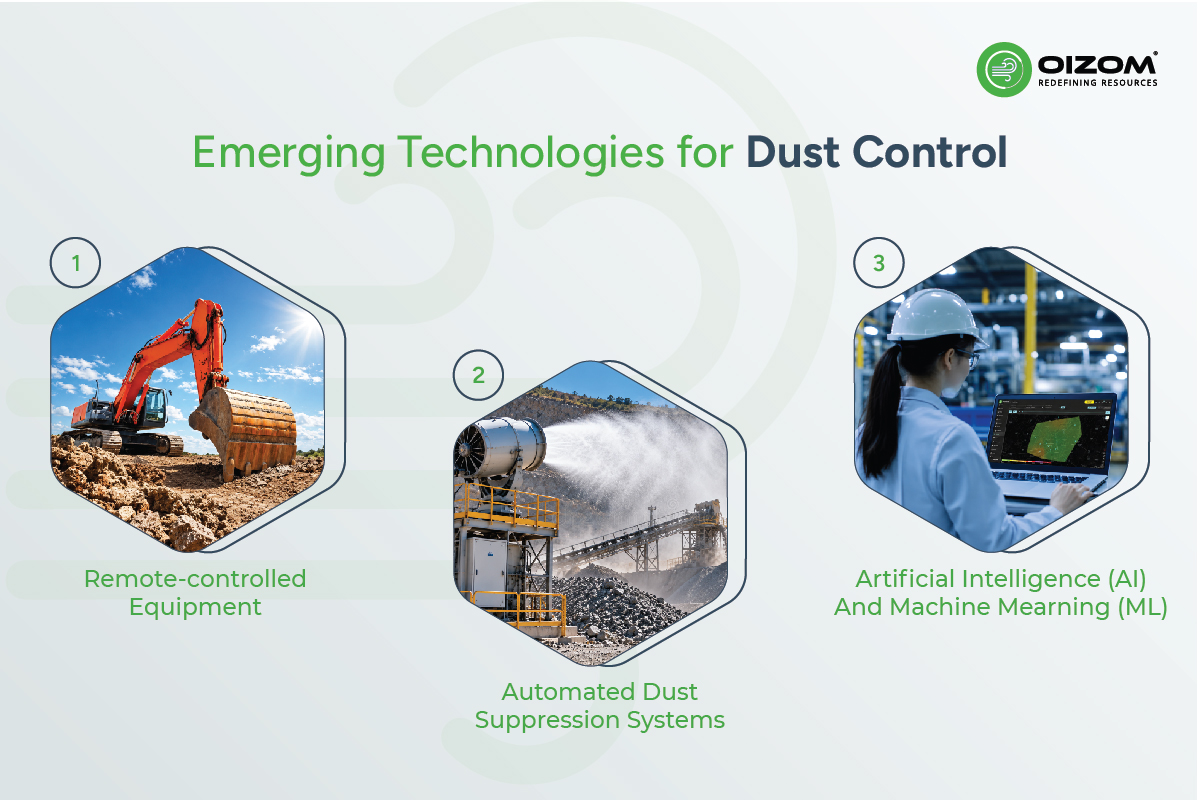
Mining with little dust exposure has a bright future, thanks to developments in remote-controlled equipment, automated dust suppression systems, artificial intelligence (AI) and machine learning (ML). These technologies could transform how mines approach dust control.
Remote-controlled equipment
Remote-controlled equipment could dramatically reduce human presence in dusty mine sites. This technology enables robotic excavators and transport trucks to operate in mines under remote control. The benefits are twofold: it reduces the risk of dust exposure for human operators and enables more accurate management of mining processes, reducing unnecessary dust formation. Real-time data from these robots' sensors can improve dust-control strategies, resulting in more efficient, targeted treatments.
Automated dust suppression systems
The automated and integrated dust suppression and control spray system for haul roads in mines and dust-emitting plants sprays water automatically to address the dust source immediately. This integrated system includes dust weather stations, sensors, communication systems, software control arrangements, and control systems. This proactive approach improves air quality in mines and optimises water use, making it a more environmentally friendly option than traditional approaches. For how real-time dust data triggers these systems in practice, see our guide to dust suppression system automation.
Artificial intelligence (AI) and machine learning (ML)
Integrating artificial intelligence, Machine Learning, the Internet of Things (IoT), and Automation is key to the fourth industrial revolution in the mining industry. AI and machine learning are shifting dust control from reactive to proactive. These technologies can find patterns and predict possible dust events by analysing data from dust sensors, ambient variables, and mining operations. This predictive capability enables mine operators to take targeted dust-control measures ahead of time, reducing the risk of dust exposure and improving resource-utilisation efficiency.
These autonomous technologies offer practical risk assessment and economic benefits such as:
Cost savings
Uninterrupted production
Less labour exposure in hazardous areas
Increased protection
Conclusion
Understanding the causes of dust and implementing a range of management methods can lead to a future in which mining coexists with health and environmental sustainability. Engineering measures, such as proper ventilation and water suppression, are critical in reducing dust at its source. Administrative policies and regular maintenance routines are crucial in reducing exposure. Personal protective equipment remains essential for miners' safety. Real-time monitoring ties these measures together by showing mines where dust is rising and whether controls are working.
The horizon holds the promise of new technologies such as remote-controlled machinery, automated dust suppression systems, and AI-driven predictive analytics, ushering in a proactive era of dust control. This campaign is about more than simply health and safety; it's also about environmental stewardship and long-term mining operations.


.be0dea41.svg)