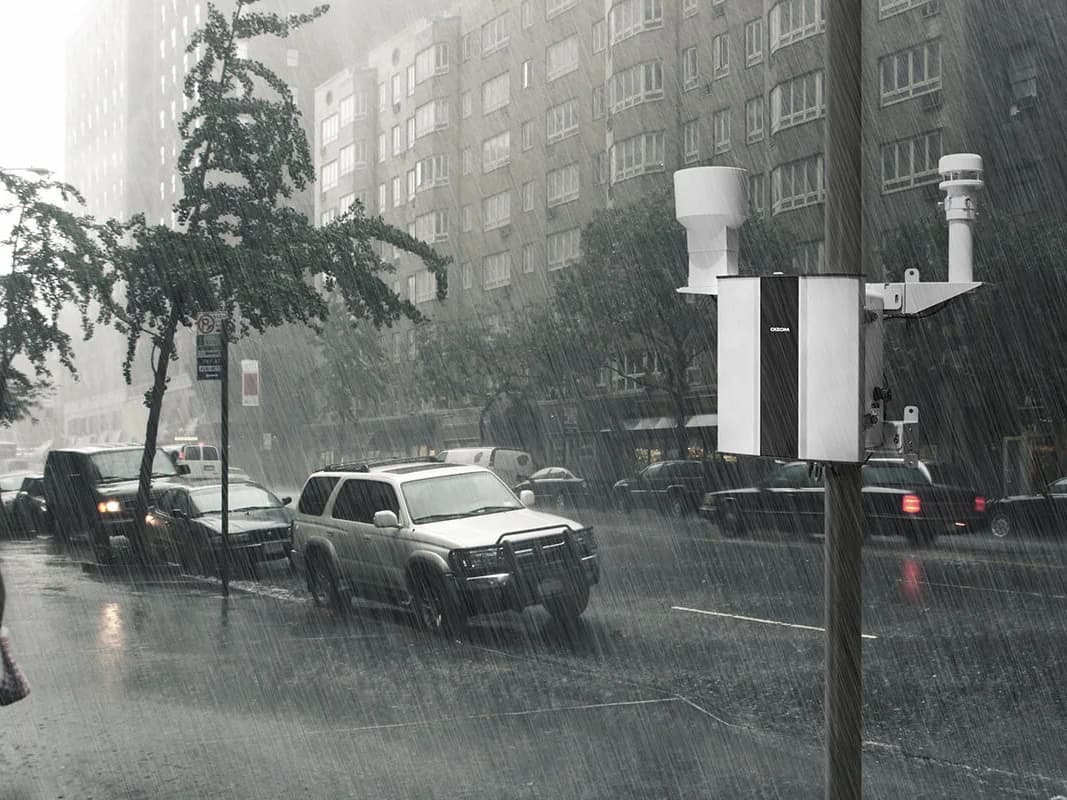
DPCC-Compliant Dust Monitoring at KPIL's Delhi Metro Phase IV Site

Sarai Rohilla, Dev Nagar, Karol Bagh, New Delhi

September 2026

Construction

Kalpataru Projects International Limited (KPIL), Kalpataru–SOMA JV

AQBot

Construction Dust Monitoring and Regulatory Compliance
Introduction
For more than a decade, Delhi has struggled to agree on how much of its air pollution comes from construction. Construction dust was estimated to contribute 20–23% of PM10 in a 2010 NEERI study, but only 3–5% in the 2015 IIT Kanpur analysis. A range that wide cannot guide enforcement against individual sites. Delhi's regulators have therefore stopped relying on city-wide estimates and started requiring measurement at each site.
Under directions from the Commission for Air Quality Management (CAQM), the Delhi Pollution Control Committee (DPCC) now requires construction projects to monitor dust continuously and prove it remotely. DPCC officials have indicated that its upgraded Dust Portal will integrate PM sensors, AI cameras and Continuous Ambient Air Quality Monitoring (CAAQM) stations to assess the impact of individual construction sites on PM2.5 and PM10 levels. Every major construction site in the capital is now expected to produce its own record of its air quality impact.
Kalpataru Projects International Limited (KPIL), part of the Kalpataru Group, is one of India's largest listed, diversified engineering and construction companies. It operates across Power Transmission and Distribution, Buildings and Factories, Water Supply and Irrigation, Railways, Oil and Gas Pipelines, Urban Mobility, Highways and Airports.
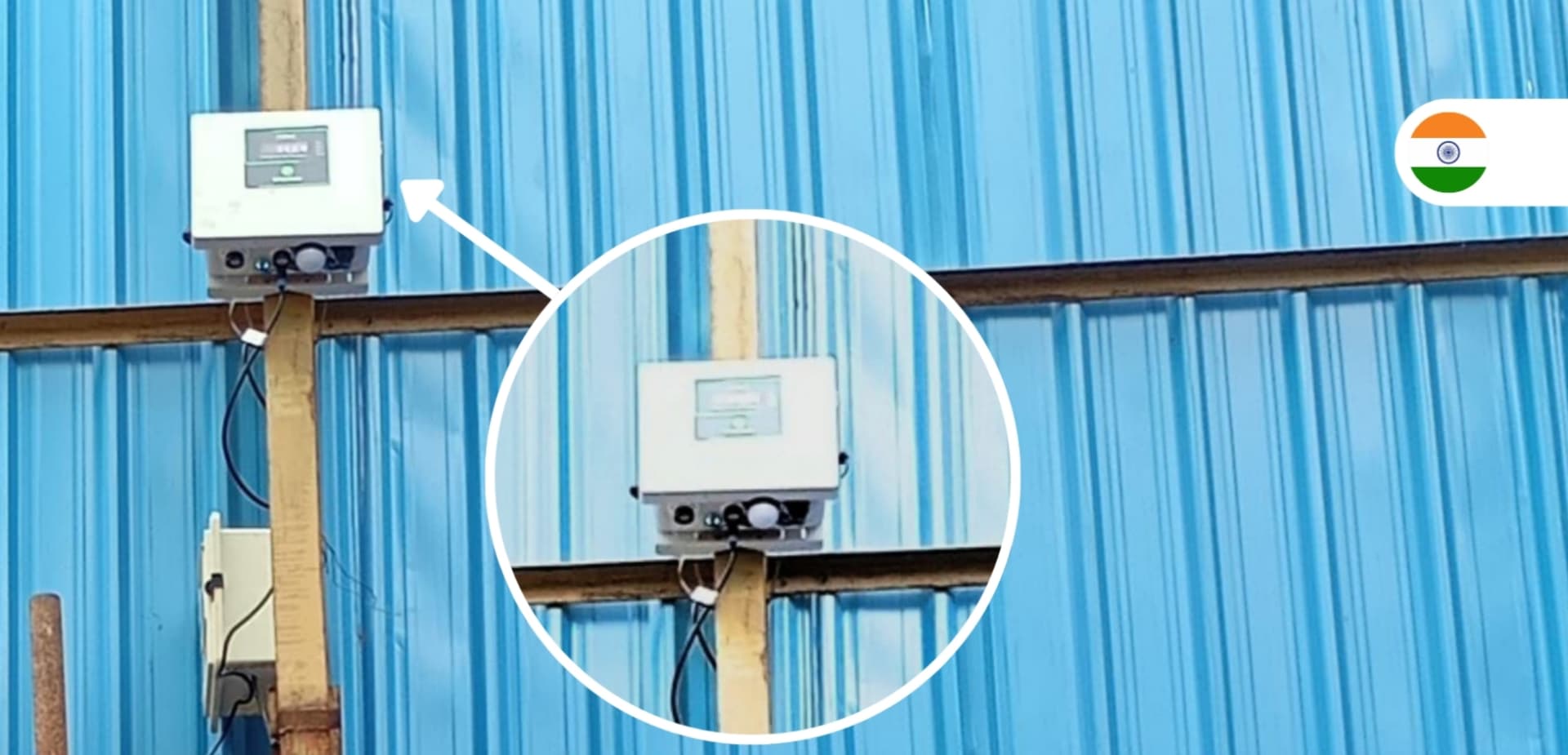
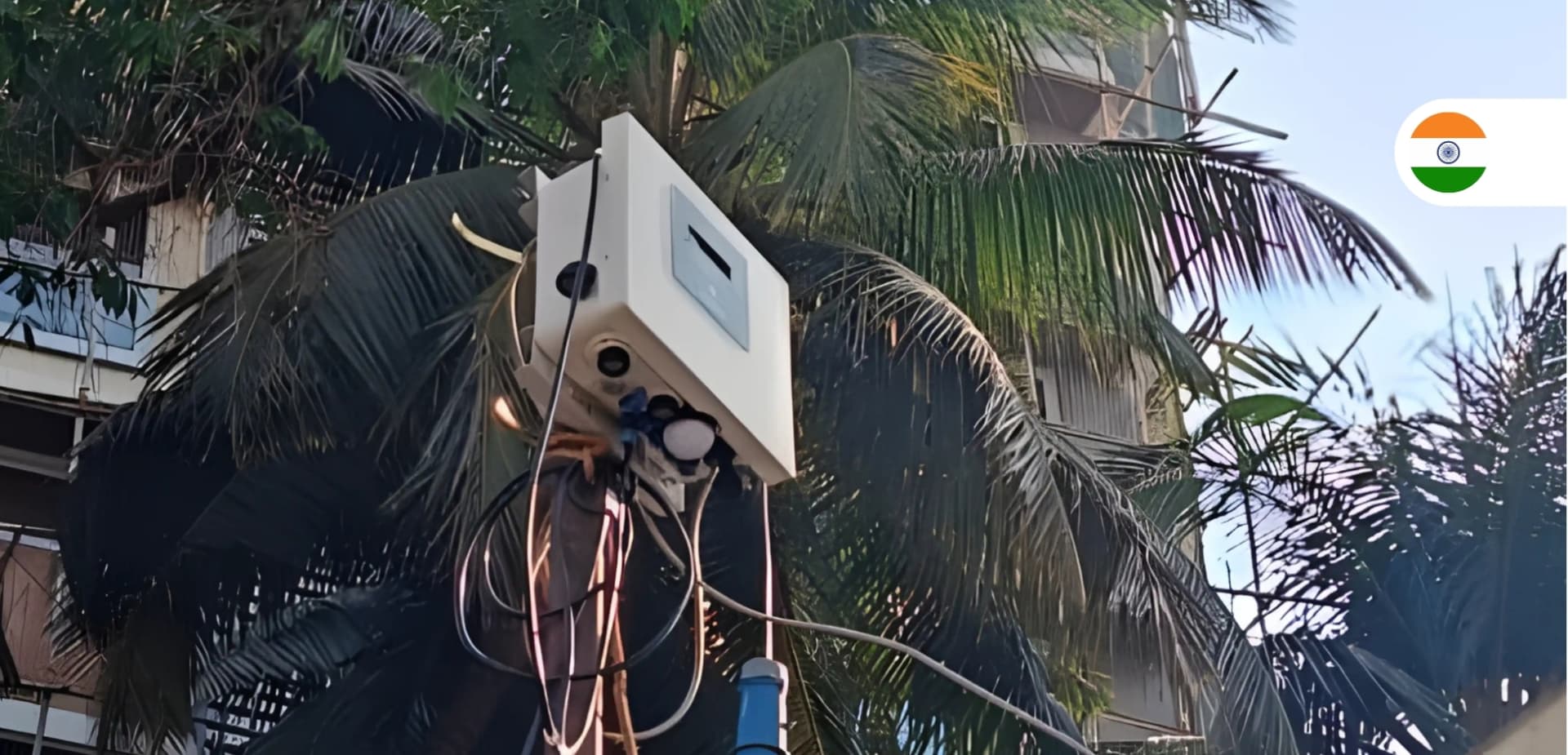
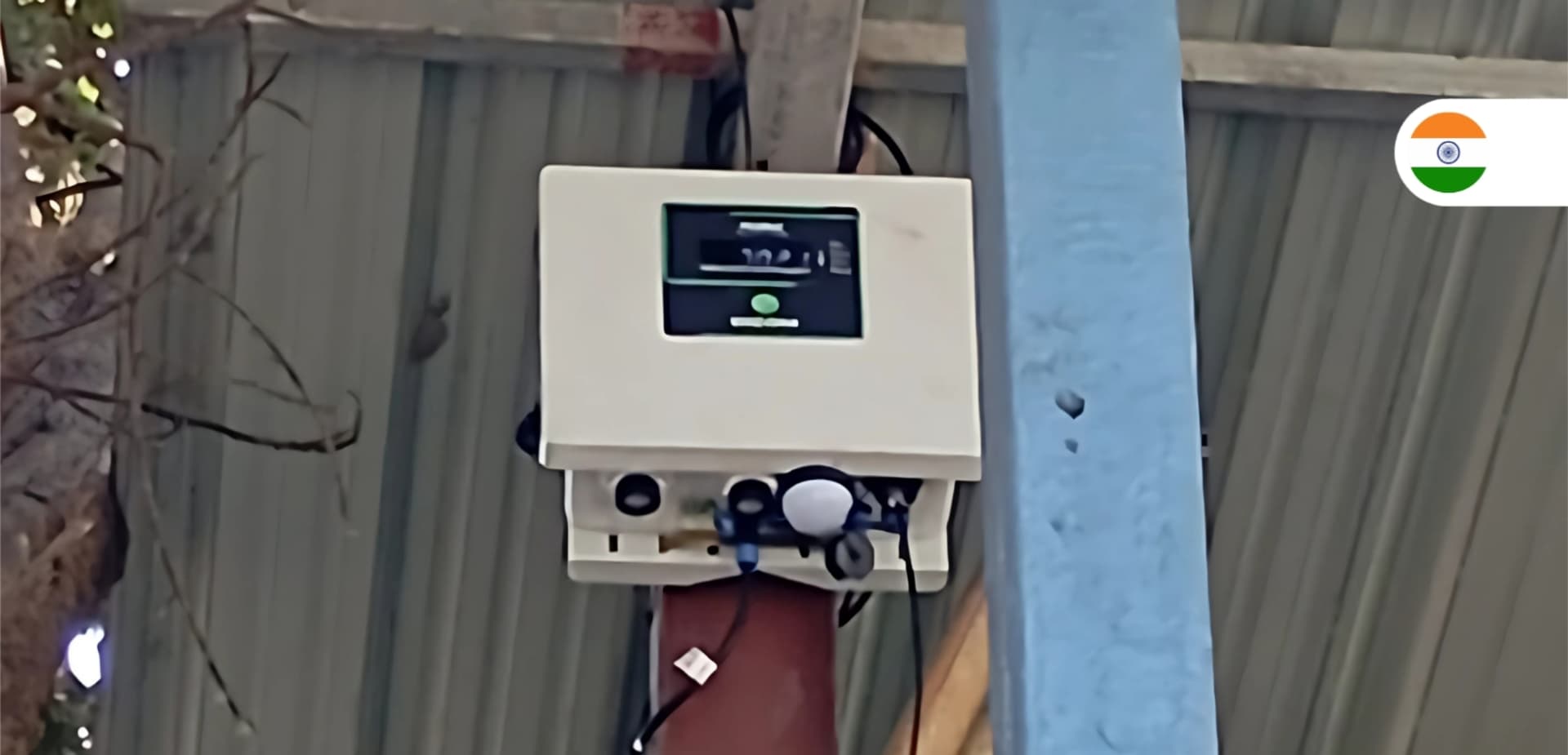
In Delhi, KPIL is executing one of the city’s most complex metro packages. To meet DPCC monitoring requirements at its Sarai Rohilla site, the Kalpataru–SOMA Joint Venture deployed Oizom’s AQBot PM with an integrated LED display and PTZ camera. The system is managed through Envizom, integrated with the city’s Command & Control Centre (CCC) for centralized environmental visibility and connected to the DPCC Dust Portal for live data sharing.
The Challenge
A Demanding Site in the Centre of the City
Contract D2C-06, awarded by Delhi Metro Rail Corporation to the Kalpataru–SOMA Joint Venture, covers twin tunnels and four underground stations on the Magenta Line extension, along with balance works at Nabi Karim.
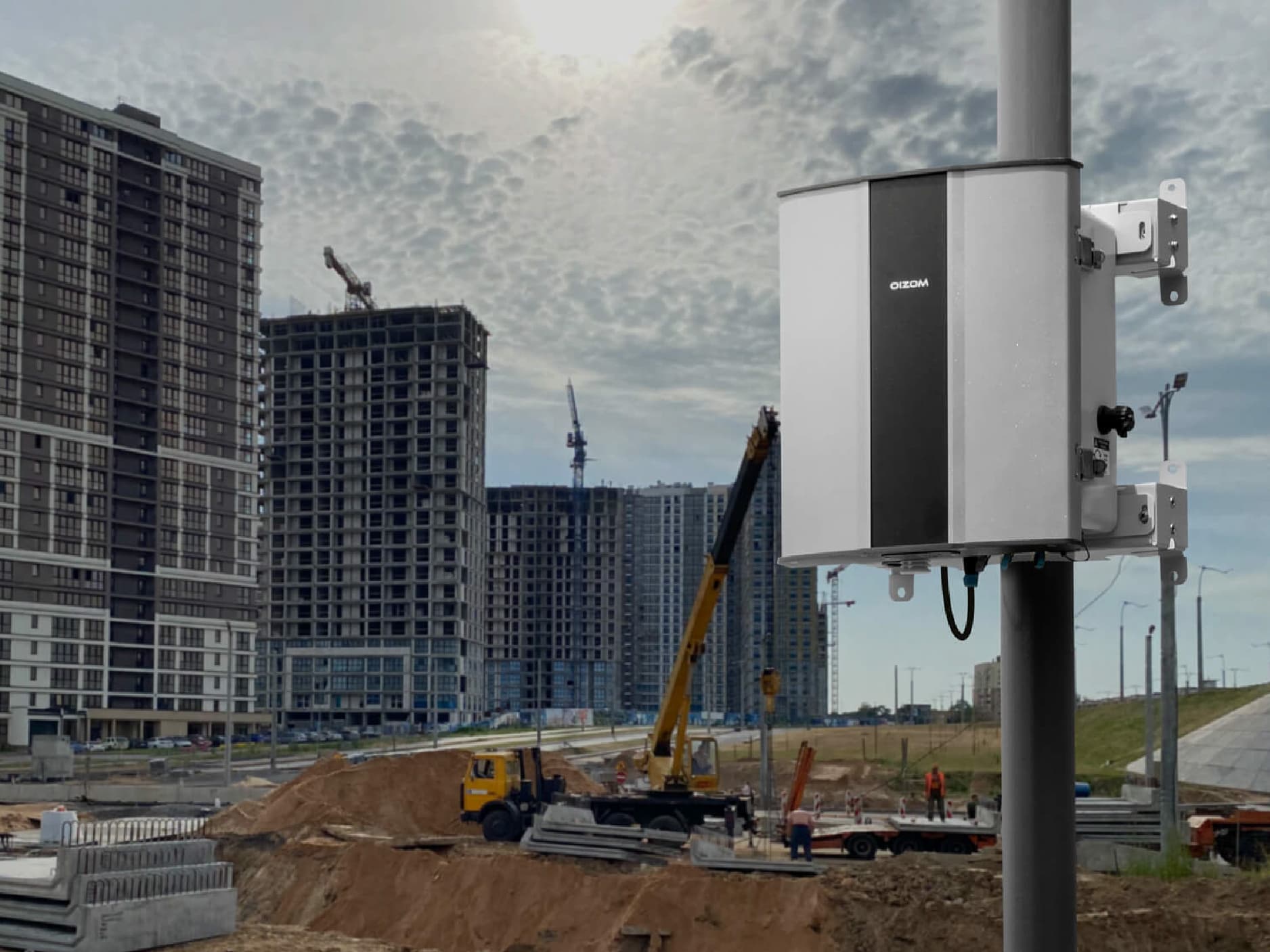
The package runs through densely populated areas with narrow road corridors, underground utilities, and active urban movement throughout construction. TBM tunnelling, excavation, shaft construction, spoil handling, and material movement generate particulate matter. At Sarai Rohilla, the monitoring point is located within a Government Boys Secondary School, making continuous dust monitoring particularly important.
Compliance Built on Continuous Data
DPCC requires all construction and demolition projects on plots of 500 square metres or more to register on its Dust Portal, in line with directions issued by the Commission for Air Quality Management. The portal integrates real-time PM2.5 and PM10 monitoring with live video surveillance of project sites, and registered projects must submit a Self-Audit Assessment Sheet every 15 days. DPCC has stated that non-compliance will attract strict penalties. For a metro programme with a fixed 42-month schedule, monitoring continuity is therefore critical.
For D2C-06, KPIL Required a Solution that Could:
- Continuously measure PM2.5 and PM10 levels.
- Share monitoring data directly with the DPCC portal through API integration.
- Transmit live data for project and regulatory access.
- Display air quality data through an LED display.
- Provide site surveillance through a PTZ camera.
- Maintain uninterrupted monitoring with responsive technical support.
Why Oizom
KPIL evaluated Oizom for the first time against these requirements. Four considerations shaped the decision.
Product Reliability: The AQBot PM is designed for continuous operation in harsh outdoor conditions. It measures particulate concentrations using laser scattering technology, with the sensor module housed in an IP66 rugged composite enclosure. The enclosure is NEMA 4X approved for long service in harsh industrial environments. These properties suit an active tunnelling site, where dust loads are heavy and the equipment runs unattended.
Measurement Technology: The AQBot PM measures PM1, PM2.5, PM10 and PM100, producing continuous, time-stamped record of site conditions rather than periodic spot readings.
Cloud Connectivity: Readings are transmitted in real time to Envizom, Oizom's cloud platform, and shared directly with the DPCC Dust Portal. A single data stream serves both the project team and the regulator.
Service Support: Continuous compliance depends on continuous uptime. Oizom's technical and after-sales support, delivered locally through Technovalue, gave the project team confidence that the system would stay operational throughout the construction programme.
The Deployment
The system was installed at the Sarai Rohilla site of the Kalpataru–SOMA JV D2C-06 project, on the premises of the Government Boys Secondary School. It brings together the monitoring, display and surveillance components specified for the site, connected through Envizom to the DPCC Dust Portal.
| Component | Function |
| AQBot PM | Continuous, real-time measurement of PM1, PM2.5, PM10 and PM100 |
| LED Display | On-device display with live air quality readings |
| PTZ Camera | Remote video surveillance of site activity, supporting DPCC's video-fencing requirement |
| Envizom | Real-time data access, trend analysis and reports for the project team |
| DPCC Dust Portal Integration | Live transmission of site PM2.5 and PM10 data to the regulator |
Together, these components create two parallel records of site conditions: one of the air quality the site produces, and one of the activity that produces it. The integrated LED display provides on-site visibility of air quality data, allowing teams and nearby stakeholders to view readings directly without requiring an external device or separate access point.
Results
The system is now fully operational, and the project team has begun to see the following early benefits.
Direct Regulatory Integration: Site data now flows live to the DPCC Dust Portal. DPCC has continuous, first-hand visibility of particulate levels at Sarai Rohilla, and KPIL's compliance data is documented continuously as the project proceeds.
Real-Time Monitoring: KPIL now receives continuous, real-time PM2.5 and PM10 data from the Sarai Rohilla site, providing a steady, time-stamped record of site conditions.
Easy Access to Data: The project team can view current readings and historical trends on Envizom from any location. This supports both site-level supervision and the fortnightly self-audits that DPCC's reporting framework requires.
Improved Visibility of Site Conditions: The system gives KPIL a clearer, data-backed view of environmental conditions at the site. This forms the baseline for future decisions on dust mitigation, work sequencing and compliance planning as the project progresses.
Impact
Delhi's approach to construction dust has shifted from estimating the city's total emissions to measuring each site's contribution. For contractors, this means compliance must be demonstrated continuously and backed by equipment that stays online. Paperwork alone is no longer enough.
By deploying Oizom's AQBot PM, LED display and PTZ camera at Sarai Rohilla, with data shared live through Envizom to the DPCC Dust Portal, KPIL has established this continuous record at an early stage of a 42-month underground construction programme. The deployment gives the project a dependable basis for DPCC compliance and a working baseline of site air quality. As tunnelling advances beneath one of Delhi's most densely populated districts, air quality at the site will be measured, recorded and publicly visible throughout construction.
About Oizom
Oizom’s innovative technology has redefined environmental monitoring by providing highly accurate and actionable data on various atmospheric parameters. Our offerings include weather stations, pollution tracking, and noise monitoring solutions. With seamless integration into smart city infrastructure, Oizom’s tools enhance decision-making, compliance monitoring, and community engagement towards a greener planet.

.webp&w=1920&q=75)
Case Studies



.svg)



.webp&w=3840&q=75)