Summary
Asbestos dust doesn't look like anything distinctive; it's invisible to the naked eye. Its fibres are less than 0.5 micrometres wide, far too fine to see individually or identify by colour once the material breaks down into dust. Solid, undisturbed material comes in three types: white (chrysotile), brown (amosite), and blue (crocidolite), but that colour disappears once it's reduced to airborne dust. The only way to confirm asbestos with certainty is laboratory testing. This guide covers what to watch for when testing isn't yet possible, where asbestos is most commonly found, and why professional testing is the only reliable way to know for sure.
Introduction
Asbestos emerged as a problematic element in modern construction and industry. Once admired for its adaptability and extraordinary fire resistance, this ubiquitous mineral is now recognised as a hidden threat that harms our planet's health and ecological balance. Asbestos, a naturally occurring fibrous material once widely used in construction and industrial applications, has become a silent but formidable threat, ingrained in the structures we inhabit and the air we breathe.
Asbestos's danger lies in its widespread use and microscopic form. When inhaled, these minuscule fibres become a serious health hazard, capable of lodging deep within the respiratory system. The consequences are terrible and often delayed, leading to debilitating illnesses such as mesothelioma, a lethal form of cancer. The insidious nature of asbestos-related diseases is further exacerbated by their long latency period. Symptoms may remain dormant, manifesting decades after initial exposure, cloaking the true extent of the threat.
The environmental repercussions of asbestos are just as alarming. Extracting and processing this mineral generates substantial quantities of hazardous waste, spreading contamination across soil, water, and air. As asbestos-containing materials age and deteriorate, they release these harmful fibres into our surroundings, endangering human health and wildlife.
According to a 2023 U.S. Geological Survey report, global asbestos consumption ranged from 1.1 to 1.3 million tons per year from 2015 through 2021.
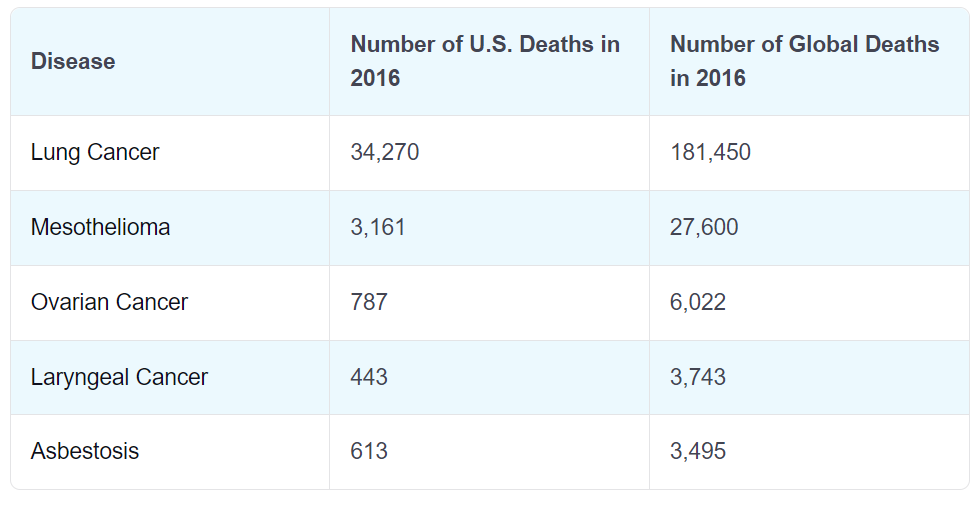
A 2018 study reported that asbestos-related diseases killed 39,275 people in the U.S. and 222,321 people throughout the world in 2016.
How to Identify Asbestos?
Asbestos, once present everywhere, is a component in construction and industrial materials and has now emerged as a hidden threat in our daily environments. This naturally occurring mineral, composed of fine, durable fibres, is nearly invisible to the naked eye yet poses significant health risks when airborne and inhaled, leading to severe respiratory illnesses, including the deadly mesothelioma.
Microscopic Appearance
At the microscopic level, asbestos fibres are exceedingly thin, resembling thread-like structures. They come in different colours, predominantly white, brown, and blue. They are so small, measuring less than 0.5 micrometres in width, that they can quickly become airborne and remain suspended for prolonged periods. This ability to stay in the air contributes significantly to their hazardous nature, as they can be inhaled deeply into the lungs.
White asbestos (chrysotile):
The most prevalent type, chrysotile, accounts for up to 90% of asbestos used globally, or white asbestos, which is commonly found in insulation, ceiling tiles, and joint compounds and is also the only member of the serpentine family of asbestos. Under a microscope, it appears as a white, fluffy substance, often intertwined with other materials, making it challenging to identify.
Brown asbestos (amosite):
As a member of the amphibole family, often used mainly in pipe insulation, roofing shingles, and fireproofing materials, amosite or brown asbestos has a brown, fibrous texture. Its rugged appearance often resembles rock wool insulation, necessitating expert analysis for accurate identification.
Blue asbestos (crocidolite):
Like amosite asbestos, they are also part of the amphibole family; Crocidolite, or blue asbestos, is less common but highly hazardous. It is primarily found in electrical insulation and gaskets and is identifiable by its distinctive blue-grey colour and grainy texture.
Colour and Texture
While the colour and texture of asbestos can provide initial clues to its presence, it’s crucial to acknowledge the limitations of visual identification. Asbestos-containing materials (ACMs) can vary widely in appearance, making it difficult to confirm the presence of asbestos without professional assessment and laboratory testing.
Widespread Locations: Where to Be Mindful
Asbestos’s historical use in various applications makes it a widespread concern, especially in older structures and materials:
Construction Sites:
- Buildings: constructed before the 1980s are particularly susceptible to containing asbestos in insulation, shingles, siding, flooring, and wallboard.
- Industrial Settings: Asbestos’s fire-resistant and insulating properties led to its widespread use in industrial applications, including pipe and boiler insulation, electrical insulation, and brake pads.
- Residential Areas: In homes, especially older constructions, asbestos may be present in popcorn or acoustic ceilings, vinyl flooring, and textured paints.
The Indispensable Role of Laboratory Testing
Recognising the limitations of visual inspection, laboratory testing is vital for the definitive identification of asbestos. This process involves microscopic analysis of suspected materials, enabling a precise and reliable assessment. This step is essential for informed decision-making regarding managing and remedying asbestos-containing materials.
While colour and texture can indicate asbestos presence, it is crucial to emphasise that visual inspection alone is not a reliable means of definitive identification. Asbestos-containing materials can vary significantly in appearance, and even experienced professionals rely on laboratory testing for confirmation.
The colour and texture of asbestos can be altered by factors such as age, weathering, and contamination, making visual inspection even more challenging. Additionally, some asbestos-containing materials may not exhibit any distinctive colour or texture, further complicating identification.
Where is Asbestos found?
Because asbestos is pervasive in many settings, awareness and proper identification are crucial for our safety.
Russia is the world's largest asbestos producer, with an annual production of around 700,000 metric tons in 2022. This mineral occurs naturally and contains silicon and oxygen. It occurs in different colours, such as blue, brown, and white, and is usually fibrous.
Construction Sites
Construction sites, especially older structures built before the 1980s, are standard repositories of asbestos-containing materials.
Insulation: Asbestos was the insulation material of choice for pipes, boilers, and walls because of its heat-resistant properties.
Roofing Shingles: Asbestos-cement shingles, known for their durability and fire resistance, were widely used in roofing.
Siding: The strength and weather resistance of asbestos siding made it a popular choice in building exteriors.
Flooring: Vinyl tiles containing asbestos were favoured for their durability and ease of maintenance.
Wallboard: Known as "Transite," asbestos-cement wallboard was preferred for its fire resistance and strength.
Each application poses a risk because asbestos fibres can be released during renovations, demolitions, or deterioration.
Industrial Settings
In industrial environments, asbestos was utilised for its fire-resistant and insulating properties.
Pipe Insulation: Asbestos was a common insulator for pipes and boilers, particularly in high-temperature settings.
Electrical Insulation: Electrical wiring and components were often insulated with asbestos to prevent fires.
Brake Pads: Asbestos's heat resistance made it an ideal material for brake pads in vehicles and machinery.
Gaskets and Seals: Its ability to withstand high temperatures and pressures led to asbestos use in gaskets and seals.
Fireproofing Materials: Asbestos was a go-to material for fireproofing due to its resistance to heat and flames.
Asbestos in these applications presents health risks, especially when materials are disturbed or worn down.
Residential Areas
Asbestos also found its way into many homes, commonly in materials like
Popcorn or acoustic Ceiling: Used for its texturing ability and sound insulation, asbestos was a frequent component in popcorn ceilings.
Vinyl Flooring: Similar to its use in industrial settings, asbestos-containing vinyl tiles were popular in residential flooring.
Textured Paint: Asbestos was added to paints for various decorative finishes.
Joint Compounds: Asbestos was a common ingredient in joint compounds used to fill and seal drywall gaps.
Putty and Patching Compounds: Asbestos-containing compounds were used to repair wall and ceiling imperfections.
These residential uses of asbestos pose significant risks, especially during remodelling or if the materials are damaged.
The Importance of Awareness and Professional Guidance
Given the health risks posed by asbestos, approach suspected asbestos-containing materials cautiously. If you suspect asbestos in your home or workplace, consult a qualified professional for proper assessment and remediation. Remember, visual inspection is not sufficient to identify asbestos. Laboratory testing is necessary for a definitive identification and to guide the appropriate response
Conclusion
Asbestos was once celebrated for its utility, but it's now recognised as a serious health and environmental hazard. Mining, refining, and the breakdown of asbestos-containing materials release hazardous fibres into soil, water, and air, so managing it responsibly is a collective effort involving individuals, businesses, and policymakers. If you suspect asbestos in your home or workplace, educate yourself on its appearance and common locations, consult a qualified professional for assessment, and consider air monitoring tools, like Oizom's, to help detect airborne particles. Together, these steps can turn asbestos from a hidden threat into a well-managed one.




.be0dea41.svg)