Summary
Construction is among the primary contributors to urban air pollution, but it may be the most controllable one. For example, in Delhi, PM10 levels due to construction activities, according to TERI (2018), are around 21%. The same applies to Mumbai, with construction activities contributing about 9% of PM emissions (MPCB, 2023). These are not background contributions; they are direct outputs of site activity that can be reduced through systematic engineering, operational, and monitoring measures.
What this guide covers:
- The complete pollution profile of a construction site; dust, diesel exhaust, and VOCs; and how each has its unique control measures.
- Engineering controls that reduce pollution emissions at the source, such as water suppression and wind barriers.
- Administrative and operational controls that work towards reducing pollution emissions through scheduling, routing, and material selection.
- Equipment-level controls that reduce diesel emissions and combustion emissions.
- Why control measures without monitoring can lead to guesswork, and how real-time monitoring can complete the feedback loop.
- The three most common causes of failure in controlling pollution emissions and how to avoid them.
Introduction: Construction Pollution Is a Cost Problem, Not Just a Compliance Problem
In Delhi, construction activities account for approximately 21% of PM10 concentrations, according to TERI (2018). In cities such as Navi Mumbai and Noida, real-time monitoring stations near construction sites show PM10 concentrations ranging from 300 to 600 µg/m³, far exceeding the maximum safe threshold of 100 µg/m³.
These figures have direct operational consequences. Stop-work orders, community complaints, regulatory fines, and project delays driven by air quality non-compliance are increasingly standard enforcement outcomes for construction projects in Indian cities. Authorities from municipal corporations such as NMMC, BMC, and PMC are now conducting real-time inspections and imposing penalties. The National Green Tribunal has also approved several directives aimed at minimising dust at construction sites.
However, the construction-related air pollution costs are not limited to fines imposed for air pollution-related violations. Dust complaints from the community can delay the entire construction process. Equipment downtime caused by inadequate maintenance generates both exhaust emissions and cost.
Reducing air pollution at a construction site is not a compliance exercise with a cost. It is a risk management exercise with a return.
Where Construction Air Pollution Actually Comes From
Construction sites generate three distinct categories of air pollution, each with different sources, different health implications, and different control approaches. Treating them as a single problem produces incomplete solutions.
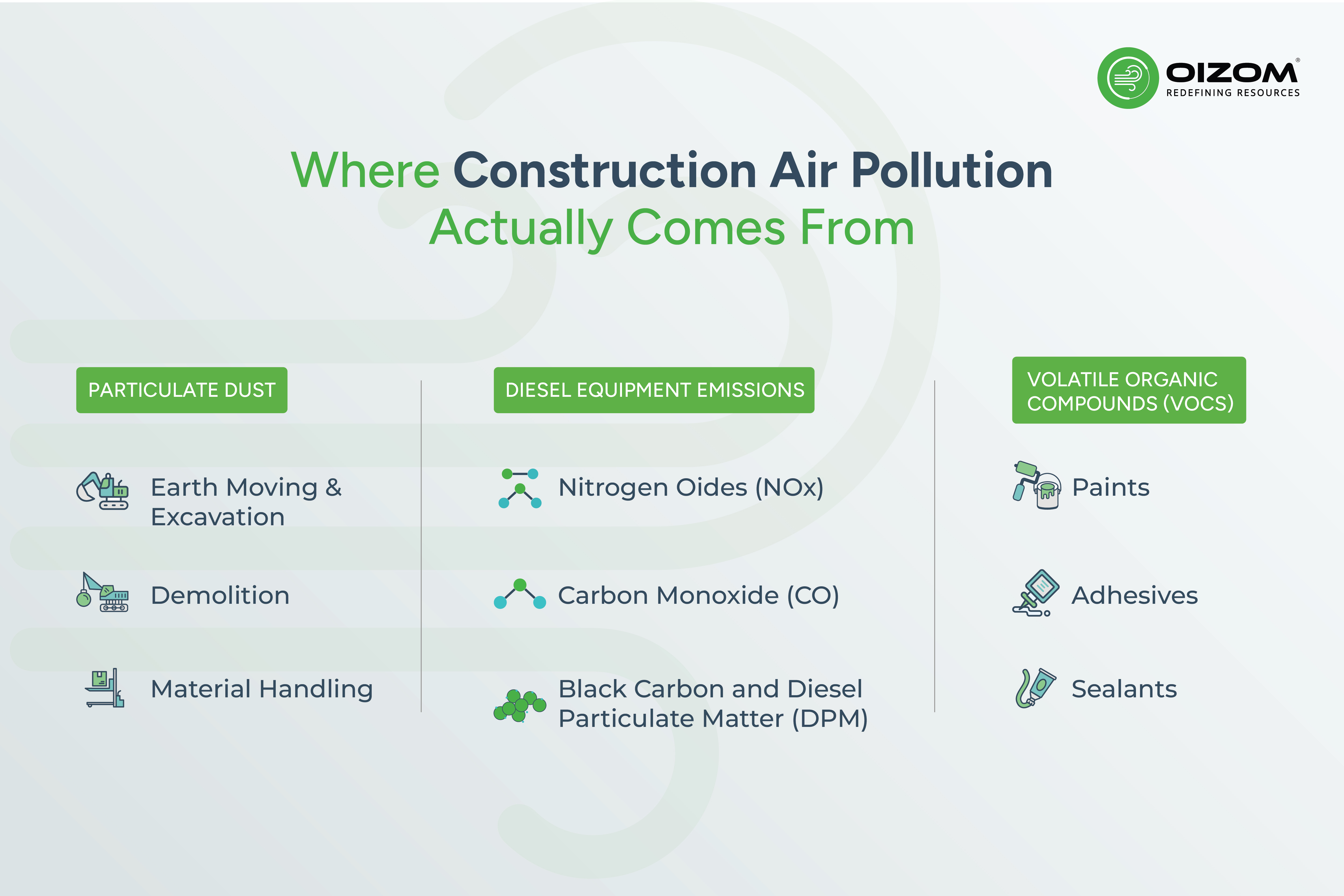
Particulate Dust
Fugitive dust is the largest and most visible contributor. It is generated by:
- Earth moving and excavation - grading, trenching, and soil disturbance generate coarse PM10 and fine PM2.5 simultaneously.
- Demolition - breaking concrete, masonry, and structural materials releases high-intensity dust plumes including respirable crystalline silica.
- Material handling - aggregate loading, cement transfer, and stockpile disturbance by wind or equipment.
- Vehicle movement - unpaved haul roads are among the highest continuous emission sources on active sites, generating PM10 throughout operating hours.
- Concrete and masonry work - cutting, drilling, and grinding generate fine particulates with high silica content.
Dust is a major regulatory target because it is among the first pollutants measured against the PM10 and PM2.5 thresholds outlined in the state standards of Maharashtra and the guidelines of the Central Pollution Control Board.
Diesel Equipment Emissions
On construction sites, heavy machinery is mainly powered by diesel engines, for instance, excavators, bulldozers, cranes, concrete mixers, and generators. The result of their operation is:
- Nitrogen oxides (NOx) - which lead to the formation of secondary PM2.5 and ground-level ozone.
- Carbon monoxide (CO) - which is a major threat to human health in closed or poorly ventilated workplaces.
- Black carbon and diesel particulate matter (DPM) - fine PM2.5 produced by incomplete fuel combustion poses a significant threat to the health of a worker near equipment.
Heavy-duty diesel equipment used on construction sites emits NOx, underscoring the need to incorporate NOx-reduction measures alongside dust control.
Volatile Organic Compounds (VOCs)
The use of paints, adhesives, sealants, waterproofing products, and surface treatments has led to VOC emissions during use and curing. VOC emissions are much stronger in high-temperature processes. Although VOC emissions can play a smaller role than dust and diesel in PM impacts on construction sites, they contribute to ozone formation in the lower atmosphere and pose health risks to construction workers due to their use in confined spaces with no ventilation.
Defining the prevailing pollution type at each stage of construction allows prioritising the measures needed to control it; for example, earthworks are dominated by dust pollution, while flooring phases involve VOC and diesel pollution.
Engineering Controls: Reducing Emissions at the Source
Engineering controls are physical measures that reduce dust and emissions generation or prevent particles from becoming airborne. They are the first line of control because they address the pollution at its source rather than managing it after release.
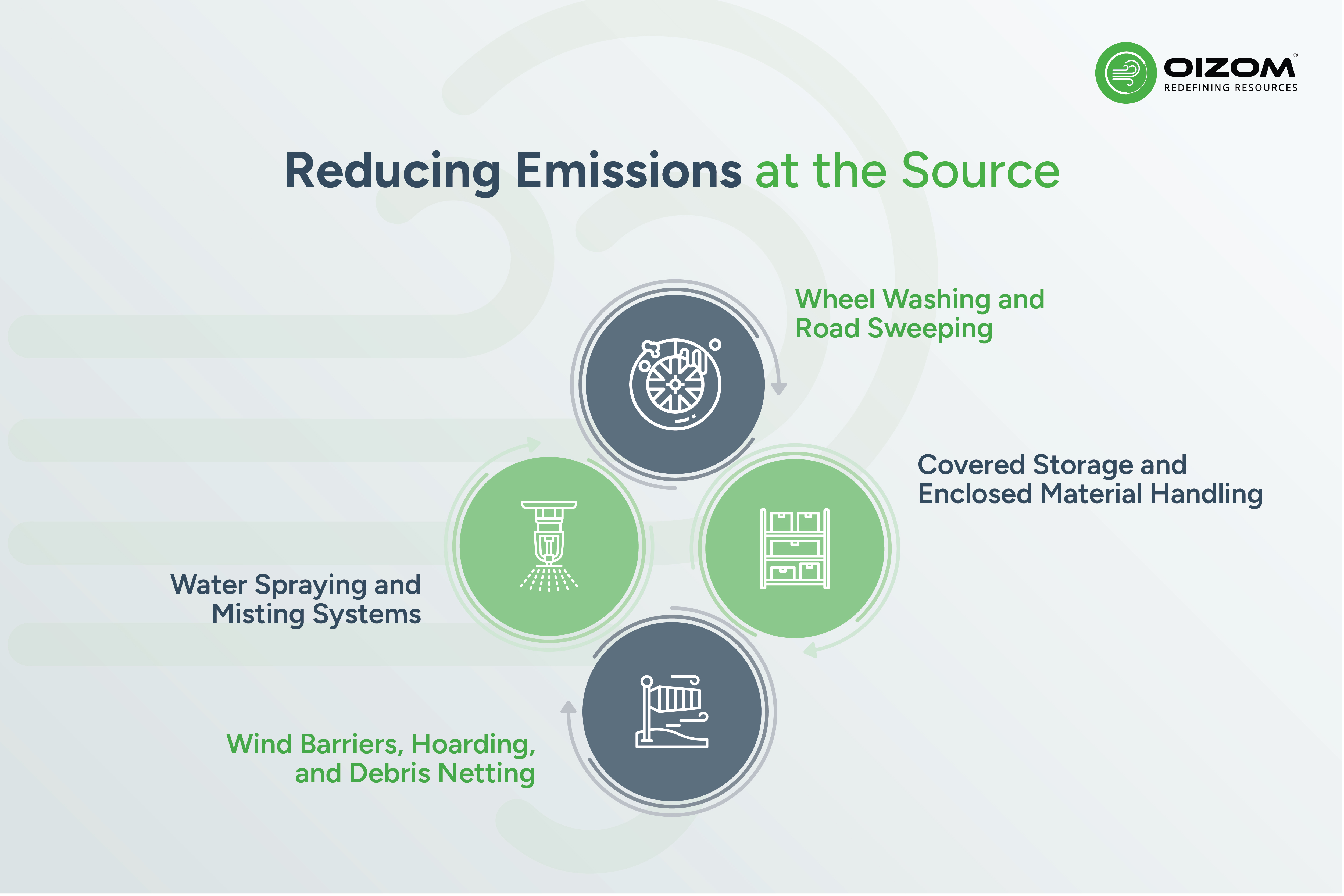
Water Spraying and Misting Systems
Water application is the most widely deployed dust control measure on construction sites and, when applied correctly, one of the most effective. The keyword is correct.
- For earthmoving and grading areas: Active surfaces should receive water at least every two hours while working or whenever wind speed exceeds 15 km/h. Just because a surface is wet now does not mean it was effectively controlled.
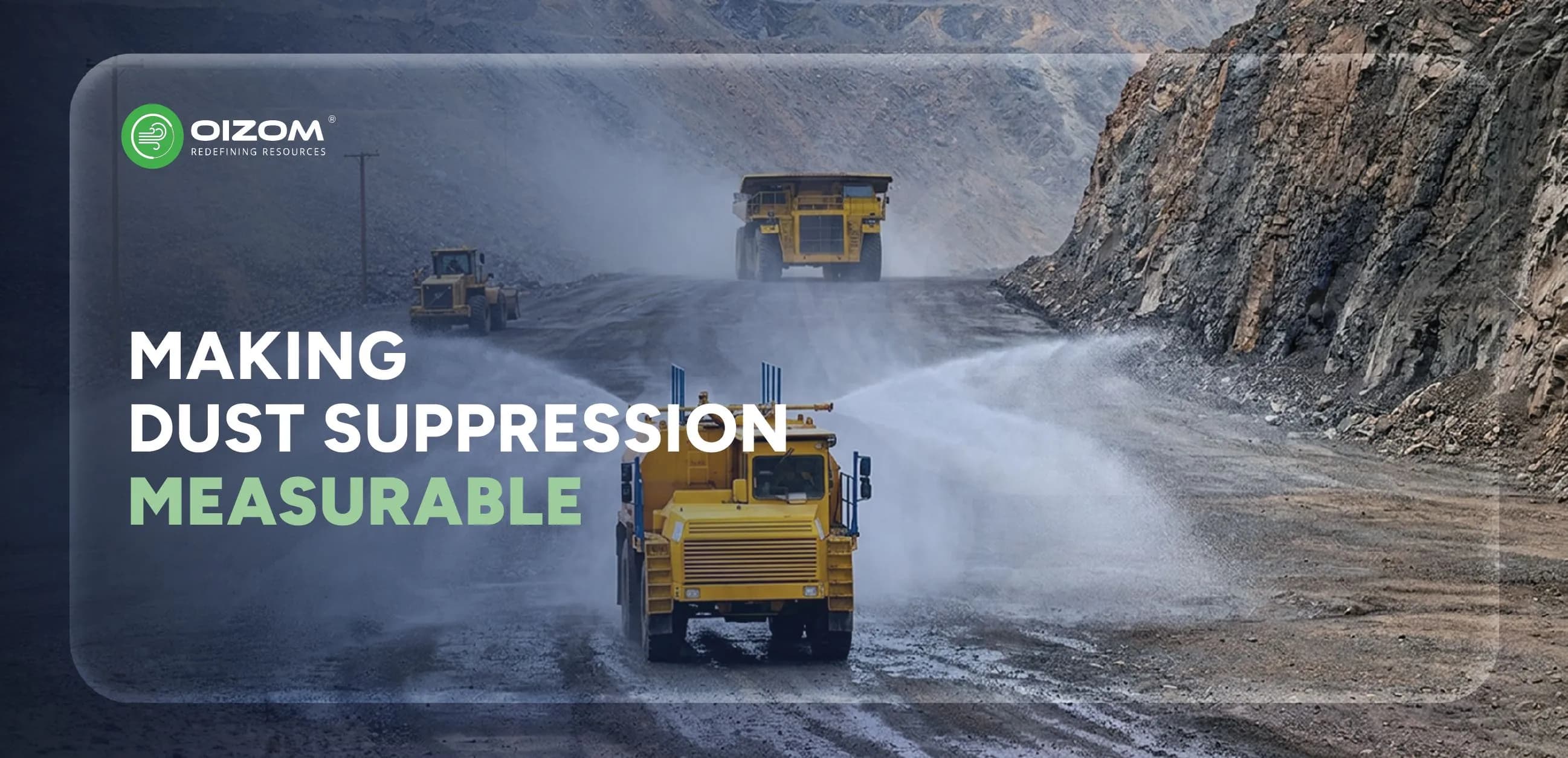
- For unpaved haul roads: Water the road at 30-45 minute intervals to effectively control dust from trucks. Just one watering of a haul road in the morning will not control dust in the afternoon.
- Anti-smog guns and misting systems produce very fine water droplets that adhere to airborne particles, causing them to precipitate. The effective radius is usually 50-100 meters depending on the wind conditions. It is most useful in large open areas where point-source watering is impractical, such as stockpile zones, active demolition sites, and bulk material transfer zones.
One of the main reasons for water suppression failure is that watering is treated as an event ("we watered this morning") instead of a sustained condition ("moisture content is above the level that leads to dust"). The two definitions lead to different outcomes.
Wind Barriers, Hoarding, and Debris Netting
Physical obstacles break down winds near the surface, thereby reducing the power available to mobilise surface particles. Currently, solid hoarding with a height of at least 3 metres is increasingly becoming the standard required by Indian law and in many developed markets.
Using geotextile debris netting secured to scaffolding in elevated work areas prevents demolition debris, fine particles, and concrete dust from spreading due to wind at the work site. This situation is particularly important for multistory projects where work is conducted at different heights above the ground.
The positioning of barriers is also important. They must be set against the wind direction, and overlapping parts of the barriers should be sufficient to limit the wind's impact.
Wheel Washing and Road Sweeping
Tracked-out material, consisting of mud, aggregates, and fine particles, is left behind on public roads; it is then aerated by vehicle traffic, making it an ongoing emission source throughout the day while the site is operational.
Wheel washing systems at site exits materially reduce trackout. There should be at least a rumble strip and a manual wash-down facility in place. Large sites should have automatic wheel-washing systems. Mechanical road sweepers should operate on public roads during and after busy periods to remove any deposits that would otherwise be resuspended.
Covered Storage and Enclosed Material Handling
When it comes to loose materials, like sand, sewage, demolition debris, and stockpiles of soil, they continuously emit emissions when exposed to wind. Covering stockpiles with tarpaulins or geotextile covers during non-handling periods and, where feasible, enclosing transfer operations can substantially reduce stockpile-related emissions.
The use of covered trash chutes at demolition and high-rise construction sites helps prevent free-falling materials from causing dust at ground level, providing a simple but effective way to reduce airborne dust during demolition operations.
Administrative and Operational Controls
Administrative controls reduce pollution through scheduling, workflow, and material decisions rather than physical infrastructure. They have lower upfront cost than engineering controls but require consistent implementation discipline to be effective.
Weather-Responsive Scheduling
Wind speed is the primary factor driving the generation of fugitive dust in most construction activities. Dust-generating work such as bulk earthmoving, demolition, and stockpiling procedures should stop over certain wind speeds (usually over 25 km/h for major earthmoving activities) unless dust control measures have been implemented.
It is better to carry out dust-generating work during periods of lower wind speeds, at midmorning when winds drop after morning gusts, and to avoid late afternoons because wind speeds frequently increase in various cities in India. This requires weather data, not just observation: a weather station integrated with the site monitoring system provides the real-time wind data needed for defensible scheduling decisions.
Vehicle Idling Reduction and Route Planning
Idling of diesel machinery generates emissions without any productive work being done. Limiting machinery idle time to 3-5 minutes is common practice in construction environmental management plans and significantly affects NOx and black carbon emissions.
Travel routes for trucks assigned to deliver materials can shorten the distance travelled on unpaved roads and reduce the number of vehicles used on roads, particularly emissive ones. Consolidation of deliveries can minimize movements leading to lower dust and diesel emissions.
Material Substitution
When low-VOC paints, sealants, and glues meet performance requirements, their use reduces VOC emissions during application. This is particularly important in the interior fit-out, waterproofing, and surface-treatment stages, where workers and surrounding communities are exposed to emissions from solvent-based products.
Equipment-Level Controls: Targeting Diesel Exhaust
Both engineering controls and administrative controls effectively address dust pollution, but they are less efficient than diesel pollution control. Diesel pollution requires separate control methods.
- Low-emission and electric machinery, where possible, should be used, especially for small machines like small excavators, telehandlers, and local power generators. This strategy is still new in Indian construction; however, it has become more widespread in urban areas with utility infrastructure used for electric machinery.
- Diesel particulate filters (DPFs) remove a substantial amount of soot from exhaust gases before they are emitted into the atmosphere. Proper maintenance of the filter (regular inspection, management of regeneration cycles, etc.) is necessary, as a blocked or bypassed DPF is not effective.
- Regular equipment maintenance plays an important role in emission levels. Poorly maintained diesel engines run rich; incomplete combustion produces significantly more black carbon and CO than a properly tuned engine. Therefore, oil changes, air filter maintenance, and fuel injector repairs should not be seen only as routine procedures but as processes that reduce emissions.
The Monitoring Feedback Loop: Why Controls Without Measurement Are Guesswork
The most consistently underinvested component of construction air pollution programmes is measurement. Most sites know their controls are operational. Very few know whether their controls are effective; the difference between the two is the difference between a compliant site and one that receives a show-cause notice despite running all its suppression systems.
Let’s consider two different situations. In one case, a given site runs its water suppression system for two hours and thinks that it is compliant simply because it has done so. In another case, the same site conducts PM10 boundary monitoring. It records PM levels well over 150 µg/m³ during vehicle movements, indicating that the water suppression system needs to be applied more often. The first site is operationally compliant. The second site is actually managing its air quality. Real-time PM monitoring at site boundaries converts dust control from a checklist activity into a feedback-driven management process.
Oizom’s Dustroid is designed specifically for the construction and mining industries to continuously monitor PM1, PM2.5, PM4, PM10, and TSP. With its heated, anti-static inlet, the Dustroid can reduce humidity interference, which is common in environments with high particulate levels. Serving as the advanced data-gathering unit, Oizom’s Polludrone provides information on NOx emissions and meteorological parameters, helping correlate dust phenomena with wind directions and pinpoint which procedures are responsible for a certain amount of dust emissions into the atmosphere.
The monitoring data from both devices is sent to the Envizom platform, which provides dashboards, alerts based on predefined parameters, and timestamps to support audits and daily decision-making. Whenever a municipal authority needs to know the status of air quality, it does not make spreadsheets filled with data gathered from many different resources. The monitoring device directly provides an accurate report of the entire monitoring process.
The monitoring investment that most meaningfully reduces air pollution is not the one that proves compliance after the fact. It is the one that identifies which specific controls are underperforming in real time, so they can be corrected before dust reaches the boundary.
Three Common Mistakes; and Why They Persist
Over-Reliance on a Single Control Method
Water suppression alone is not a dust control programme. It is one component of one. Additional measures have to be taken in windy conditions, when water might evaporate within minutes and dust can no longer be suppressed. Where there are no windbreaks, it makes no sense to use water because, while the material is lifted from the stockpiles, water cannot reduce dust emissions.
The most effective construction air pollution programmes layer controls: engineering measures reduce emission intensity, administrative controls reduce emission frequency, and monitoring confirms the combination is achieving the required boundary concentrations.
Treating Dust Control as a Setup, Not a Process
Plans for controlling dust are established at the beginning of construction projects and reviewed only when an issue arises. This process is fundamentally flawed. Building sites are dynamic, and dust emissions take different forms during earthworks at the construction stage. Therefore, if a particular control plan is useful in one phase, it is likely to be ineffective in another.
Effective dust control requires the same iterative management attention as schedule, cost, and quality. Monthly control reviews against monitoring data, with controls adjusted for the current phase of work, consistently outperform static plans and are increasingly what regulators expect to see in audit documentation.
Ignoring Off-Hours Emissions
The generation of stockpile dust continues after the workday is complete. There are stockpiles of material left exposed, surfaces that have not been stabilised, and access roads that provide no windbreak, all of which generate fugitive dust 24 hours a day, even at night and on weekends when no suppression measures are installed.
So-called off-hours exceedances are continuously recorded by monitoring systems at surrounding locations and in municipal networks. Sites that only control dust during working hours are gathering emissions data in regulatory documents, and there are no suppression records to correlate with that data. Covering dust piles overnight, maintaining windbreaks, and conducting continuous boundary monitoring should be the minimum operational requirement at sites located in densely monitored urban areas.
Conclusion
Reducing air pollution at a construction site is not a single-measure problem, and it does not have a single-measure solution. Dust control can be achieved through water dust suppression. Additionally, surrounding areas are protected from emissions by installing wind barriers around stockpiles. Equipment maintenance minimizes diesel exhaust emissions. Weather-responsive scheduling helps to reduce maximum emissions from construction. All these measures help with some specific causes of the problem.
Yet, what combines all the above measures is a feedback mechanism, which is often absent from construction processes. Dust control becomes just an assumption unless actual boundaries are measured in real time.
The sites that consistently achieve low boundary concentrations are not the ones with the most suppression equipment. They are the ones that measure what their suppression equipment is actually doing and adjust it when the data shows it is not enough.




.be0dea41.svg)