Hyperlocal Air Quality Monitoring Across Pune: A Multi-location Smart City Deployment by Oizom

Pune

June 2025

Smart City

Technovalue

Polludrone Custom

Smart City Air Quality Monitoring
Introduction
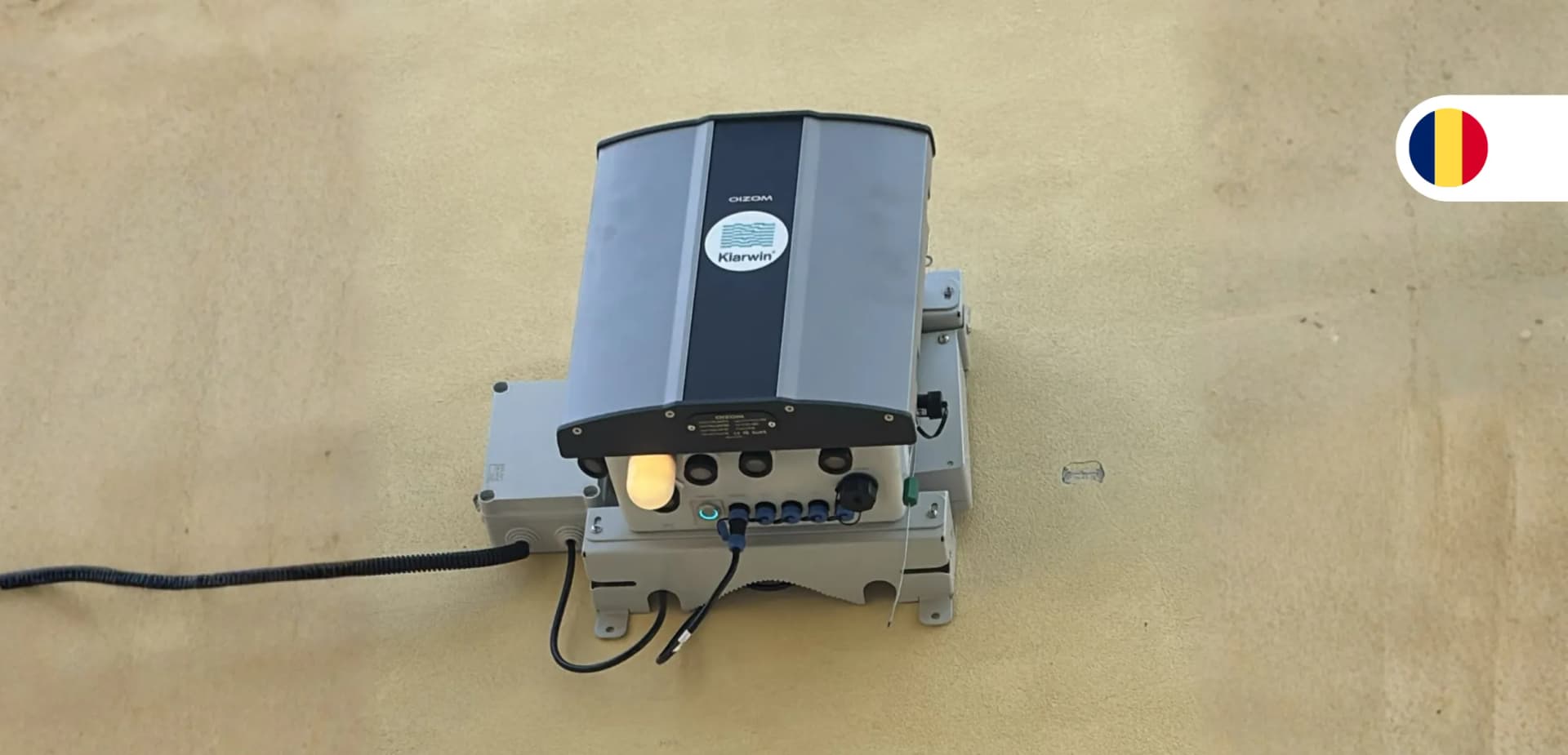
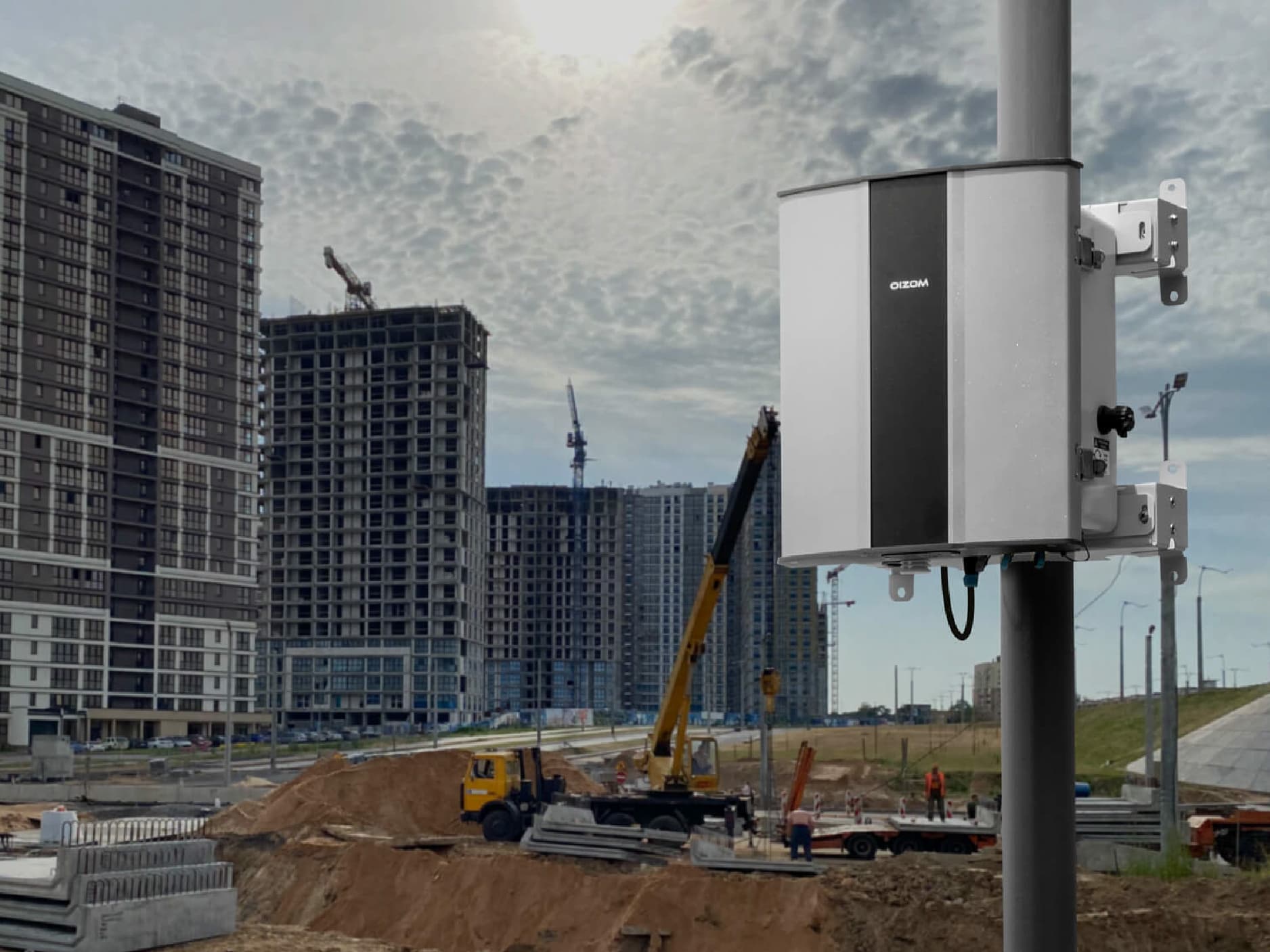
Under its Smart City mandate, Pune set out to monitor air quality at a resolution its existing infrastructure could not provide. Oizom delivered that capability through a network of 16 Custom-Configured Polludrone Air Quality Monitoring Stations, positioned at the points where pollution is most concentrated: arterial roads, congested junctions, and the fringes of industrial zones.
Driven by rapid urbanisation, rising vehicle density, and expanding industrial activity, Pune's air quality varies sharply from one corridor to the next, and a single citywide average could no longer inform meaningful action. Each station measures particulate matter, regulated gases, and atmospheric conditions, transmitting continuously to Envizom.
This resulted in an environmental intelligence layer built directly for the city's governance, turning dispersed, real-time readings into a basis for coordinated city-wide decision-making.
16 | 10+ | 24/7 |
The Challenge
A product of overlapping pressures dense traffic, Pune’s air pollution is influenced by continuous construction and industrial emissions on the city's periphery, which fluctuate by location and by hour. Untangling them demands measurement that is both continuous and geographically distributed.
The city's earlier reliance on a handful of centralised stations left wide gaps. Localised spikes went undetected, and authorities had no way to see how conditions differed between a clogged junction and an industrial belt a few kilometers away.
Closing that gap meant building a network capable of the following:
- Capturing pollution levels across the city's highest-impact zones, in place of sparse, centralised sampling.
- Tracking emission spikes that fluctuate with traffic congestion and adjacent industrial output, continuously rather than periodically.
- Measuring SO₂, NO₂, O₃, CO, THP, PM1, PM2.5, PM10, and PM100 together, from a single instrument at each site.
- Feeding directly into the city's command-and-control systems to inform day-to-day governance.
- Sustaining accurate, uninterrupted data streams to underpin long-term planning, compliance, and mitigation.
Why Oizom Polludrone
A network of this scale imposes specific demands: multiple parameters captured simultaneously, hardware that holds up at the roadside, native compatibility with Smart City platforms, and a single destination for all data. Oizom's Polludrone Custom was chosen because it addresses each of these in a single unit.
- Multi-parameter sensing in a single station, covering particulate matter, regulated gases, and atmospheric conditions, eliminating the need for separate devices.
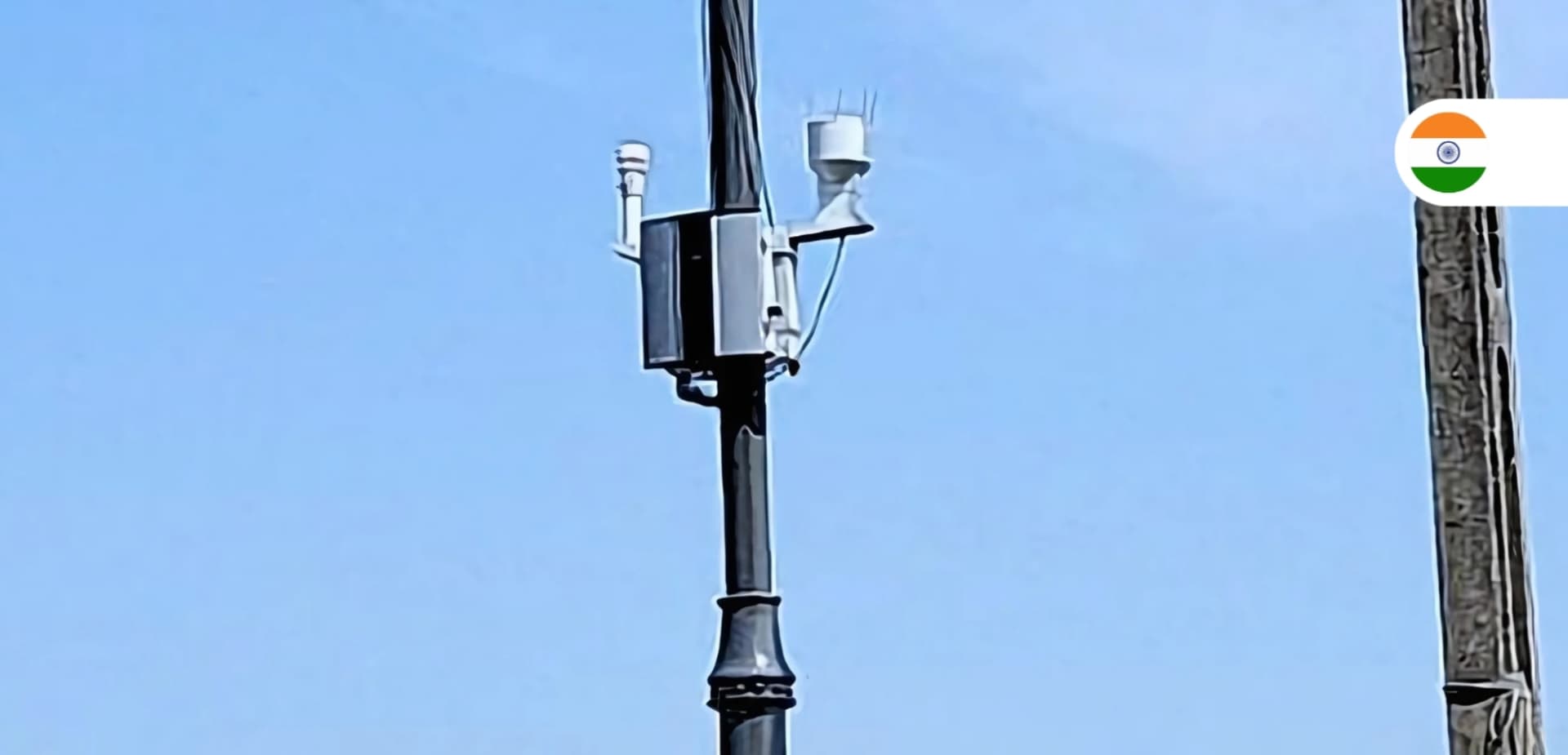
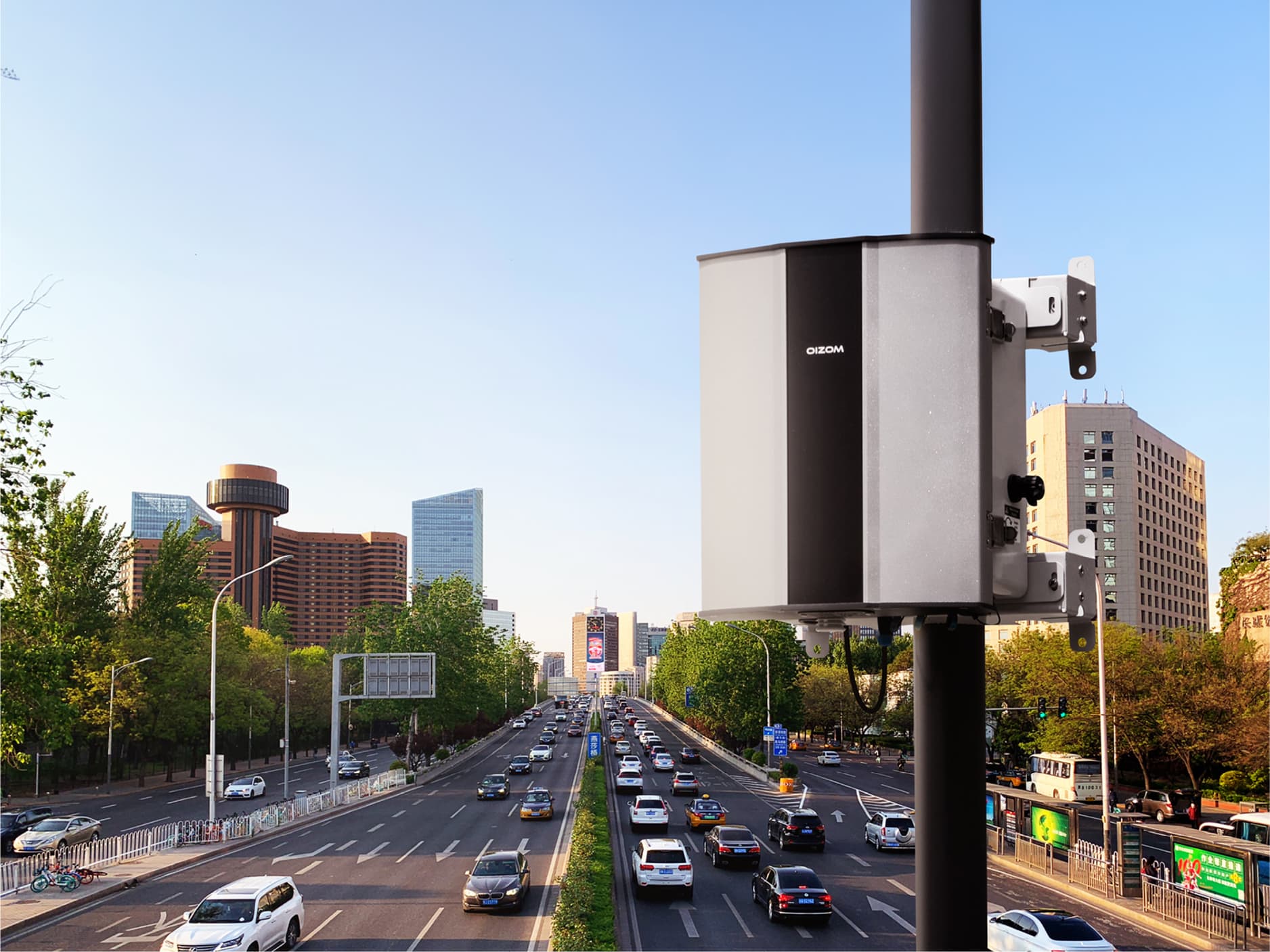
- A compact, roadside-ready build, engineered for installation at busy junctions and industrial perimeters without heavy supporting infrastructure.
- Continuous transmission to a central dashboard, giving authorities live readings, historical trends, and emerging pollution patterns in one place.
- Smart City integration by design, API-enabled and wired into the city's command infrastructure to support coordinated urban management.
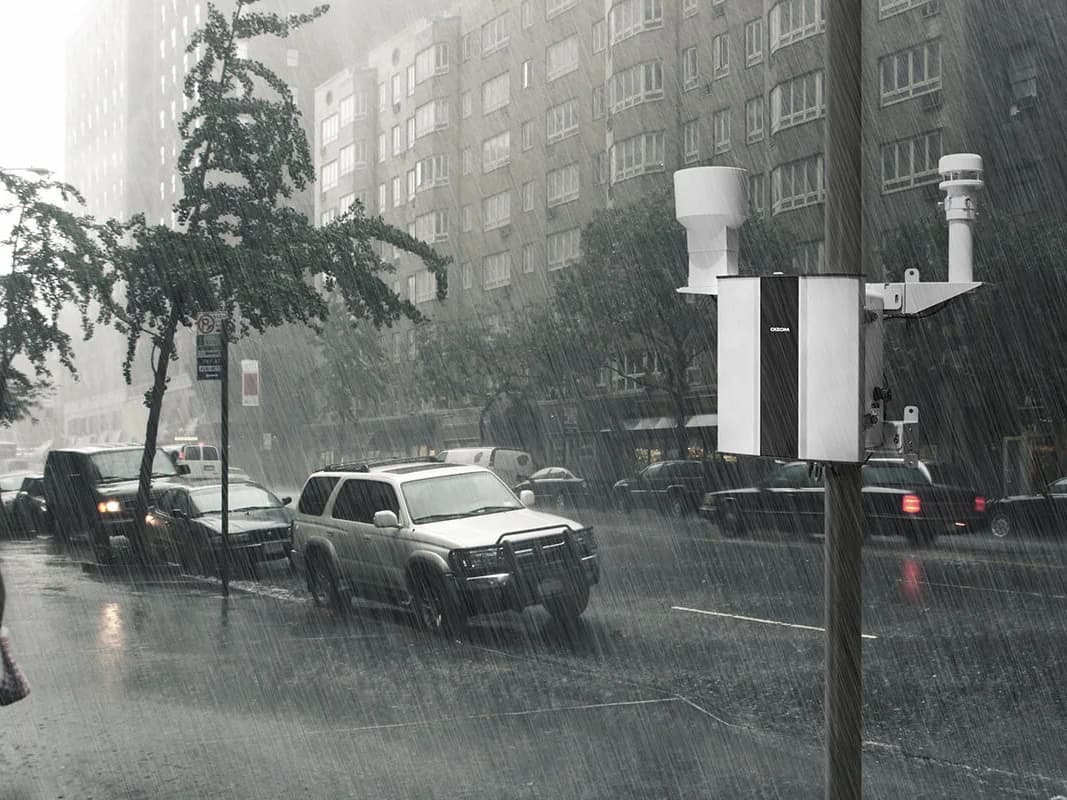
- A modular, low-maintenance architecture, with remote diagnostics and weather-resistant construction that hold performance steady and make future expansion straightforward.
The Deployment
The 16 Custom-Configured Polludrone units were installed across Pune's busiest roads, principal junctions, and industrial areas, forming a distributed grid designed to monitor pollution as it varies from street to street. Each station samples its surroundings continuously and automatically relays the readings to a cloud-based dashboard for real-time aggregation, visualisation, and analysis.
Because the system is API-enabled and tied into the city’s command-and-control infrastructure, the network functions not as a set of isolated sensors but as a single, coherent source of environmental intelligence for the city.
Each station monitors a range of pollutants and atmospheric parameters:
| Category | Parameters Measured |
| Particulate Matter | PM1 (very fine), PM2.5 (fine respirable), PM10 (inhalable), and PM100 |
| Gases | SO₂ (Sulfur Dioxide), O₃ (Ozone), CO (Carbon Monoxide), NO₂ (Nitrogen Dioxide) |
| Environmental | THP (Temperature, Humidity, Pressure) |
Pairing atmospheric readings with pollutant data lets the network relate concentrations to local conditions; the analysis that distinguishes a passing fluctuation from a persistent hotspot along a traffic corridor or industrial belt.
Results
The network has changed how Pune reads, manages, and reports its air. Continuous, reliable data across the city has replaced guesswork with evidence, sharpening response times and deepening the authorities' understanding of where pollution originates.
Key Outcomes
Hyperlocal Pollution Mapping
- Pollution hotspots along traffic corridors and industrial belts can now be visualised and identified with Envizom.
- Differences in air quality between zones can be seen and compared directly.
Real-Time Environmental Awareness
- Live data allows administrators to act quickly when pollution spikes.
- Emerging events and shifting conditions are caught early.
Data-Driven Urban Planning
- Findings inform traffic management, emission-control measures, and infrastructure decisions.
- Regulatory enforcement is grounded in a continuous evidence-based process.
Greater Transparency & Public Trust
- Data-backed reporting strengthens public confidence in the city's environmental management.
- Residents are better informed and more able to engage on air quality.
Long-Term Environmental Benchmarking
- A consistent baseline supports tracking pollution trends and evaluating mitigation policy.
- Reliable historical records underpin compliance and long-range planning.
Impact
With this network in place, Pune has moved its environmental governance onto a firmly data-driven footing. The system widens the city's capacity to track pollution, reinforces clean air action plans and public health strategy, sharpens industrial accountability, and contributes to climate resilience. Just as significantly, it offers a replicable blueprint for other cities pursuing structured, technology-led pollution management, marking Pune's shift from reactive control to anticipatory, evidence-based environmental planning.
About Oizom
Oizom’s innovative technology has redefined environmental monitoring by providing highly accurate and actionable data on various atmospheric parameters. Our offerings include weather stations, pollution tracking, and noise monitoring solutions. With seamless integration into smart city infrastructure, Oizom’s tools enhance decision-making, compliance monitoring, and community engagement towards a greener planet.


Case Studies

Do you have a specific requirement?
Our Product Range


.svg)



.webp&w=3840&q=75)


Think We Can Help You?