Underground Tunnel & Subway Station Air Quality Monitoring, Italy

Italy

January 2026

Tunnels and Multi-level Parking

Softech

Polludrone Custom

Underground Construction & Tunnel Air Quality Monitoring
Introduction
Underground air quality differs significantly from surface conditions. In active tunnels, diesel equipment, drilling, excavation, limited ventilation, and naturally occurring radon in many parts of Italy all affect the atmosphere.
At an active metro construction site in Italy, continuous monitoring at a depth of nearly 100 metres was required to protect worker health and safety while demonstrating compliance during routine inspections and audits.
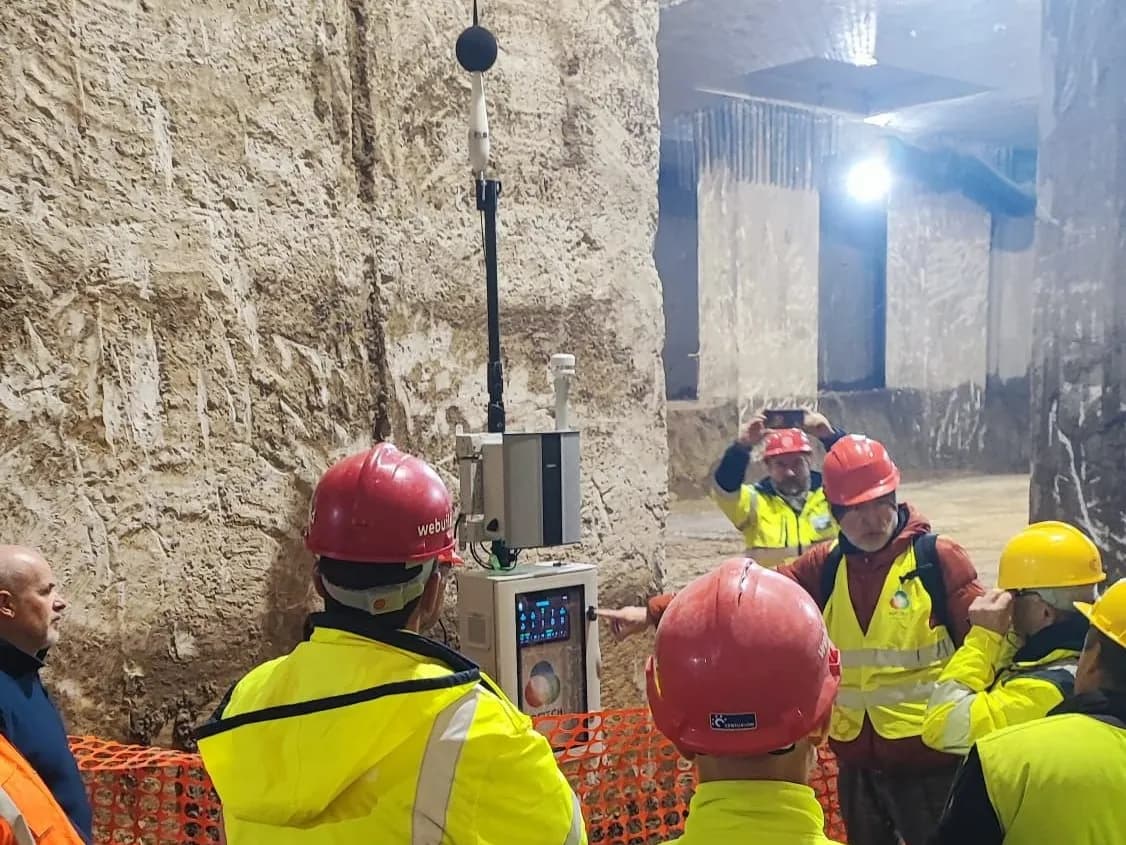
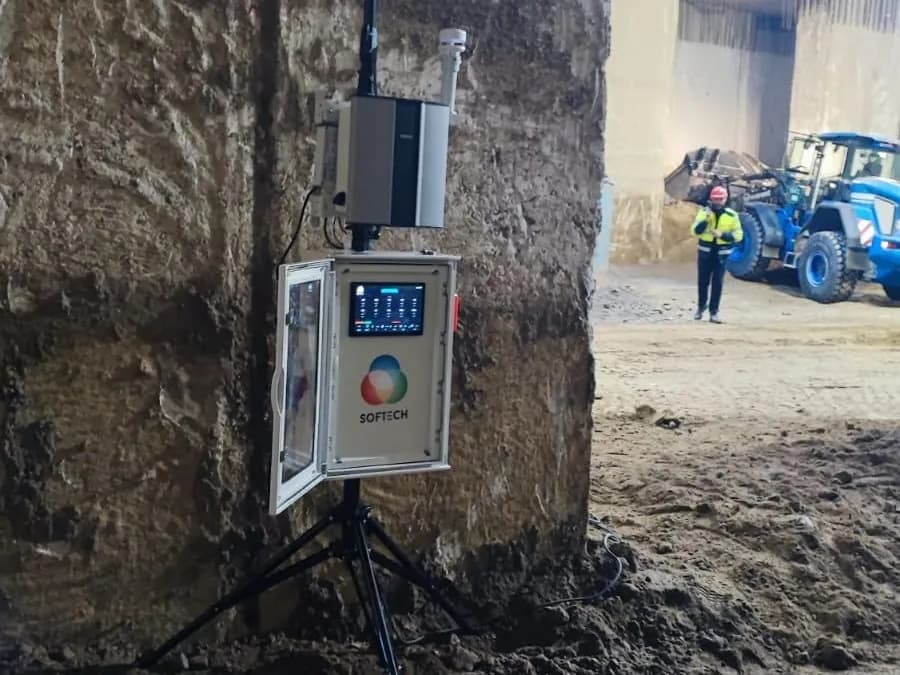
To meet these needs, two customised Oizom Polludrone monitors were deployed. Each unit was equipped with an externally integrated radon analyser and Class 1 noise sensor, then installed in protective cabinets alongside an industrial PC. Data is transmitted to the surface via a dedicated radio link and delivered through MQTT to both Envizom and Softech's management platform, where site-specific alert thresholds are configured.
02 | 15+ | 24/7 | 100m |
The Challenge
An active tunnel is close to a worst case for environmental instrumentation. Concentrations change quickly with the work cycle, the air is heavily loaded with dust and machinery exhaust, and the physical environment is confined, humid and constantly moving forward with the excavation.
The project brought together four specific difficulties:
- Radon monitoring integrated into the same station. Under Legislative Decree 101/2020, Italy's implementation of Directive 2013/59/Euratom, underground workplaces fall explicitly within the scope of radon exposure requirements, with a reference level of 300 Bq/m³ as an annual average concentration for workplaces. Inspections and audits at such sites are active and routine. The site needed radon measured alongside gases, dust and noise rather than as a separate, disconnected exercise, which meant integrating a third-party radon analyser as an external module into the monitoring station itself.
- No conventional connectivity at depth. Cellular coverage does not reach a depth of 100 metres below ground. Any monitoring solution had to deliver continuous data to the surface without relying on the network paths that ambient monitors normally depend on.
- Two-platform data delivery. The site operates on a management system developed by Softech. Data therefore had to reach both Envizom, where thresholds and alerting are configured, and the Softech platform, over a communication protocol that could be integrated cleanly at both ends rather than through fragile custom bridging.
- A monitoring point that moves. One station follows the excavation face as tunnelling advances, while the other is fixed at the station box under construction. The deployment had to accommodate a relocatable installation without compromising data continuity or the integrity of the enclosure.
The project required a monitoring approach that could:
- Measure gases, particulates, noise and radon from a single integrated station, at the point where workers are actually exposed.
- Accept an external third-party analyser as an integrated module rather than as a parallel, standalone instrument.
- Operate independently of conventional network availability and transmit reliably from
metres depth. - Integrate with an existing third-party management platform alongside Envizom, using a standard, well-supported protocol.
- Survive continuous dust, humidity and vibration in an operational excavation.
Why Oizom Devices
Two Custom-Configured Polludrone units were selected. The decision was driven less by the standard parameter list than by what could be added to it and what the data could be connected to.
Integration of external third-party modules. The decisive factor was that the radon analyser could be integrated as an external module into the Polludrone rather than deployed as a separate instrument with its own data path. Radon readings arrive in the same data stream, on the same timestamp, as the gas, dust and noise measurements from the same location, which is what makes them useful for interpretation rather than just for a file.
Network-agnostic communication. The device does not assume a particular connectivity path. This flexibility is what allowed the deployment to work at 100 metres depth, where the data route ultimately runs over a radio link rather than any conventional network.
MQTT and clean platform integration. Data is published over MQTT, a lightweight publish–subscribe protocol widely used in industrial telemetry. This made integration with the Softech management system straightforward, and allowed the same data to flow into Envizom in parallel, the single most important reason the configuration was chosen.
Multi-parameter measurement in one station. SO₂, NO₂, NO, CO, CO₂, O₂, H₂S, CH₄, the full particulate range and THP are measured together, with externally integrated Class 1 noise and radon added on top. In a confined excavation where every installation point is constrained, consolidating this into one enclosure matters more than it does above ground.
Precision and data reliability. The measurement quality required for safety-relevant and compliance-relevant reporting, sustained in conditions that are unusually hostile to sensors.
Envizom threshold alerting. Custom thresholds were configured in Envizom on the parameters that matter for worker safety, so that exceedances generate real-time notifications rather than surfacing in a later report.
The Deployment
Two customised Polludrone units were installed at nearly 100 metres below the surface. One is positioned inside the running tunnel and advances with the excavation face; the second is located at the metro station box under construction.
Each monitor is installed inside a protective cabinet together with an industrial PC that handles communication and runs the display software, so that live readings are visible at the installation point as well as on the platforms. The cabinet arrangement shields the instrumentation from the direct physical conditions of an active excavation while keeping the sampling point in the working atmosphere.
Connectivity is provided through a dedicated radio link using a master-slave antenna configuration, carrying data from the underground stations to the surface, where it enters the normal network path. From there, measurements are published over MQTT to Envizom and, in parallel, to the Softech management system. Alert thresholds configured in Envizom trigger real-time notification when concentrations approach or exceed the limits set for the site.
| Category | Parameters Measured |
| Particulate Matter | PM1 (very fine), PM2.5 (fine respirable), PM10 (inhalable), and PM100 |
| Gases | SO₂, NO₂, NO, CO, CO₂, O₂, H₂S, CH₄ |
| Radiation | Radon (xternal integrated analyser) |
| Noise | Class 1 (external integrated analyser) |
| Meteorological | Temperature, Humidity, Pressure |
Results
The stations have delivered reliable, continuous data from a depth of almost 100 metres since deployment, through the dust, humidity and vibration of active excavation, and across a communication chain that has no conventional network at its underground end.
The integration objective has held in practice. Radon is measured within the same station as the gas, dust and noise parameters and arrives in the same stream, giving the site a single, coherent picture of the underground atmosphere rather than a set of separate records that have to be reconciled after the fact. The parallel delivery into Envizom and the Softech management platform has operated as designed, with thresholds and alerting configured against the parameters that matter most for occupational exposure.
Key Outcomes
Worker Safety Visibility at the Excavation Face
- Continuous measurement of oxygen, combustible and toxic gases, particulates and noise at the point of exposure, inside the confined working environment.\
- One station follows the excavation as it advances, so measurement stays where the work is rather than at a fixed reference point behind it.
Radon Measured in Context, Not in Isolation
- A third-party radon analyser and noise sensor integrated as external modules into the monitoring station, delivering radon data on the same stream and timestamp as every other parameter.
- Supports the precautionary and documentary requirements that apply to underground workplaces under Italian radiation protection legislation, and the audits and investigations conducted at sites of this type.
Continuous Data From an Environment Without Connectivity
- A master–slave radio link carries data from nearly 100 metres depth to the surface, removing dependence on network coverage that does not exist underground.
- Uninterrupted transmission maintains the record required for both safety oversight and compliance reporting.
Dual-Platform Integration Without Custom Bridging
- MQTT delivery into both Envizom and the Softech management system, with an industrial PC in the cabinet providing local display at the installation point.
- Custom thresholds in Envizom generate real-time alerts, while the Softech platform retains the site's existing operational workflow.
Impact
Monitoring the atmosphere inside an active tunnel is a different problem from monitoring ambient air, and most of the difficulty is not in the measurement itself. It is in getting a complete picture: gases, dust, noise and radon together, out of a confined, moving, disconnected environment and into the systems where people actually act on it.
By combining a customised multi-parameter station, an integrated external radon analyser, Class 1 noise measurement, a radio link to the surface and MQTT delivery into both Envizom and Softech's platform, the project has turned the approximate depth of 100 metres of excavation into a continuously measured environment. For the workforce, conditions at the face are visible and alerted on rather than assumed. For the site, the compliance and audit record builds continuously as the tunnel advances.
About Oizom
Oizom’s innovative technology has redefined environmental monitoring by providing highly accurate and actionable data on various atmospheric parameters. Our offerings include weather stations, pollution tracking, and noise monitoring solutions. With seamless integration into smart city infrastructure, Oizom’s tools enhance decision-making, compliance monitoring, and community engagement towards a greener planet.


Do you have a specific requirement?
Our Product Range

.svg)


.webp&w=3840&q=75)


Think We Can Help You?