

Summary
Dust from construction and demolition activities contributes to poor air quality, affecting human health and the surrounding environment. Fine particles, such as silica, asbestos, wood dust, and PM2.5, can lead to respiratory issues, lung impairment, eye and skin irritation, and long-term complications, including silicosis, asbestosis, and lung cancer. Vulnerable groups, including construction workers, children, the elderly, and pregnant women, are at a higher risk. Preventive strategies, including the use of personal protective equipment (PPE), engineering controls, proper site management, and real-time dust monitoring, help reduce exposure and improve safety. Advanced solutions like Oizom’s Dustroid provide continuous monitoring, enabling proactive dust management, regulatory compliance, and healthier construction environments.
Is Construction Dust Harmful?
Critical for urban development and infrastructure expansion, the construction industry is also a significant contributor to environmental pollution, particularly through the production of construction dust. Although this small particulate matter may appear harmless, it poses several hazards to human health and the environment. We delve into the diverse world of construction dust in this detailed examination, analyzing its composition, health risks, and the critical safety precautions required to mitigate its impact.
As per the literature review, on August 4, 2022, a search of the ‘Web of Science Core Collection’ for the subject terms ‘construction dust OR construction particulate’ and ‘expos OR health was carried out, and there were 1558 matching articles. Construction dust was frequently mentioned in studies related to urban environments and the pollution from the construction industry. However, few studies have focused on the exposure and health impacts of construction dust compared to factory dust, road dust, and indoor dust. Therefore, there is a need to review the current state of research on construction dust exposure and the corresponding health impacts. This work will help guide future research on construction dust and assist in understanding how it harms humans.

As per the above paragraph, Construction dust can be a significant problem for many people. Airborne dust can cause a wide range of health and respiratory issues for construction workers, but it also raises concerns for people living near construction sites. Having a foundation of knowledge can benefit your health and safety, whether you work in construction or simply wish to understand the hazards and solutions for air quality. Let’s examine construction dust to understand its impact on humans and the environment.
What Is Construction Dust and How Is It Generated?
Construction dust is a pervasive byproduct of building activities that presents significant health risks. This dust comprises fine and coarse particles originating from various construction-related processes, including demolition, excavation, cutting, grinding, and material handling. These particles are often invisible to the naked eye, making them especially dangerous as people may inhale them without realizing it. The specific composition of this dust varies based on the activities and materials involved, but commonly includes:
- Silica: Found in rocks, sand, and concrete, silica is a natural mineral. Inhalation of silica dust can lead to silicosis, a debilitating lung disease characterized by respiratory impairment and, in severe cases, death.
- Asbestos: Historically prevalent in construction materials, asbestos is a fibrous mineral. Its inhalation can cause asbestosis, mesothelioma, and lung cancer, all severe respiratory illnesses.
- Wood Dust: A common irritant, wood dust can cause respiratory problems, including coughing and wheezing, as well as eye irritation. In the long term, it may also increase the risk of nasal cancer.
- Metal Dust: Arising from activities like cutting or grinding metals, metal dust can lead to respiratory issues, skin irritation, and conditions like metal fume fever.
The Hidden Dangers of Construction Dust on Air Quality and Health
Health Risks
Regular exposure to construction dust, especially among workers in the construction industry, can have terrible health consequences. The risks vary depending on the type of dust, concentration levels, and the duration of exposure.
Short-term Effects:
- Respiratory Irritation: Inhaling dust can irritate the respiratory tract, leading to coughing, wheezing, and shortness of breath.
- Eye Irritation: Dust particles can cause eye redness, itching, and watering.
- Skin Irritation: Exposure to construction dust can cause dryness, itching, and redness of the skin.
However, the more concerning are the long-term health risks:
- Silicosis: Caused by the inhalation of silica dust, it leads to lung scarring and severe respiratory impairment.
- Asbestosis: Inhalation of asbestos fibres can cause lung scarring and thickening.
- Lung Cancer: Certain components of construction dust are carcinogenic, thereby increasing the risk of lung cancer.
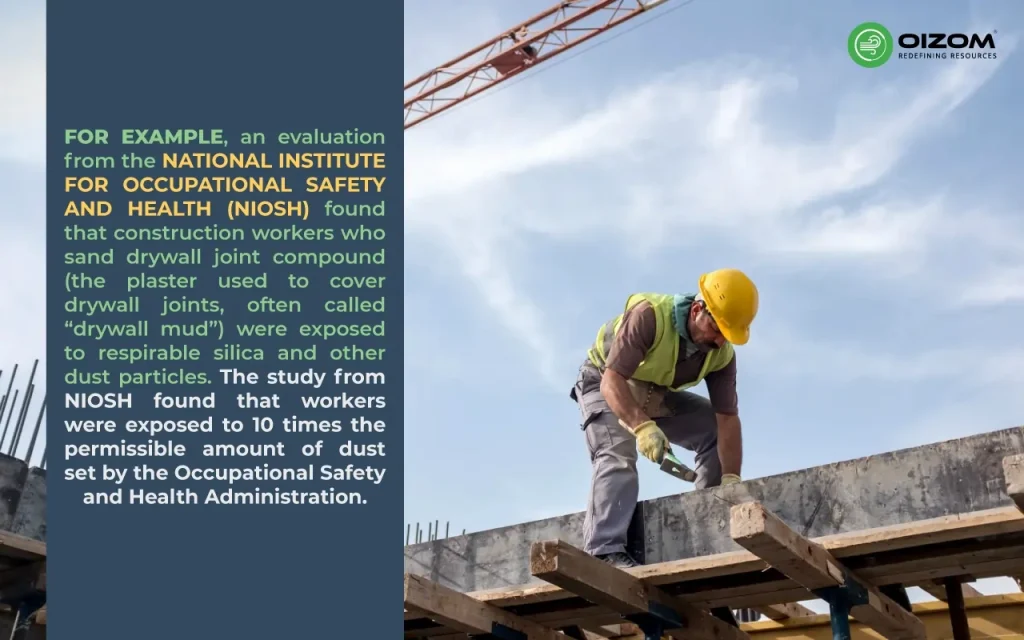
For example, an evaluation by the National Institute for Occupational Safety and Health (NIOSH) found that construction workers who sand drywall joint compound (the plaster used to cover drywall joints, often referred to as “drywall mud”) were exposed to respirable silica and other dust particles. The study from NIOSH found that workers were exposed to 10 times the permissible amount of dust set by the Occupational Safety and Health Administration.
Respiratory Issues
Respirable crystalline silica, a common mineral in many building materials such as stone and sand, poses a risk to construction workers (and surrounding residences). Working with these materials exposes workers to a small amount of silica particles, which are incredibly small and can be easily inhaled. (This means they are “respirable.”)
These materials can enter your lungs and produce silicosis, which is incurable and, in some cases, fatal. Lung cancer and other respiratory problems are also related to respirable crystalline silica. However, the sickness typically manifests in most cases after years of exposure to the materials.
Respirable crystalline silica is used in the manufacturing of glass, pottery, brick, and concrete, as well as asphalt roofing and porcelain, among many other products. The use of industrial sand can also release silica into the environment.
Eye and Skin Irritation
This hazard extends beyond the immediate discomfort, potentially leading to severe health complications.
Eye Irritation
The eyes are particularly vulnerable to irritation from construction dust. The particles can cause a range of symptoms, including:
- Redness: The eyes may become visibly reddened due to irritation.
- Itching: A persistent itchy sensation is a common reaction to dust particles.
- Watering: Increased tear production is a natural response to eye irritation.
- Burning Sensation: The eyes may feel a burning sensation, a symptom often exacerbated in dusty environments.
- Blurred Vision: Dust particles can interfere with vision, causing temporary blurriness.
- Sensitivity to Light: A heightened sensitivity to light can occur due to irritation.
These symptoms can not only be uncomfortable but can also be hazardous, particularly for workers who rely on clear vision for safety. It’s crucial to seek medical attention if these symptoms persist, as they can indicate more serious underlying conditions.
Skin Irritation
Similarly, the skin can react adversely to prolonged exposure to construction dust:
- Dryness: The skin may become dry, resulting in a loss of moisture.
- Itching: An itching sensation is a common symptom of skin irritation.
- Redness: Affected areas may appear reddened.
- Rash: In some cases, a visible rash may develop.
- Burning Sensation: The skin may feel as though it is burning, especially after prolonged exposure.
These symptoms can be alleviated by thoroughly washing the affected areas with soap and water and avoiding further exposure to dust.
Long-Term Impact
Long-term exposure to construction dust can lead to several serious health issues:
- Silicosis: This progressive lung disease, caused by inhaling silica dust, can lead to symptoms like coughing, shortness of breath, and chest pain. Silicosis can be fatal and is of particular concern in industries where silica dust is prevalent.
- Asbestosis: As a result of asbestos inhalation, asbestosis is a lung disease marked by similar symptoms to silicosis. It can lead to mesothelioma, a severe form of lung cancer.
- Lung Cancer: The carcinogenic components in construction dust can significantly increase the risk of lung cancer, a leading cause of cancer-related deaths.
Beyond these specific diseases, long-term exposure to construction dust can contribute to:
- Reduced Lung Function: Prolonged exposure can impair lung function, even in those without pre-existing respiratory conditions.
- Chronic Obstructive Pulmonary Disease (COPD): This group of lung diseases can be exacerbated or triggered by exposure to dust.
- Heart Disease: A correlation has been observed between exposure to construction dust and an increased risk of heart disease.
Who Is Most at Risk from Construction Dust Exposure?
The health hazards of construction dust are a significant concern, particularly for certain groups more vulnerable to its adverse effects. Due to various physiological and environmental factors, these populations face a heightened risk of experiencing the harmful impact of dust exposure.
Construction Workers
At the frontline are construction workers who, due to prolonged and repeated exposure, are at an increased risk of developing respiratory illnesses and long-term health complications. Their daily proximity to dust-generating activities makes them particularly susceptible.
Children
Children are especially vulnerable due to their developing respiratory systems. They are more prone to the harmful effects of dust inhalation because their immune systems are still maturing, making them more susceptible to respiratory infections. Moreover, children have a faster breathing rate than adults, leading to a higher intake of dust particles per breath. This risk can bring attention to children living or playing near construction sites.
Elderly Individuals
Older adults often have weakened respiratory systems, which makes them more susceptible to the ill effects of construction dust. Many also have pre-existing health conditions, such as asthma or heart disease, which can be exacerbated by exposure to dust particles.
People with Respiratory Conditions
Individuals with pre-existing respiratory conditions, including asthma, chronic obstructive pulmonary disease (COPD), and emphysema, are more likely to experience worsened symptoms and adverse health effects from construction dust exposure.
Pregnant Women
Pregnant women are another group at increased risk. Exposure to construction dust can lead to complications such as premature birth and low birth weight, posing a threat to both the mother and the unborn child.
Protective Measures
To safeguard these vulnerable groups, it is essential to implement protective measures. Providing construction workers with personal protective equipment (PPE), such as respirators and masks, is crucial. Additionally, educating children and families about the risks and ways to minimise exposure is essential. Efforts must also be made to reduce dust emissions from construction sites.
How Oizom’s Dust Monitoring System Enhances Construction Site Safety?
Construction dust not only affects on-site workers; it also affects nearby neighborhoods, schools, and public spaces, concerning the communities and the environment. This is where Oizom’s advanced monitoring solutions make a real difference.
With products like Dustroid, Oizom enables continuous and real-time monitoring of particulate matter (PM1, PM2.5, PM10, PM100) coming from construction sites. The data is displayed via the Envizom software platform, which helps contractors and authorities track pollution levels, set alerts for threshold breaches, and take timely actions.
Beyond regulatory compliance, this helps in building trust with local communities. By combining robust hardware with user-friendly software, Oizom enables construction projects to maintain safety standards while protecting public health and the surrounding environment.
Practical Measures to Mitigate Construction Dust Pollution with Data Insights
Safety Measures
Effective measures are crucial to minimise dust generation, suppress its dispersion, and protect workers and nearby communities from harmful effects.
Engineering Controls
- Water Suppression: A key tactic in dust control is sprinkling water on dusty surfaces, excavation sites, and during material handling.
- Encapsulation: Enclosing dust-generating activities within temporary structures helps prevent dust from dispersing.
- Local Exhaust Ventilation (LEV): LEV systems include hoods, ducts, and fans that draw and filter dust-loaded air, releasing cleaner air into the environment.
- Vacuuming: Regularly vacuuming areas prone to dust accumulation is a simple yet effective way to control dust.
Personal Protective Equipment (PPE)
- Respirators: Essential for workers exposed to high dust concentrations, respirators filter particles from inhaled air, protecting the respiratory system.
- Dust Masks: Offering essential protection, dust masks cover the nose and mouth to prevent inhaling larger dust particles.
- Eye Protection: Safety goggles or glasses are essential for shielding the eyes from dust particles, which can cause irritation or scratches.
Site Management Practices
- Covering Material Stockpiles: Using tarps or plastic sheeting to cover stockpiles of materials, such as sand and gravel, prevents dust generation from wind action.
- Prompt Cleanup of Spills: Cleaning up spills of dusty materials quickly can prevent dust from becoming airborne.
- Maintaining Proper Ventilation: Adequate ventilation in work areas and enclosed spaces helps dilute and remove dust particles.
- Dust Monitoring: Regular monitoring of dust levels helps assess the effectiveness of control measures and identify areas that require additional measures.
Industry Awareness
- Training Programs: Regular training for workers on dust hazard identification, control measures, and the importance of PPE can improve understanding and compliance.
- Community Outreach: Engaging nearby communities to educate them about dust exposure risks and protective measures can build cooperation and minimise concerns.
- Industry Guidelines and Best Practices: Clear guidelines and best practices for dust control ensure consistent and effective project implementation.
- Public Awareness Campaigns: These campaigns aim to raise general awareness about the health and environmental risks associated with construction dust, encouraging individuals to take protective measures and support policies that promote effective dust control.
Conclusion
The presence of construction dust in building and demolition sites presents a formidable challenge with far-reaching health and environmental implications. Its presence poses a significant concern, especially for susceptible groups such as construction workers, children, and the elderly. Understanding and addressing the complexities of construction dust is necessary and a responsibility that extends to all stakeholders involved in construction projects.
We can collectively mitigate the health and environmental risks of construction dust by adopting a holistic approach that combines innovative engineering solutions, personal protection strategies, efficient site management, and widespread awareness. This collective effort will lead to safer construction environments and contribute to the overall well-being of workers and communities, ensuring a healthier and more sustainable future for all.
FAQs
Silica, asbestos, wood dust, and fine particulate matter (PM2.5).
Yes, airborne dust can travel and affect residents, especially children.
Using real-time dust monitoring systems, such as Oizom’s Dustroid, ensures accurate measurement and compliance.