
Summary
Black carbon generated during industrial operations in automotive manufacturing plants accumulates within facilities, causing operational challenges and contributing to broader environmental impacts. Routine emissions testing and measurement protocols cannot capture real-time fluctuations or localized particulate buildup on the shop floor, thereby reducing their usefulness in a fast-paced manufacturing environment. Real-time monitoring and air quality data analysis provide greater visibility into emissions patterns, enabling accurate, targeted control options, enhanced ventilation, and proactive, environmentally responsible decision-making aligned with current compliance and sustainability objectives.
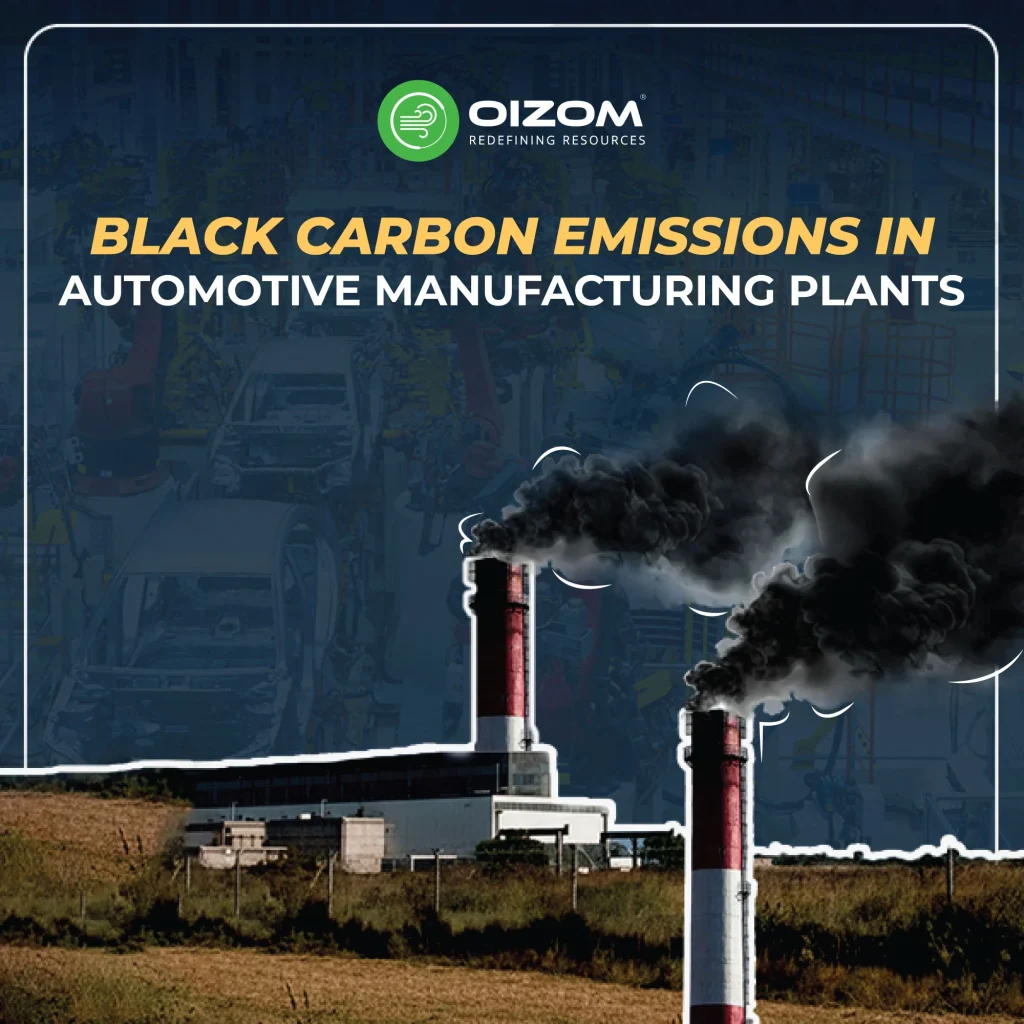
Black Carbon Emissions in Automotive Manufacturing Plants
Black carbon emissions from automotive manufacturing plants are an overlooked component of industrial air pollution, primarily generated by combustion, thermal processes, and continuous production. Due to its fine particulate nature, black carbon can accumulate within facility zones and gradually extend its impact beyond plant boundaries. As manufacturing environments become more complex and sustainability expectations rise, identifying emission sources, understanding accumulation behavior, and implementing data-driven control strategies are becoming essential for effective environmental and operational management.
What Causes Black Carbon Emissions in Automotive Plants?
Though not a major emission, black carbon is generated during incomplete combustion in thermal and fuel-based processes within an automotive facility.
Combustion-based Equipment:
Black carbon emissions can result from incomplete combustion of fuels used in heating systems, such as boilers, furnaces, and backup diesel generators.
Welding and Thermal Processes:
Black carbon may be emitted during regular operations as soot particles, byproducts of incomplete combustion during continuous welding, laser cutting, and thermal processes used to fabricate parts of mass production.
Paint Shops and Curing Ovens:
Curing ovens used for coating vehicles, as well as solvent-based coatings in the paint shop, generate particulate emissions.
Material Handling Vehicles:
Black carbon emissions from diesel-powered forklifts, internal transport vehicles, and gas-testing engines for indoor use or subfloors contribute to localized black carbon levels.
Engine Testing and Exhaust Emissions:
In engine testing facilities, black carbon emissions are generated during load simulations and extended testing cycles.
Although individual emission sources may appear controlled, growing emissions within a facility may cause persistent indoor black carbon concentrations.
Black Carbon Accumulation in Manufacturing Facilities
Black carbon accumulates in areas with limited air movement and continual emissions or deposition sites. In automotive plants, the accumulation can be observed most commonly within the following areas:
Welding Bays and Fabrication Areas:
These areas continuously generate particles. Without sufficient localized exhaust ventilation, the soot generated by welding will remain suspended in the facility and gradually deposit on nearby surfaces and equipment.
Paint Booths and Curing Sections:
Enclosed environments combined with thermal curing processes create microenvironments where the air circulates before being removed by collection devices or filtering systems.
Engine Testing Zones and Exhaust Pathways:
Frequently using semi-enclosed engine testing cells may cause localized buildup of combustion by-products until the exhaust systems are properly optimized.
Storage and Enclosed Workshops:
Closed assembly and warehouse areas with negligible air exchange are passive accumulation zones for black carbon, which will gradually settle on surfaces or objects within the area over time.
Ceilings, Ducts, and Ventilation Surfaces:
Particulate buildup in HVAC ducts, filters, and upper building structural surfaces occurs as a result of an extended operational period during which soot particles have had prolonged exposure to work-area air.
How Black Carbon Impacts Worker Health & Plant Operations
Black carbon is an airborne fine particulate matter component of PM₂.₅. It can remain suspended in the air for extended periods, increasing the likelihood that workers are exposed to inhalation hazards in high-emission zones.
From a health perspective, long-term exposure to fine particulate matter and combustion-derived particles is associated with respiratory irritation, reduced lung function, and increased occupational health risks among workers in high-exposure roles such as welding and engine testing. Long-term exposure in a closed environment can lead to cumulative degradation of indoor air quality, which may not be immediately visible but can affect the wellness and comfort of the workforce.
From an operational perspective, black carbon deposition on machinery, sensors, and other production equipment creates additional challenges to successful operations. Fine soot particles that settle on equipment, sensors, and production machines create calibration issues, increase the frequency of required maintenance, and accelerate filter clogging in ventilation and air-handling systems.
Consequently, using platforms that provide structured IAQ visibility will enable a facility to identify particle trends, determine the locations of high-traffic areas or pollution sources, and use data to make operational decisions without disrupting business processes.
Environmental Impact Beyond the Factory Gates
As a result, black carbon particles can leave the immediate area around the industrial plant where they are produced, thereby contributing to both site-specific and regional air pollution.
Once black carbon is released into the atmosphere, it becomes part of the overall ambient particulate load. As such, it affects air quality and climate-related outcomes. Black carbon, a component of the PM₂.₅ group of pollutants, can absorb sunlight and thereby warm the atmosphere, making it not only a local pollutant but also a short-lived climate pollutant (SLCP).
In industrial regions located near transport corridors, emissions from manufacturing and vehicle traffic can combine and influence ambient pollution levels along surrounding road networks. Continuous monitoring solutions, like Air Quality Monitoring for Roadside and Highways, help track particulate levels in these high-traffic areas and support better environmental management.
In addition, facilities located near residential or mixed-use areas may inadvertently have elevated exposure risks due to a lack of ongoing emissions monitoring and management. These elevated exposure risks can contribute to a larger environmental footprint over time, extending beyond direct production activities. This illustrates the need for consistent visibility into, and thereby active management of, emissions generated by every manufacturing facility, rather than isolated internal assessments.
The growing interest in how operational emissions interact with surrounding conditions will continue to shape future stakeholder decision-making.
Why Traditional Emission Checks Are No Longer Enough
Emission assessment techniques commonly used in manufacturing plants have relied on scheduled inspections, manual audits, and periodic stack testing for many years.
Automotive manufacturing operations involve numerous production processes, variable production loads, and multiple operating emission source points within a manufacturing facility. Therefore, spot-check measurements or infrequent testing cannot capture the amount of black carbon emitted during short-term spikes caused by equipment cycling, fuel variability in machinery, or shifts in process intensity.
Additionally, traditional emission checks focus exclusively on external emissions at a stack rather than on the accumulation of fine particulate matter (black carbon) within operational areas and on exposure in microenvironments. Because black carbon is a fine particulate, it typically accumulates in operational areas before dispersing or settling, making it difficult to accurately measure through periodic external stack sampling.
Key gaps in traditional emission checks include:
- Limited temporal coverage that misses real-time emission fluctuations
- Lack of spatial granularity across different production zones
- Delayed data interpretation and reactive decision-making
- Minimal integration with operational workflows and process analytics
Facilities require continuous, high-resolution data to identify patterns and root causes and proactively manage their particulate emissions, rather than responding to exceedances after the fact.
How Real-Time Monitoring Helps Control Black Carbon Emissions
Real-time monitoring collects continuous records of particulate concentrations, allowing the identification of trends rather than evaluating only point-in-time measurements.
The collection of high-frequency environmental data enables manufacturers to link specific processes (e.g., welding cycles, furnace operations) to spikes in particulate emissions. Recognizing the relationship between processes and particulate emissions enables targeted operational adjustments without hindering production.
An important benefit of using real-time monitoring is improved spatial awareness of particulate emissions. By monitoring particulate levels at multiple locations throughout a facility (manufacturing areas, paint shops, test areas, ventilation outlets), a facility can identify areas where particulate matter accumulates and verify the effectiveness of its existing ventilation/filtration systems in controlling ambient particulate matter. Over time, trends can help distinguish typical background particulate matter levels from abnormal emissions.
This supports preventive maintenance, optimized airflow management, and improved emission control strategies while maintaining operational efficiency.
Ultimately, real-time monitoring shifts emission management from reactive compliance to a strategic improvement process aligned with evolving sustainability goals.
Using Air Quality Data to Reduce Emissions in Practice
Continuous air quality data can provide analytical insight into operational processes and environmental controls.
Data trends help identify time periods and sources of high emissions within a facility, enabling businesses to improve production scheduling, combustion efficiency, and ventilation system performance. For example, if air quality data shows a pattern of increased particulate emissions at the same time for each production shift or specific piece of equipment, this allows businesses to take targeted actions such as recalibrating equipment or upgrading filters.
Data from air quality measurements can also help predict maintenance needs. A gradual rise in particulate concentration within an enclosed production area may suggest that filters are not working efficiently, that there is an imbalance in the airflow through the buildings, or that improper combustion has occurred in a thermal set of equipment. Catching these trends early allows businesses to mitigate surges in overall emissions and reduce long-term maintenance costs.
Practical applications of air quality data in emission reduction include:
- Optimizing ventilation and air circulation systems based on particulate trends
- Enhancing filtration efficiency in high-emission zones
- Improving fuel combustion performance in boilers and furnaces
- Adjusting operational workflows to minimize peak particulate generation
- Supporting internal sustainability reporting and ESG documentation
These insights can now be shared across operational, EHS, and management teams through integrated, centralized environmental data platforms, enabling coordinated decision-making.
The Future of Emission Control in Automotive Manufacturing
Automotive manufacturing is transitioning from disconnected compliance strategies for emissions control to using an integrated, data-centric environmental management model.
In the future, smart environmental monitoring will likely be a core element of manufacturing infrastructure, working with automated and digitally manufactured systems. This integration will support continuous evaluation of production-stage emissions, enabling faster identification of inefficient production processes and more accurate control of particulate sources.
Emerging trends shaping the future of emission control include:
- Integration of environmental monitoring with industrial IoT ecosystems
- Predictive analytics for emission forecasting and risk prevention
- Automated alerts for abnormal particulate spikes
- Enhanced indoor air quality management as part of worker safety initiatives
- Stronger alignment with ESG, sustainability, and regulatory transparency goals
As regulatory agencies and sustainability frameworks increasingly focus on direct combustion emissions and indoor air quality, automotive manufacturers will have to demonstrate ongoing environmental accountability. Continuous monitoring, transparent reporting, and the proactive use of technology to reduce their emissions will increasingly define excellence in manufacturing operations today.
Conclusion
Managing black carbon emissions in automotive manufacturing is transitioning from periodic compliance checks to continuous, data-centric emission control. Emissions are generated by numerous operational sources and distributed throughout a plant; therefore, real-time visibility into emission levels and structured air quality data are essential for reducing environmental impact and improving operational management. A proactive approach to emission monitoring and intelligence will be integral to enabling cleaner, safer, and more sustainable manufacturing practices in the future.
FAQs
High-temperature combustion processes such as furnaces, boilers, welding, engine testing, and diesel-powered material handling typically produce the most black carbon in automotive plants.
Black carbon is commonly linked with PM2.5, soot, NOx, CO, and other combustion-derived particulate pollutants.
Yes, black carbon levels can fluctuate significantly across production shifts due to varying equipment usage, workload intensity, and operational cycles.
Visible soot deposition, frequent filter clogging, elevated PM2.5 readings, and persistent haze or poor indoor air clarity often indicate high black carbon levels inside plants.