
Summary
The level of carbon monoxide in a mining operation poses a serious risk because various combustion-based equipment is used within the mining industry. To effectively manage CO safely, companies should understand permissible exposure limits, when CO levels can pose a danger, and the factors that may increase the likelihood of CO exposure (such as inadequate ventilation and CO emissions from diesel engines). Therefore, companies should develop effective CO safety programs that include well-defined responses to CO incidents, continuous monitoring of the atmosphere for elevated CO levels, and proactive alarm thresholds. Best practices involve installing CO sensors and setting appropriate alarm thresholds. Employing a real-time approach to monitoring CO will protect miners, ensure compliance, and maintain a safe mining environment.
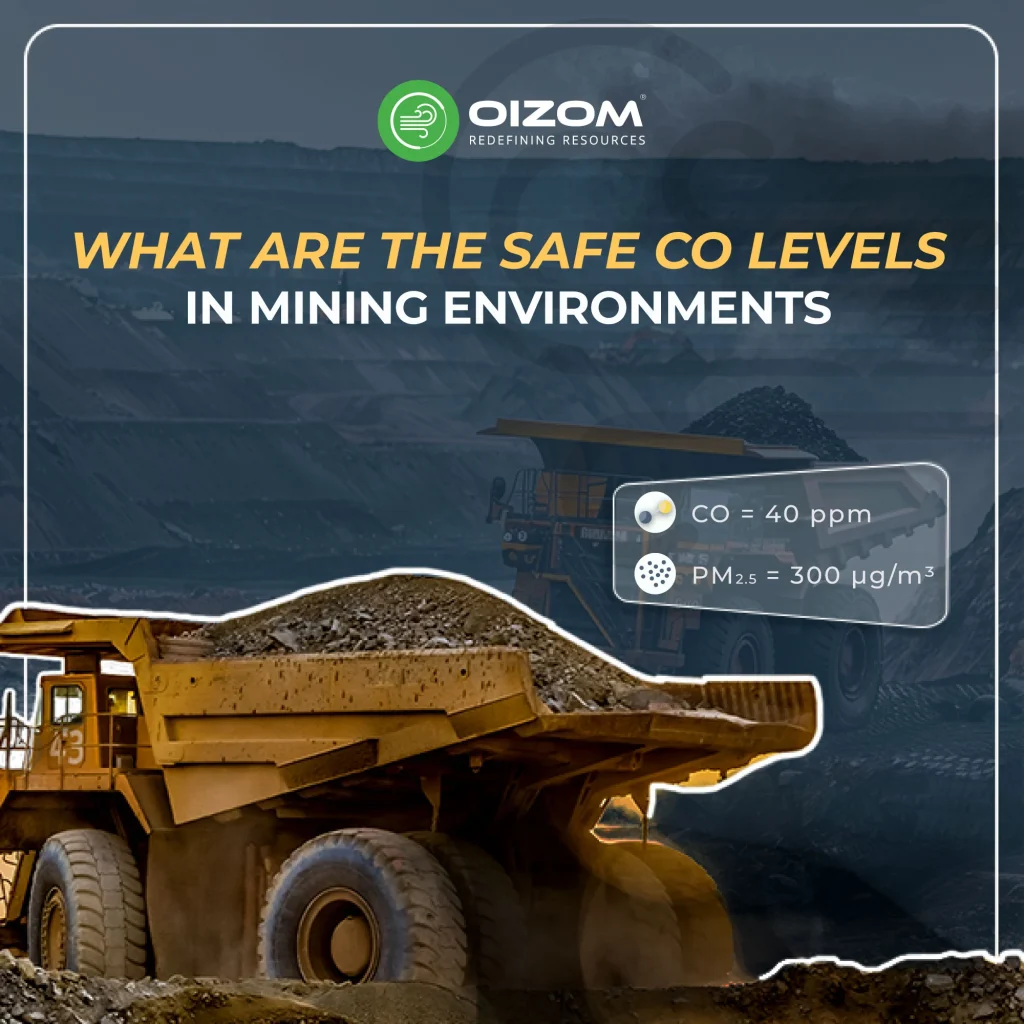
What Are The Safe CO Levels In Mining Environments
Carbon monoxide is one of the most dangerous yet overlooked hazards in mining environments, posing serious health risks to miners. From diesel-powered machinery and blasting operations to ventilation challenges, both underground and surface mines regularly face CO-related risks. Understanding safe limits, dangerous thresholds, and risk management is crucial for safety. This blog explains why carbon monoxide poses a serious threat in mining, outlines permissible exposure limits, identifies key risk factors, and explores how proper monitoring and response strategies can prevent CO-related incidents.
Why Carbon Monoxide Is a Serious Risk in Mining
One of the most significant hazards in mine environments, particularly underground mining sites, is the increased risk of carbon monoxide (CO) poisoning generated by other machines (e.g., diesel engines, blasting explosives).
The risk of CO exposure exists in both underground and open-pit mines. Due to the limited airflow, even small amounts of diesel engine emissions can emit CO, though at lower levels than gasoline engines; confined spaces increase the risk. But even in enclosed or low-airflow areas, CO pockets can still form.
The health effects of CO are dire, and the documented risks of CO exposure are well established. CO binds to hemoglobin about 200-250 times more strongly than O2 does. The U.S. Mine Safety and Health Administration (MSHA) and NIOSH recognize that CO levels above 50 ppm averaged over 8 hours are potentially hazardous; however, short-term exposure to higher concentrations (i.e., 400 ppm for 3-4 hours) can be fatal. The health symptoms resulting from CO exposure may include, but are not limited to, headaches, unconsciousness, and death at extremely high levels.
What Is Considered a Safe CO Level in Mining?
Identifying safe carbon monoxide (CO) levels in the mining industry is of utmost importance to ensure workers’ health and safety. Regulatory agencies such as MSHA have established an 8-hour Permissible Exposure Limit (PEL) of 50 parts per million (ppm) and a Short-Term Exposure Limit of 200 ppm, with no more than 15 minutes of exposure. Both the PEL and STEL were created to protect against acute and chronic effects of CO exposure.
As a result of current variations in ventilation, fuel sources, and other features unique to a given mine, many mining companies will take a more conservative approach to setting an operational safe CO level. These operational targets (25–30 ppm) offer an additional safety margin against ventilation failures.
When a mine experiences a short-term spike in CO levels above 50 ppm, the mine operator takes immediate action by adjusting ventilation, instituting an evacuation plan, or placing the equipment in a shutdown condition. Incorporating regulatory guidelines and operational goals provides a safety net for all employees.
Permissible CO Exposure Limits
| Standard Source | 8-hour Exposure Limit (ppm) | Short-term / Ceiling Limit (ppm) | Notes |
|---|---|---|---|
| MSHA (US) | 50 | 200 (15 min) | Mandatory for underground mines |
| NIOSH (US) | 35 | 200 (15 min) | Recommended exposure limits |
| OSHA (US) | 50 | 400 (1-hr ceiling) | Legal workplace limit |
| EU / Germany | 20–35 | 200 (15 min) | Varies slightly by member state |
| India (DGMS) | 25 | No fixed national STEL | Guidelines for Indian mines |
When Does Carbon Monoxide Become Dangerous for Miners?
When Carbon Monoxide (CO) levels become high in the mine working environment – even for short durations- it can become a health hazard. Although many regulations dictate that 50 parts per million (ppm) of CO would be a permissible level for an eight-hour day of mining operations, CO levels may adversely affect miners even if they are below these levels if the miners are exposed to CO for extended periods of time and/or if ventilation is poor.
CO exposure is more dangerous above 200 ppm; miners may become confused and experience coordination problems. Many incidents illustrate the dangers of excessive CO exposure. One such case happened on July 29, 2010, in Pennsylvania, USA, at a diesel-powered mine, which hospitalised several workers for CO poisoning after CO levels had developed from poor ventilation. Similar incidents have been reported from coal and iron ore mines in India, where crew members nearly succumbed to excessive CO levels while operating diesel engines in confined areas due to a lack of fresh air exchange.
Even frequent exposure to moderate CO levels can cause long-term neurological and cardiovascular effects. Continuous monitoring, proper ventilation, and strict compliance with both regulatory and operational limits are therefore essential to prevent CO from becoming a silent but deadly threat in mining operations.
Factors That Increase CO Risk in Mining Operations
Carbon monoxide (CO) poisoning can pose a danger to workers in underground mines due to the varied operational and environmental conditions that create a high likelihood of CO buildup. These factors can be used to develop safety procedures for mining operations; however, understanding them is essential before designing safety systems.
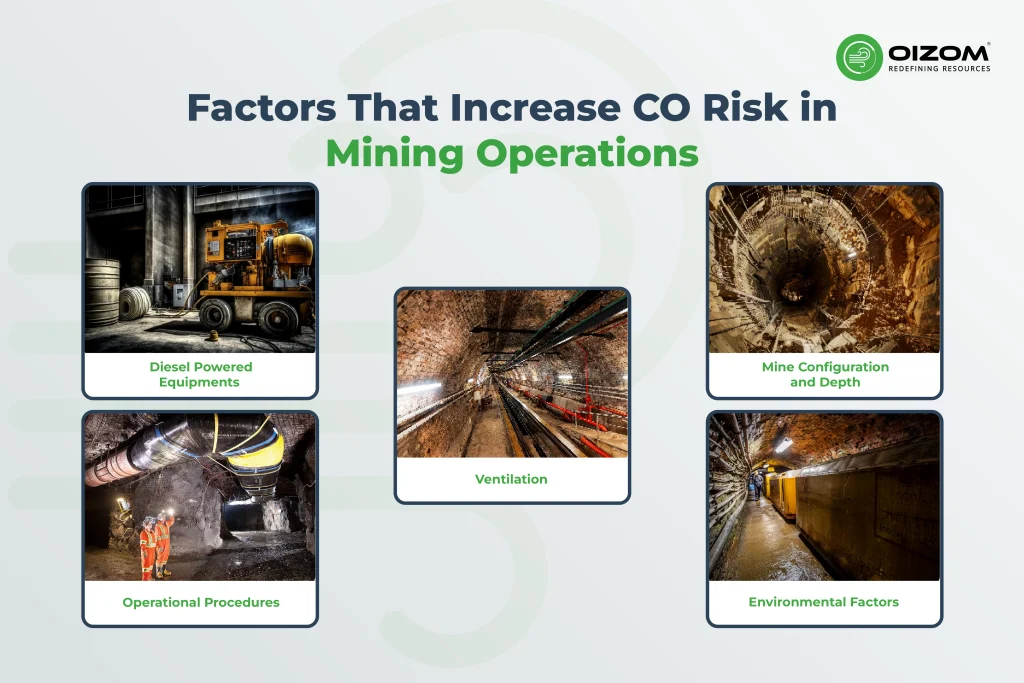
1. Equipment Powered by Diesel and Explosive Use
All equipment that uses diesel fuel (i.e., diesel generators, diesel engines, etc.), and all blasting operations generate CO through the combustion of diesel fuel. Thus, the number of diesel-powered machines operating at any one time increases the potential for CO accumulation, particularly in confined areas with limited air exchange.
2. Ventilation
The design of underground mines consists of passages/tunnels that restrict air exchange, creating a much greater vulnerability to CO poisoning. Poorly designed or maintained ventilation systems in underground mines can increase the potential for rapid CO accumulation.
3. Mine Configuration and Depth
Long, winding tunnels and deep shafts are both environments with minimal natural air movement (i.e., fresh air).
4. Environmental Factors
Environmental factors, including: Temperature Inversion (i.e., a warm air layer forms above a cooler air layer); Humidity (high); and Wind Speed (low), may cause pockets of CO to build up in surface mining operations.
5. Operational Procedures
Continuous use of machines without monitoring their emissions, lack of routine maintenance, insufficiently scheduled blasting, and/or engine operations could further increase the risk of CO poisoning.
By recognizing these contributing factors, mining operations can prioritize ventilation improvements, equipment maintenance, and proactive monitoring to reduce the likelihood of dangerous CO exposure.
How Mining Sites Can Monitor Carbon Monoxide Safely
In mining operations, effective monitoring of carbon monoxide is essential to protect miners and comply with regulations. To provide a safe working environment, mining operations can combine continuous and periodic monitoring.
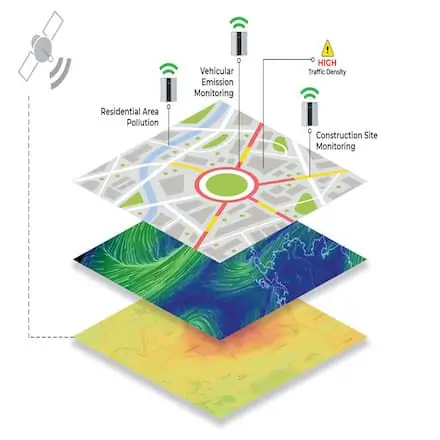
Mining sites often use fixed CO gas monitors for worker safety, while larger outdoor areas or surface mining zones may use systems like CAAQMS to track broader ambient air conditions. Continuous monitoring systems are most useful in high-risk work areas, such as underground tunnels, engine rooms, and blasting areas. Periodic monitoring can be conducted using handheld detectors or through manual sampling.
For practical purposes, continuous carbon monoxide monitoring should be conducted near potential carbon monoxide emission sources, work areas, and at points with inadequate ventilation. Calibration and maintenance of continuous monitoring equipment must be performed regularly to ensure reliability. Additionally, alarm thresholds for continuous monitoring systems should be set below the regulatory threshold.
By combining continuous monitoring with periodic checks and smart sensor placement, mining sites can maintain effective CO control, protect workers, and ensure compliance, all while optimizing operational efficiency.
What To Do If CO Levels Exceed Safe Limits
When the concentration of carbon monoxide (CO) within a minesite exceeds established permissible levels, prompt action is necessary. Initially, all persons in the area must be evacuated while information is gathered on the CO level, hazards, and the need to prevent further exposure.
Once evacuation is complete, steps should be taken to identify and control CO sources. The mine’s ventilation systems should be intensified to dilute the concentration of accumulated CO gas. Data from CO monitoring systems should be continuously monitored to ensure CO concentrations are declining. Operations should only be resumed once CO concentrations are consistently well below established permitted and operational levels.
Corrective actions may include conducting a root cause analysis, inspecting equipment for evidence of incomplete combustion, evaluating the ventilation system’s effectiveness, and reviewing alarm setpoints.
Why Continuous CO Monitoring Matters More Than Periodic Checks
By its nature, periodic CO monitoring provides only a snapshot of air quality over a given interval. Sudden spikes in the levels of CO can occur with the use of equipment, blasting, and failure of ventilation systems.
Continuous CO monitoring allows for immediate identification when CO concentrations begin to rise. Rather than having to react after the fact, such as after a worker has been exposed to high levels of CO, mining operations will be able to take action to address the problem before it creates a dangerous situation for the workforce, either by making changes to ventilation systems, shutting off equipment, and/or evacuating areas that may be affected by CO exposure.
Commercialized monitoring systems, such as those produced by Oizom, can automatically alert to issues and centrally store data, giving mining companies a tool that helps create a safe work environment, comply with regulations, and provide more data for decision-making.
Conclusion
A proactive rather than reactive approach is required to manage carbon monoxide hazards in mining. It is vital to promptly detect carbon monoxide in the workplace. While exposure limits and safety procedures have been established, they do not provide the same level of visibility as ongoing monitoring. Mining companies that use solutions that enable ongoing monitoring of carbon monoxide concentrations can respond to hazards more quickly, maintain regulatory compliance, and prevent their workers from being exposed to the dangers associated with carbon monoxide. Thus, regular monitoring of carbon monoxide is an essential component of a safe modern mining work environment.
FAQs
CO exposure becomes dangerous when levels exceed 50 ppm over 8 hours or rise sharply above 200 ppm, which can cause severe health effects.
Excess CO can cause symptoms ranging from headaches and dizziness to unconsciousness, requiring immediate evacuation and corrective action.
No, CO limits vary by country and regulations, but most sites adopt stricter operational limits for added safety.
CO is monitored using continuous monitoring systems and periodic handheld detectors to detect and respond to rising concentrations.