
Summary
Air quality monitors measure pollutants as air is drawn from the environment, and particulate matter and gas analysis are conducted with specially designed instrumentation based upon physical and chemical principles. When particulate and gaseous data are obtained from the instrumentation, the results are stored in a central system, quality-checked, and converted into a form that can be visualized, like an AQI or a trend graph. Monitoring can be done either continuously or manually; however, continuous monitoring provides near-real-time data, which is particularly important in urban and industrial environments. Accurate and meaningful air quality measurements depend on proper monitor placement, clear monitoring objectives, and reliable infrastructure.
How Air Quality Monitoring Stations Work: From Sensors to AQI
Monitoring air quality is very important to understand the air we breathe every day. Air quality monitoring stations continuously measure pollutants that can affect your health. Whether you are in a busy city or near a large industrial area, these monitors provide accurate data on pollution levels. While the monitors themselves may look very simple, they are actually complex systems that sample the air, analyse pollutant concentrations using scientific instruments, and convert that information into useful data. Understanding how air quality monitoring stations work makes it easier to grasp how air quality information is generated and shared, which is critical to protecting our communities from the negative health impacts of air pollution.
Why Air Quality Monitoring Stations Exist
The purpose of an air quality monitoring station is to provide reliable, real-time environmental data. This data enables researchers to better understand the sources of air pollution, trends in its occurrence, and the long-term effects of air pollution on both ecosystems and human health.
Government, industry, and other institutions that invest in these monitoring systems depend on air quality monitoring stations not only to ensure compliance with environmental regulations but also to provide reliable information for decision-making on issues such as urban planning, industrial activity, and public safety. The absence of air quality monitoring would prevent early detection of air pollution, hinder accurate trend tracking, and hinder planning to prevent problems before they become significant.
Core Components of an Air Quality Monitoring Station
Air Quality Monitoring Stations combine the hardware required to measure, record, and transmit air pollution data accurately. Each element of a monitoring station has a specific job and works sequentially, from capturing airborne material (where the sensors are located) to turning the measurements into usable information.
Sensors: Where Measurement Actually Happens
Sensors are the heart of an air quality monitoring station because they measure pollutant concentrations in the atmosphere, like particulate matter, non-particulate gases, and other factors such as temperature and humidity. The type of sensor used will vary by application. Monitoring stations may use a range of measurement technologies, including optical, infrared, and electrochemical methods, while metal-oxide sensors are more commonly found in lower-cost or indicative monitoring systems rather than regulatory-grade stations. They will choose the best sensor for each pollutant type.
Sampling System: How Air Reaches the Sensors
The sampling system is designed to supply ambient air to the sensors in a controlled, representative manner. Properly configuring inlets and filtering devices will help prevent contamination and ensure accurate sampling data.
Data Logger & Controller
The Data Logger & Controller serves as the station’s headquarters, collecting signals from its attached sensors, converting them into digital values, calibrating those values using calibration factors, and validating the data. The data stored is time-stamped, organized, and made available for further analysis.
Communication Module
The Communications Module serves as the mechanism for transferring data collected by the monitoring station to remote storage (servers or dashboards). The Communications Module uses a variety of means to obtain this communication, including GSM/4G/5G cellular networks, Wi-Fi, Ethernet, LoRa, or satellite communications.
How Air Quality Monitoring Stations Measure Pollutants
With high accuracy, air quality monitoring stations have been established to analyze the air we breathe. The measurement process begins when air is continuously pulled into the station through a sampling inlet. Using pumps to draw air through tubing, the sample air is passed through inlets and size-selective components to remove large debris, and may be conditioned where appropriate, taking care to avoid losses of moisture-sensitive or reactive gases.
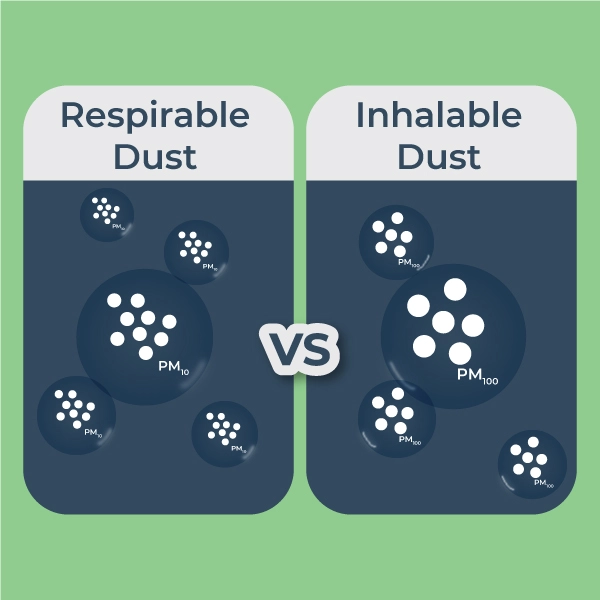
Measurements of particulate matter (e.g., PM₁₀ and PM₂.₅) are made using various instruments that measure the mass of particles in the air. Some technologies used to measure the mass of airborne particles include Beta Attenuation Monitors (BAM) and Tapered Element Oscillating Microbalances (TEOM). BAM uses a filter tape to collect particles from the air, and the attenuation of beta radiation as it passes through the particle deposit is measured to determine particle concentration. TEOM uses the principle that when particles collect on the tapered element, the added mass changes its vibration frequency, enabling near-real-time determination of particulate mass concentration, with known limitations for semi-volatile components unless additional correction methods are used.
Various scientific methods are used to determine air pollution levels for different gases. Nitric oxide (NO) is measured directly using chemiluminescence, while nitrogen dioxide (NO₂) is typically measured indirectly by converting NO₂ to NO and measuring the combined NOₓ signal. Sulfur dioxide (SO₂) is generally measured using ultraviolet fluorescence, and ozone (O₃) is measured using ultraviolet photometry, which determines how much ultraviolet light the molecule absorbs. Additionally, carbon monoxide (CO) is most commonly measured using the NDIR absorption method, which detects CO’s infrared absorption at specific wavelengths. Each type of analyzer is designed to be highly selective; however, potential interferences can occur, so regular calibration, quality control checks, and proper instrument configuration are essential.
Calibration and quality checks of monitoring equipment are conducted regularly using either reference gases or internal standards. This provides the means to continue producing accurate measures.
How Data Is Processed, Stored, and Visualized
Pollutants are measured and recorded at the monitoring station, collected, and time-marked, then converted to standard concentration units of µg/m3 and ppm. Basic checks will identify missing or unexpected readings that may result from instrument failure or malfunction.
The data from each analyzer is automatically sent over a cellular or internet network to a central server. To be acceptable as final, quality control checks are performed both before and after to ensure that the data have been corrected or cleaned, instrument drift has been resolved, and all data are usable.
To aid the interpretation of pollutant concentrations, concentrations are displayed through graphical visualizations and AQI colour codes on dashboards, websites, and mobile applications to support public health advisories and pollution management.
Continuous vs Manual Air Quality Monitoring Stations

Air quality measurement stations can be classified into continuous or manual systems based on how data is collected and reported. Continuous measurement stations use automatic analyzers to measure the concentrations of gaseous and particulate pollutants (e.g., PM₂.₅, PM₁₀, NO₂, SO₂, CO, and O₃) in real-time or at very short intervals.
In contrast, manual measuring involves collecting an air sample over a predetermined period (usually 8 or 24 hrs) on filter papers or other absorbent media, which are then sent to a laboratory for analysis to determine pollutant concentrations. Although manual measurement can yield very accurate results and is still widely used for compliance monitoring and verifying continuous measurement, it does not provide the same level of immediacy as real-time data. It is labour and laboratory-intensive when compared to continuous measurement.
For general air quality management, continuous measurement is preferred for the immediacy of time-resolved data, which can support public information, compliance monitoring by industrial operators, and timely decision-making. However, manual measurement remains a valid data source for validation studies, regulatory reference measurements, and locations where continuous measurement is not practical at present.
Where Air Quality Monitoring Stations Are Commonly Used
Monitoring stations are used in a variety of environments to help us understand the health, hazardous nature, or regulatory impacts of air pollution. Air quality measurement sites in metropolitan centres are often positioned alongside highways, in residential areas, and downtown to assess population exposure to air pollution and overall air quality, allowing regulators to evaluate how daily pollution levels are affected by vehicular traffic, construction, and other urban activity.
Traffic and construction are frequent sources of air pollution in metropolitan areas, making air quality monitoring stations vital for governments and businesses (e.g., transportation and construction) that must comply with clean air regulations. Air quality monitoring stations are also placed in industrial areas. Air quality monitoring sites measure air pollution from industrial facilities, including factories, power plants, mines, construction projects, ports, and refineries. In these locations, continuous air quality monitoring provides data to regulate compliance with governmental environmental regulations and manage high-emission or high-dust industrial practices.
Air quality measurement sites are located in background or rural areas to track regional air quality changes over time and to understand which pollutants are transported long distances and how much naturally occurring pollutants (such as forest fires and dust storms) contribute to air pollution in a particular region. Together, these locations can provide a comprehensive understanding of air quality changes across a region and the sources of air pollution.
Key Factors to Consider Before Installing a Monitoring Station
It must first be determined why air quality is being monitored. (e.g., to comply with regulations, impact assessment, and community awareness). This answer will help determine which pollutants to monitor and, therefore, the type of instrumentation you will need.
The conditions at the site where you will install the air quality monitor are equally important for producing accurate data. The monitor must be installed in a location that provides a representative sample of the air everyone around it is breathing, while minimizing as much as possible the potential for other physical structures or localized sources of air pollution to significantly impact or obstruct the data collected by the monitor being evaluated. Furthermore, the monitor must have access to a stable electrical power source, a secure location, and a relatively easy-to-reach area for regular service to replace batteries, perform calibration, and maintain the monitor so it remains operational.
Additional practical considerations, such as funding, long-term operating costs, data transmission infrastructure, and the availability of technical support, must also be taken into account when installing an air quality monitor.
Conclusion
Air Quality Monitoring Stations support the public, governments, and businesses in making informed, responsible choices about how to address air pollution. Monitoring stations convert invisible air pollutants into quantifiable data that inform responses. Accurate sensing, reliable data handling, and clear visualization of air quality monitoring stations will provide the foundation for a better plan that enables a healthier, more equitable community, government, and environment.
FAQs
Air quality monitoring stations use a mix of particulate sensors (such as BAM or TEOM for PM) and gas analyzers based on chemiluminescence, UV fluorescence, UV photometry, and NDIR to measure pollutants.
Regulatory-grade monitoring stations are highly accurate when properly calibrated and maintained, while lower-cost sensor systems provide indicative trends.
Raw pollutant data show actual measured concentrations of individual pollutants, while AQI converts those values into a simplified scale that indicates overall health risk levels.
Most stations are designed to operate in a wide range of weather conditions, though extreme environments may require additional protection and maintenance.
Air quality monitoring stations should be installed by trained professionals or organizations with technical expertise to ensure proper siting, calibration, and data reliability.