Air, being an invisible and dynamic medium, it is difficult to know if the air quality of a region is as per the air quality standards. It is imperative to monitor the air quality frequently to assess the pollution level in accordance with the National Air Quality Standards set under the Air (Prevention and Control of Pollution) Act, 1981. Air monitoring is done to measure the pollution level of an area – indoors or outdoors. The results of which indicate the status of the quality of the air we breathe.
That’s why the term ‘ambient air quality monitoring’ was coined. An Air Monitoring System detects and measures the pollution in the surrounding. It represents the pollution data as concentrations of different pollutants – whether it is dust particles or gases.
Ambient air monitoring system helps in evaluating and understanding pollution status and trends. It also helps to know whether pollution control strategies in place are working or not. Pollution monitoring also helps in determining the air purification method required, for instance, dry deposition, dilution, precipitation, chemical treatment, etc.
However, you might have come across two different terms in this aspect – Ambient Air Quality Monitoring System (AAQMS) and Continuous Air Quality Monitoring System (CAAQMS). Though both may sound the same, there’s a differences between these monitoring systems, depending upon the data usage, equipment cost, operating cost, system reliability, and ease of operation.
What is the Difference Between AAQMS and CAAQMS?
AAQMS
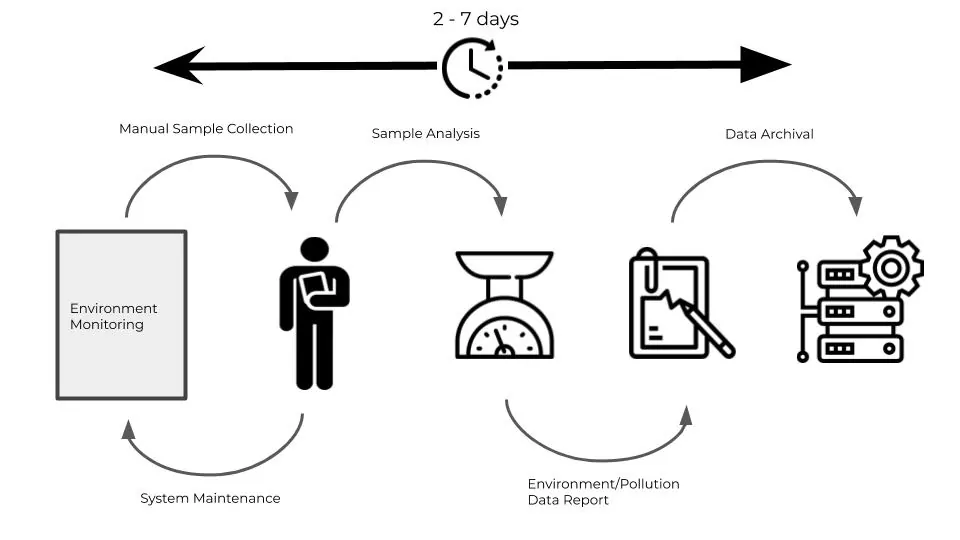
AAQMS is usually known as the Manual Air Quality Monitoring System. Under this system, the device samples the ambient air, and then after a few days of data collection, it is transferred manually to the center where the data is analyzed. The report is generated manually based on the analytics, and then finally, the data is archived to the server.
AAQMS generally includes a High Volume Sampler System or manual sampler which draws a known volume of air through the filter. After sample collection for the defined period, the sampler is taken manually to the laboratory for analysis. The filter is analyzed for different pollutants based on its weight before and after sampling. Thus, it’s a process of sample collection, sample transfer to the lab, analysis, data recording, and post-consumption. So, the whole process may take up to 2-7 days to complete to get the pollution information of the location.
CAAQMS
On the other hand, CAAQMS is the advanced version of AAQMS. It uses high-end technology like IoT for automated data collection and its transfer and analytics at the central server. The data transfer to the server is in real-time, and its interval is adjustable between 2-30 min. At the center, the data is analyzed automatically with advanced AI and archived or used accordingly.
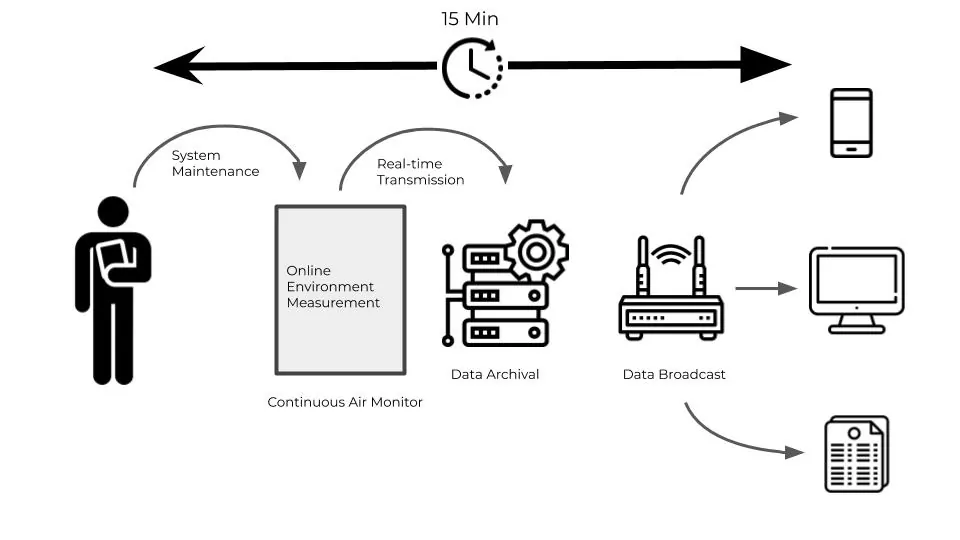
CAAQMS monitors pollutants using different analyzers and working principles, thereby, which reduces the chances of manual error, generating data within minutes, and transmitting the data. The data generated is disseminated online through a digital display board to the public. But there are two ways of data analysis for a CAAQMS:
What is CAAQMS Data: The Caaqms data is crucial for EPA officials and researchers to assess air quality trends, identify pollution hotspots, and develop effective strategies to improve air quality. The data is collected at regular intervals and is used to generate air quality indexes, which inform the public about the current air quality and potential health risks.
Sensor-based Systems – The air monitoring system collects the sample and has sensors that operate on different working principles to measure different pollutants instantly. For instance, PM sensor works on the Laser Scattering method, and Gas sensors work on NDIR, Electrochemical Sensing, or Photoionization technique. Temperature, Pressure, and Humidity are measured using a solid-state semi-conductor sensing technique.
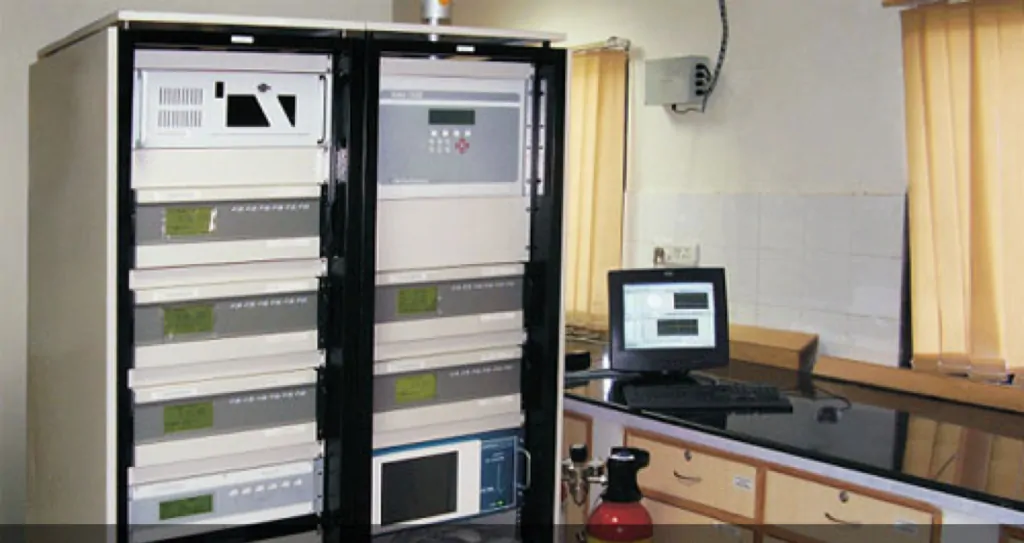
Regulatory Monitoring by CPCBs and SPCBs – The Central Pollution Control Board (CPCB) and State Pollution Control Board (SPCB) collect pollution data from various cities and collectively analyze it at the center. Traditional CAAQMS have dedicated analyzers with different working principles for each pollutant. For example, SO2 is measured using fluorescence, NO2 using a chemiluminescent reaction, CO using infrared absorption, PM using filtration and gravimetry, etc.
This process creates a data archive for the entire state or nation. The current national air quality monitoring network is present only in 268 cities, out of the 5,000 cities and towns in India. This is due to its excessive cost, high manpower requirement, and costly O&M procedure.
.webp)
What Plagues the Current Manual Method?
Since AAQMS is a manual monitor, it has certain limitations, and its data accuracy might be dubious. Hence, maintenance of instruments and evaluation of ambient air quality monitoring stations is crucial to ensure data quality, and for analytical quality control and following monitoring and calibration protocols.
Manual monitoring through AAQMS using different measuring techniques and instruments results in data variation in the same location. Studies show that due to incorrect flow measurement and calibration, the average data error ranges from 10-26% for PM monitoring. Inconsistent power supply and voltage fluctuations affect monitoring as well. For gaseous pollutants, duration of sampling, sample dilution, and temperature controls are essential to ensure proper testing. Moreover, the manual monitoring poses constraints for some of the gases, like, monitoring of benzene and ozone is very difficult using the manual method.
So How Does This Difference Change Our Lives?
Imagine a time when citizens would not even know the air quality of their state or country. Now, with the continuous air quality monitoring systems and AQI dissemination to the public through display boards, people are more aware and cautious about the health impact of air pollution. Citizens and authorities can initiate action to reduce air pollution with environmental data. The introduction of continuous air quality monitors has eased environment monitoring through its various features.
Scalable Real-time Monitoring – Manual AAQMS is bulky and huge and therefore, its mass installation is not possible. On the other hand, sensor-based CAAQMS is compact and lightweight to allow for deployment en masse. This feature makes hyperspatial data possible to gather data from all corners of the region or city.
Data Acquisition – Manual monitoring results in delayed data collection, transmission, and availability. Whereas, real-time monitoring enables the environmental assessment as soon as the sample is collected. This bridges the time-lapse between data acquisition and analytics for speeding up the whole monitoring process.
Measurement Features – Currently, the existing AAQMS only monitors limited parameters, like PM, and harmful gases like SO2, NO2, CO, CO2, etc. The advanced CAAQMS covers a broader range of parameters including PM, SOx, NOx, CO, CO2, TVOCs, and weather parameters like temperature, humidity, pressure, wind speed & direction, light intensity, UV radiations, noise, rainfall, and floods.
Decision-Making – In AAQMS, data analysis may take up to several days, which delays the decision-making process. Faster data analytics through CAAQMS allows for on-time pollution monitoring for taking immediate measures to avoid critical situations in the future. It is an essential tool for better compliance enforcement through credible pollution monitoring and reporting practices.
Analytics – In AAQMS, data is analyzed manually and may account for human error. Sensor-based CAAQMS incorporates automated data analytics supported by AI technology. It minimizes manual intervention to enhance data accuracy for strengthening the pollution control regime.
Public Awareness – One of the main purposes of ambient air quality monitoring is to create public awareness of environmental conditions. Delayed data acquisition through manual air monitors cannot provide real-time environmental data to the public. That’s why automatic monitors are crucial for providing timely data. With real-time data analytics, the data can be served to the common people instantly through integrated Public displays, mobile apps, web widgets, alerts, etc.
While there is a strong reason for regulatory air quality monitoring to expand, its excessive cost and size create a problem. Thus, a cost-effective sensor-based air quality monitoring system presents a feasible option for deploying air monitors for the general public. This also helps in democratizing the environmental data even in remote areas.
Automatic CAAQMS has made air quality monitoring simpler and provides more accurate data. A dense network of cost-effective sensor-based air quality monitors is the need of the hour. Advanced technologies in the area of air quality monitoring are becoming essential for the faster and real-time problem addressed in pollution mitigation plans.
How Oizom Air Quality Monitoring System is Changing the Industry
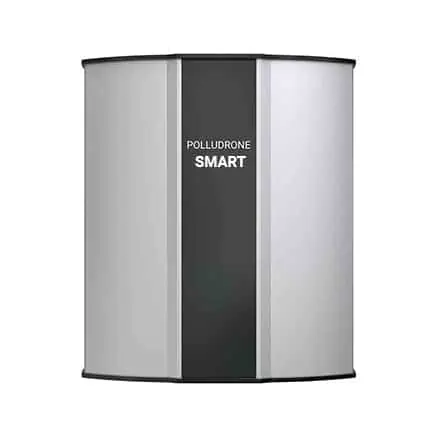
Oizom has deployed a network of low-cost air quality sensors, PolludroneTM at Riyadh King Khalid International Airport which is the second largest airport in Saudi Arabia. Due to frequent dust storms, the particulate matter concentration increased alarmingly which can cause acute asthma in the passengers. Polludrone monitored major pollutants like PM1, PM2.5, PM10, NO2, SO2, O3, H2S, CO, CO2, and other parameters like Noise, Temperature, Humidity Wind speed, wind direction. The authorities took corrective actions after analyzing the real-time data. It increased flight safety while taking off and landing. Oizom’s Polludrone can automate and optimize air ventilation improving the interior air quality of the airports.
.be0dea41.svg)


.webp&w=1920&q=75)
.webp&w=1920&q=75)