Summary
What does choosing the right industrial monitoring system actually require?
Beyond purchase price, organizations should consider 10 criteria: pollutant coverage, sensor accuracy, real-time monitoring, multi-site scalability, data platform quality, environmental durability, calibration complexity, compliance readiness, deployment flexibility, and total cost of ownership.
An industrial pollution monitoring system is a network of sensors, data acquisition hardware, and analytics software that continuously measures, records, and reports airborne pollutants around an industrial facility, enabling real-time compliance tracking, emission event detection, and regulatory reporting.
India's Central Pollution Control Board mandates Continuous Emission Monitoring Systems for 17 highly polluting industry categories under the Environment Protection Act, 1986. According to the US-EPA fugitive emissions guidelines, VOC emissions from equipment leaks and open sources can account for up to 60% of total site emissions at some refineries, undetectable by stack monitoring alone. Organizations selecting on purchase price alone typically encounter total ownership costs 2-3x higher within 24-36 months, driven by recalibration cycles, data gaps, and system replacement.
"The facilities that get compliance right aren't the ones with the most sensors; they're the ones whose monitoring data connects directly to operational decisions every single day." - Vrushank Vyas, COO, Oizom.
This guide applies Oizom's SMART-10 Industrial Monitoring Framework, developed from 3,500+ industrial deployments across 90+ cities to help organizations evaluate vendors and select a solution built for long-term field performance, not just initial cost.
Introduction
The selection of a monitoring system directly affects an organization's ability to comply with regulations, achieve operational efficiencies, and minimize future costs associated with maintaining regulatory compliance. Yet, only a few EHS heads invest enough time in justifying their selections. If you're managing fugitive emissions at a steel, cement, or chemical facility, navigating CEMS compliance before an inspection, or trying to protect your Consent-to-Operate from revocation, this guide provides a structured framework for making that decision, not generic procurement advice. An industrial pollution monitoring system enables real-time compliance tracking, emission event detection, and regulatory reporting across one or multiple sites.
For EHS heads in heavy industry, the pressure is specific: CEMS data must be audit-ready at all times, fenceline readings must stay within thresholds, and LDAR programs must demonstrate fugitive emission sources being actively tracked rather than discovered by regulators first.
The 10 Criteria for Choosing an Industrial Monitoring System
There are multiple factors beyond the initial cost to consider while selecting an industrial pollution monitoring solution. These 10 criteria can help assess the possibility of regulatory compliance, operational efficiency, and long-term lifecycle value.
- Pollutant Coverage: A system that measures all pollutants necessary for both operational and regulatory compliance.
- Sensor Accuracy: The delivery of consistent and verified environmental measurements.
- Real-time Monitoring: View pollutants and system performance in real time.
- Multi-Location Scalability: The ability to monitor multiple sites from a single, centralized view.
- Data Platform Quality: It provides actionable insights, superior visualization, and efficient reporting.
- Environmental Durability: It denotes consistent operation in harsh industrial environments.
- Calibration Complexity: To ensure accurate measurement with manageable maintenance and service requirements.
- Compliance Readiness: Supports regulatory reporting, auditability, and alignment with established industry standards.
- Deployment Flexibility: Can easily interface with any existing process infrastructure.
- Total Cost of Ownership: Considers the initial purchase price versus long-term operational costs.
Choosing the right industrial monitoring system starts with knowing which criteria actually predict field performance, not just what looks good on a vendor comparison sheet. A system that demonstrates excellence in each of the above criteria will likely deliver reliable compliance results, operational effectiveness, and the long-term return on investment.
The SMART-10 Industrial Monitoring Framework
The SMART-10 framework organizes the ten evaluation criteria into two layers:
- 5 Strategic Pillars: Sensor Reliability, Multi-Site Scalability, Audit Readiness, Real-Time Visibility, and Total Lifecycle Value that define what a compliant program must achieve
- 5 Operational Criteria: Pollutant Coverage, Data Platform Quality, Environmental Durability, Calibration Complexity, and Deployment Flexibility that define how it must perform in the field.
.webp)
The framework is built around 5 Strategic Pillars:
1. S- Sensor Reliability
Ensures accurate, stable, validated measurement performance under real operating conditions. Oizom's patented e-Breathing technology continuously controls sensor cell conditions, compensating for humidity, temperature, and pressure fluctuations that lead to sensor drift in industrial environments.
2. M- Multi-Site Scalability
Enables centralized visibility and efficient monitoring across multiple facilities and operational zones.
3. A- Audit Readiness
Supports regulatory compliance through traceable calibration workflows, standardized reporting, and inspection-ready data access.
4. R- Real-Time Visibility
Provides real-time environmental data for faster incident response and operational decision-making.
5. T- Total Lifecycle Value
Evaluates long-term cost efficiency beyond initial hardware investment. Across Oizom's industrial deployments, facilities that shifted from low-cost sensor networks reported 40% fewer non-compliance incidents and lower recalibration costs in the initial operational year, reflecting the value of long-term reliability over low purchase costs.
For EHS leads managing LDAR Programmes, fenceline compliance, and CEMS reporting, the SMART-10 framework directly aligns with the areas most commonly flagged during regulatory audits: data continuity gaps, calibration traceability failures, and fugitive emission blind spots.
The 5 Operational Criteria are:
6. Pollutant Coverage
7. Data Platform Quality
8. Environmental Durability
9. Calibration Complexity
10. Deployment Flexibility
Collectively, the 10 evaluation criteria form a decision-making framework for identifying monitoring systems that can deliver reliable compliance performance, operating efficiency, and scalable long-term value.
The SMART-10 Framework is developed from Oizom’s experience across 3,500+ industrial monitoring deployments in over 90+ cities worldwide, developing a consistent framework of criteria that separates compliant, operationally reliable programs from those creating audit risk and replacement costs. Oizom’s Polludrone and AQBot industrial monitors are engineered to meet SMART-10 evaluation criteria.
Key Factors in Industrial Environmental Monitoring System Selection
1. Identify the Pollutants to be Monitored
In steel and cement plants, the primary pollutants would include PM2.5, PM10, SO₂, and NOx. However, it must also include fugitive dust emissions from material handling and stockpiles, since location alone cannot accurately capture them through stack monitoring. In addition to these, chemical facilities will have non-negotiable needs for VOC speciation and site-specific hazardous air pollutants (HAPs). If your stack monitoring system covers the stack but does not adequately cover your fenceline or surrounding area, it is considered a partial monitoring system and not a full monitoring program. The EPA estimates that fugitive emissions contribute up to 60% of VOCs released to the atmosphere by some industrial processes at refineries, none of which would be detected by stack monitoring alone.
2. Check Monitoring Accuracy and Sensor Technology
In any industrial plant, inaccurate data doesn't just mean poor decisions; it means defending a false reading during a CPCB inspection or discovering a fugitive emission source only after a community complaint has already triggered regulatory scrutiny.
Look for:
• Proven sensor technologies
• Calibration mechanisms
• Third-party certifications
Understand Sensor Trade-Offs
A sensor that performs well under controlled laboratory conditions may not continue to perform as reliably in an industrial environment due to variations in dust, heat, moisture, and fluctuating process loads. For example, a sensor exhibiting a rating of ±2% accuracy under lab conditions can exhibit as much as ±15% drift, and sometimes even more so when continuously operated in environments exceeding 45°C and exceeding 90% humidity, both of which are common conditions found in industrial environments in South Asia (based on field deployment data collected by Oizom, comprising 3,500+ installations).
Polludrone's multi-parameter sensing architecture is field-validated for continuous industrial use at temperatures up to 55 °C and humidity levels up to 93% RH. It includes automatic drift detection to alert on calibration changes without manual effort, addressing the most frequent cause of missing compliance data. This performance is enabled by Oizom's patented e-Breathing technology. This active system continuously regulates internal sensor conditions, compensating for humidity spikes, temperature cycling, and pressure fluctuations that cause conventional sensors to drift beyond acceptable accuracy thresholds in the field.
3. Ensure the System Supports Real-Time Monitoring
Why this matters for Plant EHS Heads: VOC leaks from valve leakage, spillage from storage tank hatches, and air emissions during material loading do not show up on a stack monitor. The only way to know whether the plant has exceeded regulatory limits is through real-time data from the fenceline, so you can act before you violate your Consent-to-Operate or face a community complaint.
Why this matters for operations leaders: Early detection of process disruptions allows them to minimize their impact and maintain operational continuity. Oizom's Envizom platform provides organizations with continuous real-time visibility across the entire monitoring site. It includes features such as automated alerts when thresholds are exceeded, incident logs, and compliance-ready reports. All collected raw sensor data is transformed into actionable decisions rather than simply being stored as archived readings.
4. Look for Multi-Location Monitoring Capability
Envizom centralizes the environmental data collected across multiple locations into a single compliance dashboard, allowing you to compare results across multiple sites, generate standard reports, and manage alerting all from one location without the need for separate login credentials or manually consolidating data from each of your locations.
5. Evaluate Data Management and Cloud Platform
Key considerations include:
- Cloud accessibility and secure data storage
- Threshold alert automation for faster response to exceedances
- Compliance-ready export architecture for simplified reporting and audits
An effective data strategy enables faster decision-making while reducing manual effort and reporting complexity.
6. Check Environmental Durability
Industrial environments expose monitoring systems to corrosive gases, continuous vibration, high-temperature cycling, condensation, and dust-loading conditions that degrade sensors not specifically engineered for field deployment.
Not only do equipment failures increase maintenance costs, but they also create data gaps that may weaken compliance reporting and undermine trust in the environmental decision-making process. Polludrone and AQBot are the only sensors designed for continuous deployment on the perimeters of industrial facilities, housed in an IP66-rated enclosure, made of corrosion-resistant materials, with validated performance in manufacturing, petrochemical, mining, and steel processing facilities. Selecting a system designed for industrial durability ensures more consistent performance, lower operational disruption, and stronger long-term monitoring reliability.
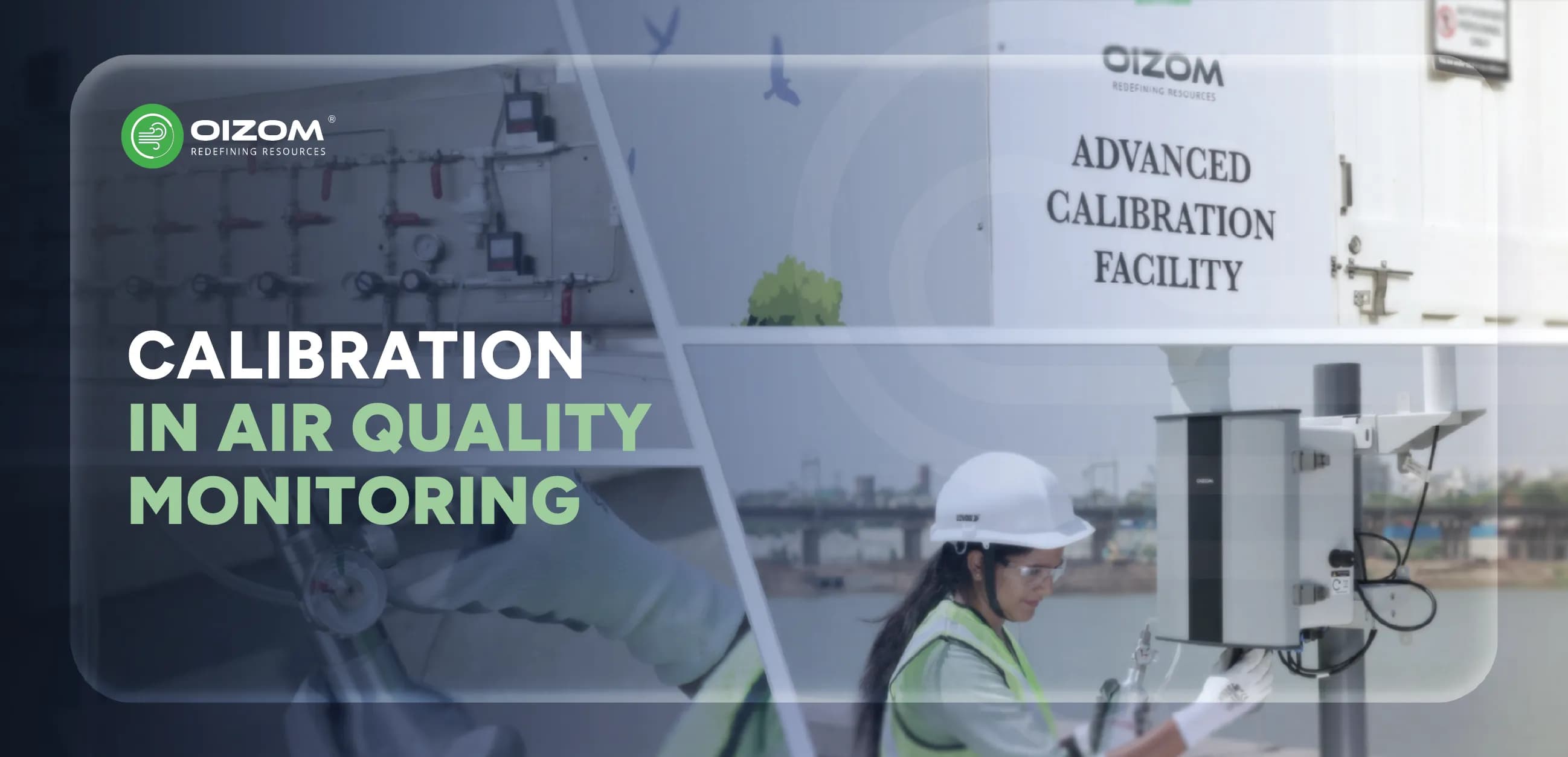
7. Understand Maintenance and Calibration Needs
Questions to ask:
- Frequency of calibration
- Is the calibration manual or automated?
- Downtime required for servicing
Electrochemical sensors typically require recalibration every 3-6 months. Optical PM systems need periodic zero-check validation to maintain measurement consistency. The majority of unplanned calibration failures in industrial applications occur during peak operating times for those systems. Across Oizom's industrial deployments, unplanned calibration failures are among the leading causes of monitoring data gaps, clustering disproportionately around peak operational periods when compliance scrutiny is highest.
When a system requires frequent manual recalibration or lengthy service times, it can lead to increased operational costs and gaps in monitoring data. A solution’s ability to provide predictable maintenance schedules with low downtime will help maintain a reliable system over the long term while also reducing overall ownership costs.
8. Ensure Compliance with Environmental Standards
When evaluating compliance readiness, organizations should ensure the monitoring system aligns with:
- CPCB industrial ambient monitoring benchmarks for pollutant-specific measurement standards
- MCERTS-equivalent validation pathways that demonstrate recognized performance verification standards
- ISO-aligned calibration traceability ensures measurement accuracy remains demonstrable over time
- Automated reporting readiness, allowing environmental performance data to be easily exported in audit-ready formats
Under Consent-to-Establish or Consent-to-Operate approvals, a developing facility is continuously assessed for compliance rather than periodically. A facility's Consent to Operate (CTO) may be suspended, revoked, or denied renewal if a CPCB inspection identifies data gaps, uncalibrated sensors, or incomplete CEMS records. The CPCB has made CEMS compulsory for the 17 highly polluting industrial categories under the Environment Protection Act, 1986, and requires that emissions data be transmitted in real-time. The CEMS your facility uses must provide defensible, complete records daily, rather than being obtained solely during the preparation for an audit of your facility's operations.
9. Evaluate Installation and Deployment Flexibility
Deployment complexity is also a hidden cost driver. When systems have special installation requirements and need custom infrastructure integration, this typically results in delayed rollout schedules and budgets exceeding initial estimates.
Hence, systems that are simple to deploy and readily integrate with existing infrastructure should be prioritized. A system designed for flexible deployment reduces integration challenges and scales easily as operational requirements evolve.
10. Compare Total Cost of Ownership
Rather than focusing only on purchase price, organizations should evaluate:
- Installation costs
- Servicing and calibration expenses
- Software and subscription costs
- Risk of downtime
- Long-term system viability
Why this matters for procurement teams: Servicing and maintenance costs often exceed initial hardware savings within 24-36 months, making lower-cost systems more expensive over their operational lifespan.
The lowest-cost sensor is rarely the cost-effective decision over three years. Organizations selecting monitoring systems based on purchase price alone generally face total ownership costs 2-3 times higher than initial cost within 24-36 months, driven by recalibration cycles, data gap remediation, and system replacement. Evaluating total lifecycle cost helps organizations make informed investment decisions and avoid replacement costs.
Common Procurement Failure Patterns
Many investments in industrial monitoring systems fail because several factors are overlooked during purchase, rather than issues with the technology itself. Some common failure points include:
- Buying only for current needs: Systems purchased without future scalability in mind may lead to expensive expansion as the operational requirements grow.
- Ignoring calibration labor costs: Systems sold with lower upfront cost may not include the labor required to service them after installation, which increases operational burden and continues to increase the total cost of ownership.
- Underestimating software adoption complexity: Technically sound systems may not deliver value due to challenges in adopting and effectively using dashboards, reporting tools, or workflows.
- Prioritizing hardware over data usability: Data that is accurately measured has no value if the insights gathered from environmental measurements cannot be easily interpreted or acted on.
- Overlooking deployment-environment realities: Systems excelling in controlled environments often struggle in real-world conditions with heat, vibration, humidity, or dust.
Fenceline monitoring and stack monitoring are often perceived the same, though they serve fundamentally different purposes. Stack monitoring measures point-source emissions, whereas fugitive emissions from equipment leaks, open storage areas, and material-handling processes can account for up to 60% of total VOC emissions in certain industrial operations (CEM, 2012).
Recognizing these risks early helps organizations make informed procurement decisions and avoid costly system replacements later.
Vendor Evaluation Criteria
Before finalizing a monitoring system, decision-makers should evaluate vendors across six critical performance indicators:
.webp)
| Evaluation Criteria | What to Assess | How Oizom Addresses It |
| Compliance Readiness | Alignment with regional regulatory standards, reporting compatibility, and audit preparedness | CPCB CEMS aligned, audit-ready data export, and traceable calibration records generated automatically, not prepared manually before inspections |
| Calibration Complexity | Calibration frequency, automation capability, servicing requirements, and expected downtime | Automated anomaly detection flags sensor drift and calibration deviations in real time, eliminating manual identification burden and reducing calibration-related data gaps |
| Environmental Durability | Resistance to dust, humidity, vibration, temperature fluctuation, and harsh operating conditions | IP66-rated enclosures with e-Breathing technology, validated across steel, cement, petrochemical, and mining environments at temperatures up to 55°C and humidity up to 98% RH |
| Dashboard Usability | Real-time visibility, reporting clarity, alert configuration, and ease of operational interpretation | Envizom delivers multi-site dashboards, automated threshold alerts, compliance-ready exports, and cross-departmental visibility from a single login |
| Deployment Flexibility | Installation simplicity, scalability across sites, and compatibility with existing infrastructure | Rapid deployment with LoRaWAN, 4G, and Wi-Fi connectivity options compatible with existing EHS, ERP, and operational management infrastructure |
| Lifecycle Cost Predictability | Long-term maintenance, software dependency, servicing burden, and replacement risk | Field-grade reliability across 10,000+ deployments reduces recalibration frequency, data gap risk, and system replacement costs over a three-year horizon |
A strong industrial monitoring system should perform consistently across all six areas. If several criteria raise concerns, further technical assessment is recommended before purchase.
Case Study: Mitsubishi Chemical Group, USA
Mitsubishi Chemical Group USA installed 14 Oizom Odosense devices across its U.S. facilities to provide real-time data on O2, formaldehyde, and methane levels, along with atmospheric parameters such as temperature, humidity, and air pressure. Oizom devices supported the company's compliance efforts by simplifying monitoring and reducing operational costs. With Envizom's alert and reporting features, facility staff receive real-time alerts when thresholds are breached, allowing them to take action as needed without manually reviewing data. Based on its positive experience with the system, the company plans to deploy additional devices at the T2 facility.
Quick Decision Audit
Before selecting a system, organizations should confirm the following:
- Does it monitor all pollutants relevant to operational risk and compliance obligations?
- Can it deliver reliable real-time visibility for faster environmental response?
- Is maintenance predictable and operationally manageable?
- Will it remain accurate under real industrial exposure conditions?
- Does it support compliance reporting without additional complexity?
- Does it capture fugitive emissions at the fenceline, not just point-source emissions at the stack?
- Will it produce defensible CEMS-grade records if a CPCB inspector arrives unannounced tomorrow?
- Can it scale as monitoring requirements evolve?
- Does its long-term operational value justify the investment?
If the answers to these questions are uncertain, the system may require further technical assessment before implementation.
Conclusion
The ten SMART-10 criteria exist because real monitoring programs fail in predictable ways, not because EHS teams don't care, but because the system fell short in real-world conditions. A sensor that drifts at 45°C. A fenceline that goes unwatched while the stack data looks clean. A dashboard that fills with numbers nobody acts on. They're the gaps that show up during CPCB inspections, in community complaints, and in audit records at exactly the wrong moment. The facilities that get this right aren't doing anything extraordinary; they're just running systems that were honestly built for the conditions they actually work in, every single day. Emissions don't wait for audit season, so neither should your monitoring.

.webp&w=3840&q=75)
.webp&w=3840&q=75)


.be0dea41.svg)


.webp&w=1920&q=75)
.webp&w=1920&q=75)