Summary
Airborne dust causes disease interferes with land, sea, and air motion, impairs renewable energy systems, transmits infections and dangerous substances, and poses various additional risks. This blog will explore the hidden hazards of organic dust, its causes, health effects, and effective mitigation strategies. We hope to provide readers with valuable information and strategies for organic dust. Our mission is to assist you in combating this invisible particle, resulting in a healthier, more breathable environment for everyone.
What is organic dust?
First, let us understand what organic dust is. Organic dust is made from hay, grain, fuel chips, straw, and cattle. Organic dust contains molds, pollens, bacteria, pesticides, chemicals, feed and bedding particles, and animal particles, including hair, feathers, and droppings. Heavy concentrations of organic dust are common in grain dryers, livestock pens, swine buildings, or other enclosed spaces.
Exposure to this dust has been linked to the development of respiratory disorders, including asthma, allergic alveolitis, byssinosis, chronic bronchitis, and emphysema. Organic dusts are found in various occupations, including agriculture, the textile industry, particularly cotton processing, flour milling and bakeries, and the wood industry, specifically sawmills, carpentry, and wood processing. Many of these activities, particularly agricultural employment, include the possibility of simultaneous exposure to additional substances that influence lung health, such as metals, gases, fibers, and chemicals.
Health Risks of Organic Dust Exposure
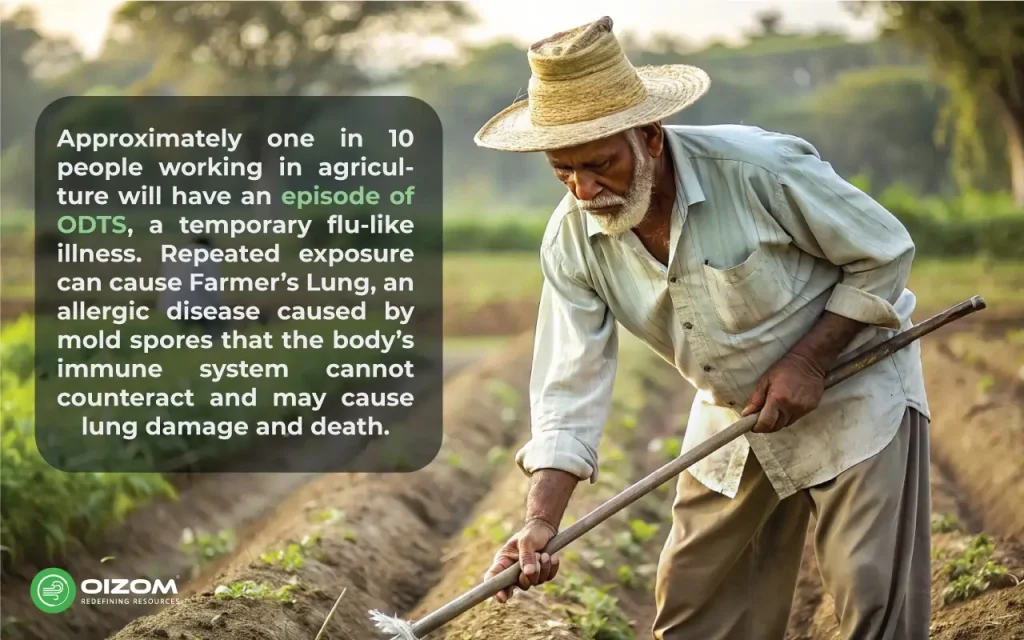
Dust comprises microscopic or soil particles (50 microns or smaller in diameter) suspended in the atmosphere and transported by the wind. While these tiny airborne particles may appear harmless, they substantially threaten humans. Long-term exposure to organic dust can cause congestion, coughing or wheezing, sensitivity to dust, and frequent illnesses like colds, bronchitis, and pneumonia. Over time, exposure to organic dust can lead to significant respiratory disorders such as Organic Dust Toxic Syndrome (ODTS) and Farmer’s lung.
Organic dust toxic syndrome is a term recently coined to describe a noninfectious, febrile illness associated with chills, malaise, myalgia, a dry cough, dyspnea, headache, and nausea that occurs after heavy organic dust exposure. Organic dust toxic syndrome shares many clinical features with acute farmer’s lung and other hypersensitivity pneumonitis, including increased numbers of neutrophils in bronchoalveolar lavage.
Some types of pneumoconiosis, according to dust and lung reaction
The above table represents the types of organic dust with different diseases and their lung reaction.
Sources and Environments of Organic Dust
These dust originate in the soil, animals and their breakdown products, animal feeds, plant materials, fungi, insects, and decaying stored plant material. Other substances on farms, including fumes and gases, can also cause respiratory problems. Moreover, other organic dusts are produced from grain, vegetables, and other sources. Primary sources include occupational, indoor, and outdoor situations, illustrating where this unseen threat lies.
Occupational exposure ( Eg.farming, woodworking)
- Farming: In occupational settings, organic dust is a significant concern. Agriculture exposes workers to pollen, fungal spores, and animal dander, increasing respiratory problems like asthma. Grain dust contains organic and inorganic particles from several sources, including leaves, dirt, and insect parts. The blend changes depending on grain type, location, growing circumstances, and harvest, storage, and processing processes.
- Woodworking: produces fine wood dust, leading to chronic lung diseases. Other professions, such as baking and textile work, also face risks from organic dust.
Indoor environments ( E.g., pet dander, Mold)
Indoors, our homes can be sources of organic dust. Pet dander, a frequent allergy, is caused by household pets shedding skin flakes. Mold and fungus in wet locations produce spores, which cause allergies and respiratory problems. Additionally, dust mites grow in warm, humid environments, and their droppings are a severe allergen. Various fungi, bacteria, spores, and by-products also pose a respiratory hazard.
Outdoor exposure
Organic dust exists in both indoor and outdoor areas. Pollen, especially in the spring, causes allergies and respiratory issues. Windblown dust from agricultural regions and unpaved roadways can drastically reduce air quality. Forest fires also contribute to air pollution by emitting soot and ash. In agriculture dust, the exposure starts with farmers and farm workers who grow, harvest, sometimes store, and then transport grain to local storage facilities. These farmers are exposed to grain dust on occasion.

Mitigation Strategies against Organic Dust
Let’s explore effective strategies to mitigate its impact in various environments.
- In occupational settings, controlling the source is crucial. Dust suppression techniques like wet suppression in agriculture and workshop ventilation systems can significantly reduce dust levels. Equipping workers with appropriate respirators, especially during high-dust activities, is essential.
- Regular housekeeping, including vacuuming and damp mopping, helps maintain clean workspaces and minimize dust accumulation.
- Indoor environments also demand specific strategies. Reducing humidity through proper ventilation and dehumidifiers can discourage mold growth and dust mite proliferation. HEPA air purifiers are effective in capturing and removing airborne dust particles. Regular laundering of bedding and fabrics in hot water and frequent vacuuming of carpets and furniture removes dust and allergens.
How Oizom helps to monitor the dust
Using advanced sensors and data analytics like Oizom systems can accurately measure dust particle concentrations in the air. This real-time monitoring allows for timely and effective responses to dust pollution. For instance, in areas where construction or industrial activities are causing elevated dust levels, Oizom’s data can prompt immediate mitigation measures such as water spraying or adjusting work schedules to reduce dust emissions.
Additionally, Oizom’s comprehensive data analysis helps identify dust pollution trends and sources, enabling long-term planning and policy-making to control dust more effectively. This is especially vital in outdoor areas where dust contributes significantly to air quality issues, affecting public health and the environment.
By providing actionable insights, Oizom empowers communities and authorities to make informed decisions, leading to a cleaner and healthier environment.
Conclusion
In conclusion, tackling the omnipresent challenge of organic dust requires awareness, proactive strategies, and personal vigilance. From occupational settings to our own homes, the sources of organic dust are varied and often hidden. However, we can significantly reduce its impact by implementing effective mitigation strategies such as dust suppression techniques, proper ventilation, and HEPA air purifiers. Personal measures like monitoring air quality, limiting exposure during high-risk periods, and maintaining good hygiene are crucial in safeguarding respiratory health. This battle against organic dust isn’t just about cleaning our surroundings; it’s about adopting a comprehensive approach to create healthier living and working environments. With knowledge and the right tools, we can effectively minimize the risks posed by this invisible foe, ensuring cleaner air and better health for all.


.webp&w=3840&q=75)


.be0dea41.svg)



.webp&w=1920&q=75)