
Summary
In this blog, we explored the top 5 most and least polluted countries in 2025. Countries like India, Chad, and Pakistan continue to face serious air pollution challenges, with high levels of PM₂.₅ and poor AQI scores. On the flip side, Iceland, Finland, and Norway are setting great examples with clean, breathable air thanks to better policies, cleaner energy, and smart city planning.
We also explained how air pollution is measured globally through AQI, PM levels, and real-time monitoring systems, and why accurate data is key to fighting pollution. Tools like Oizom’s Polludrone are helping cities and industries take action with live data and early alerts.
The takeaway? Clean air is possible, but it requires the right mix of technology, awareness, and strong regulations. This guide helps you understand where the air is safe, where it’s not, and why that matters, whether you’re a policymaker, researcher, traveler, or simply someone who cares about the air you breathe.
Top 5 Most & Least Polluted Countries in 2025
Today, we’re zooming out a bit to look at the top 5 most and least polluted countries in 2025. Now, whether you’re traveling for work, heading on vacation, or planning an international move, there’s one thing many people forget to check: the air quality. And that’s exactly why I’m here. This blog will help understand which countries are currently breathing easily and which are struggling with pollution. Whether you’re an environmental professional or just an informed global citizen, this guide will help you make sense of what the numbers really mean.
Let’s dive into the cleanest and most polluted countries this year, and why these rankings matter.
How Pollution Levels Are Measured
Before we look at the rankings, it’s important to understand how we measure pollution levels. Without standardized metrics, comparisons between countries would be unreliable. Fortunately, air quality is now measured using, making the data more actionable than ever.
Let’s break down the technical side in simple terms.
Understanding PM2.5, PM10, and AQI
When we talk about air pollution, the most common indicators are particulate matter, specifically PM₂.₅ and PM₁₀. PM₂.₅ can penetrate deep into the lungs and even enter the bloodstream, leading to respiratory and cardiovascular issues.
To give these numbers more context, we use the AQI. The AQI is a normalized scale (often ranging from 0 to 500) that translates raw pollutant concentrations into categories such as “Good,” “Moderate,” or “Hazardous.”
Criteria for Ranking Countries
For a fair comparison, countries are concentrations, the most reliable indicator of long-term air pollution exposure. and the presence of real-time monitoring networks was also considered.
While some regions may show lower pollution due to sparse data, our analysis factors in data density, geographic distribution, and sensor accuracy, especially where Oizom deployments are active.
This approach ensures that rankings are based not just on static figures, but on consistent, real-world measurements.
Before we get into the cleanest countries, let’s first take a look at the ones struggling the most with air pollution. It’ll give us a clearer picture of where air quality is poor and where it’s actually safe to breathe.
The data in this blog was collected in real-time on June 11th, 2025, using the AQI readings from that day. We’ve also referred to the IQAir Report for added insights.
Keep in mind, this is a snapshot of a single day; air quality can change daily based on weather, traffic, and other factors. So while this gives a clear picture of the situation on that day, the numbers might look a little different tomorrow.
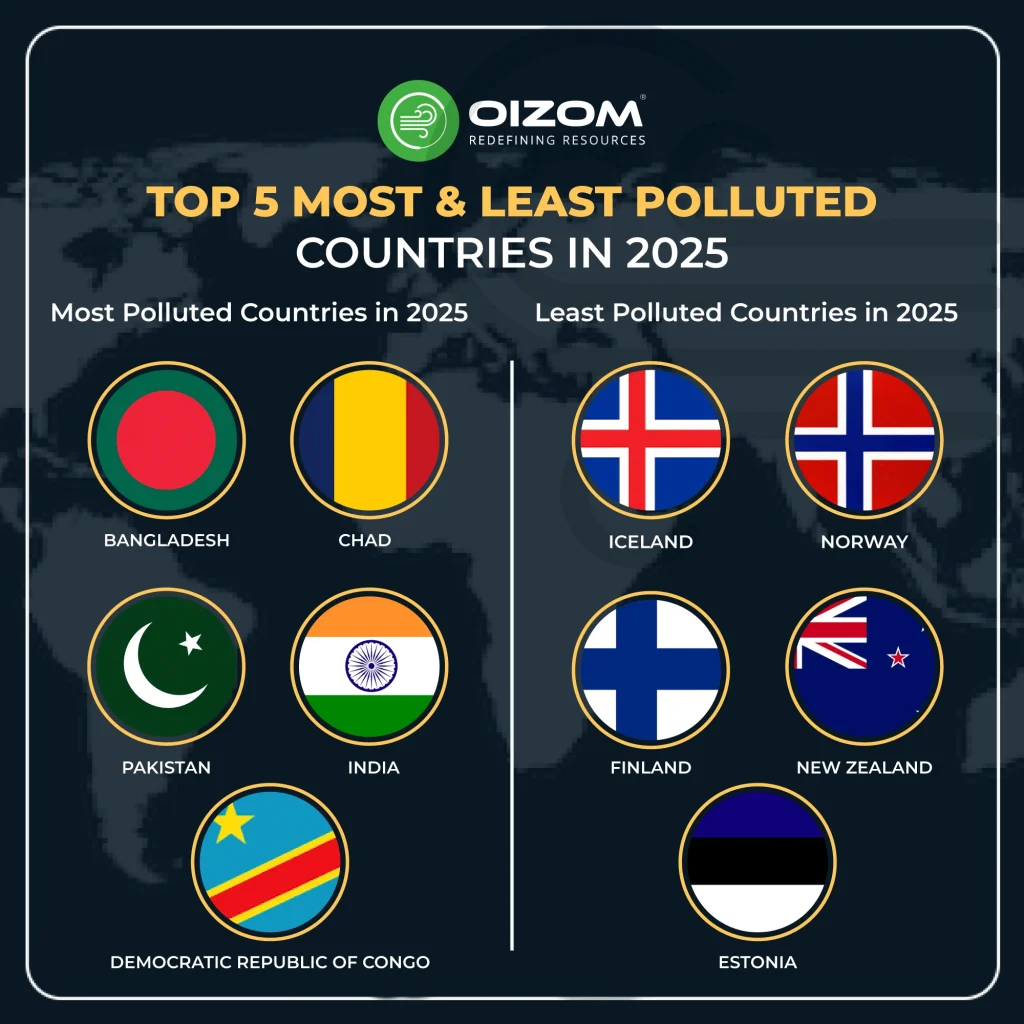
Top 5 Most Polluted Countries in 2025
Yet for millions of people, the air they breathe every day does more harm than good.
Air pollution isn’t just a distant environmental issue anymore; it’s right outside our homes, offices, and schools.
In this section, we take a closer look at the world’s top 5 most polluted countries in 2025, places where air quality has reached critical levels and urgent action is needed.
| Rank | Country | AQI-US |
|---|---|---|
| 1 | Bangladesh | ~200–300 |
| 2 | Chad | ~150–250 |
| 3 | Pakistan | ~170–250 |
| 4 | India | ~150–250 |
| 5 | Democratic Republic of Congo | ~120–180 |
1.Bangladesh

Bangladesh is known for its rivers, fertile plains, and vibrant cultural heritage. However, alongside its rapid urban growth, air pollution has become a severe and persistent challenge.
In 2025, Bangladesh recorded an average AQI of 200.
What’s Causing It?
- Vehicle emissions
- Brick kilns operating around urban areas.
- Industrial emissions
- Construction dust
- Burning of fossil fuels and waste
These pollutants significantly increase PM₂.₅ and PM₁₀ levels, especially during dry and winter seasons.
Health Impact
Air pollution in Bangladesh contributes to:
- Chronic respiratory illnesses
- Heart and lung diseases
- Higher health risks for children and the elderly
- Reduced life expectancy in urban regions
Despite increasing awareness and monitoring efforts, air pollution remains a critical public health issue requiring urgent intervention.
2.Chad
Chad is known for its deserts, lakes, and diverse ecosystems. Yet, environmental challenges and limited infrastructure have made air pollution an increasing concern.
In 2025, Chad recorded an average AQI of 180.
What’s Causing It?
- Frequent dust storms and desertification
- Burning of biomass and solid fuels for cooking
- Unregulated waste burning
- Vehicle emissions in urban centers
- Limited air quality regulations
These factors lead to consistently high PM₂.₅ and PM₁₀ concentrations year-round.
Health Impact
Air pollution in Chad contributes to:
- Respiratory infections
- Aggravated asthma symptoms
- Increased vulnerability among children and older adults
- Long-term damage to lung health
With limited monitoring and mitigation measures, addressing air pollution remains a major environmental and health challenge.
3.Pakistan

Pakistan is known for its mountain ranges, cultural diversity, and agricultural economy. However, rapid urbanization and energy dependence have intensified air pollution problems.
In 2025, Pakistan recorded an average AQI of 170.
What’s Causing It?
- Vehicle emissions in major cities
- Industrial smoke
- Crop residue burning
- Coal-based power generation
- Construction and road dust
These activities sharply raise PM₂.₅ and PM₁₀ levels, particularly during winter smog episodes.
Health Impact
Air pollution in Pakistan contributes to:
- Respiratory and breathing disorders
- Heart and lung diseases
- Increased health risks for children and the elderly
- Lower overall quality of life in urban areas
While initiatives around clean energy and monitoring are growing, air pollution remains a serious challenge demanding sustained action.
4.India

India is known for its rich culture, festivals, diverse landscapes, and natural beauty, from the Himalayas to coastal beaches. But alongside this charm lies a growing concern: air pollution.
In 2025, India recorded an average AQI of 155. Breathing this air is roughly equal to smoking 7–8 cigarettes a day, even if you’ve never picked one up.
What’s Causing It?
- Vehicle emissions in cities
- Industrial smoke
- Construction dust
- Crop burning in northern states
- Use of coal and biomass in rural homes
These pollutants raise harmful PM₂.₅ and PM₁₀ levels, especially during winter.
Health Impact
Air pollution in India contributes to:
- Breathing problems and asthma
- Heart and lung diseases
- Increased health risks for children and the elderly
- Reduced life expectancy in high-pollution zones
Despite efforts like electric mobility and clean energy, air quality remains a major challenge that needs urgent action.
5.Democratic Republic of Congo

The Democratic Republic of the Congo (DRC), home to the Congo Rainforest, vast wildlife, and rich mineral resources, is a land of natural abundance. Yet, in 2025, it ranks as the fifth most polluted country, with an average AQI of 120.
What’s Causing It?
- Vehicle emissions in densely populated urban areas
- Mining activities release dust and chemical pollutants
- Widespread use of wood and charcoal for cooking
- Burning of waste and open fires
- Limited environmental regulations and monitoring
These practices lead to high PM₂.₅ and PM₁₀ levels, especially in and around industrial zones and informal settlements.
Health effects
- Increased respiratory infections
- Aggravated asthma and bronchitis
- Long-term damage to lung and heart health
While the DRC is rich in natural resources, the lack of infrastructure and awareness about air pollution means the country still struggles to address its growing air quality crisis. Introducing clean energy alternatives and better regulatory oversight.
Top 5 Least Polluted Countries in 2025
So far, we’ve seen where the air quality is at its worst, but now, let’s switch gears and explore where it’s actually good.
If you’ve ever wondered where you can breathe easy, whether for a vacation, remote work, or just peace of mind, you’ll want to stick around for this part. Let’s take a look at the cleanest countries that are setting an example.
| Rank | Country | AQI-US |
|---|---|---|
| 1 | Iceland | ~10–25 |
| 2 | Norway | ~10–30 |
| 3 | Finland | ~15–35 |
| 4 | New Zealand | ~15–35 |
| 5 | Estonia | ~20–35 |
1.Iceland

Iceland, known for its volcanoes, glaciers, and pristine landscapes, continues to lead in environmental purity. In 2025, it ranks among the least polluted countries in the world, with an average AQI of 18.
Why So Clean?
Iceland maintains clean air through:
- Near-total reliance on geothermal and hydropower
- Minimal heavy industry
- Low population density
- Strong environmental protection laws
Icelandic towns and cities consistently report some of the lowest pollution levels globally.
Health Benefits
An AQI of 18 is rated “Good”, meaning the air is exceptionally safe for everyone. Breathing here is equivalent to smoking virtually zero cigarettes per day, promoting excellent respiratory and cardiovascular health.
Iceland proves that renewable energy and untouched nature create one of the healthiest environments on Earth.
2.Norway

Norway, famous for its fjords, northern lights, and clean living, continues to set the bar high for environmental standards. In 2025, it ranks as the fifth least polluted country, with an average AQI of 22.
Why So Clean?
Norway maintains clean air through:
- Widespread use of electric vehicles
- Strict industrial emission controls
- Abundant renewable energy
- Strong government policies on air quality
Norwegian cities consistently rank among the cleanest in Europe.
Health Benefits
An AQI of 22 is rated “Good”, meaning the air is safe for everyone. Breathing here is like smoking almost zero cigarettes a day, supporting long-term well-being.
Norway shows how clean tech, public policy, and a love for nature can go hand in hand.
3.Finland

Finland, celebrated for its forests, lakes, and high quality of life, continues to excel in environmental performance. In 2025, it ranked among the least polluted countries, with an average AQI of 25.
Why So Clean?
Finland maintains clean air through:
- Extensive forest cover acts as a natural air filter
- Strict air quality and industrial regulations
- Clean public transport systems
- High environmental awareness among citizens
Finnish cities frequently rank among the top of European air quality charts.
Health Benefits
An AQI of 25 is rated “Good”, meaning the air poses no risk to health. Breathing here is comparable to smoking almost zero cigarettes a day, supporting long-term wellness and longevity.
Finland demonstrates how nature preservation and smart governance go hand in hand.
4.New Zealand

New Zealand, famous for its dramatic landscapes and outdoor lifestyle, remains a global leader in clean air. In 2025, it ranks among the least polluted nations, with an average AQI of 28.
Why So Clean?
New Zealand maintains clean air through:
- Low population density
- Strong environmental regulations
- High reliance on renewable energy
- Limited heavy industrial activity
New Zealand’s cities and towns regularly report excellent air quality.
Health Benefits
An AQI of 28 is rated “Good”, meaning the air is safe for all age groups. Breathing here is equivalent to smoking almost zero cigarettes per day, benefiting lung health and overall vitality.
New Zealand highlights how sustainable living and natural geography work together.
5.Estonia

Estonia, known for its digital innovation and green spaces, continues to make strides in environmental health. In 2025, it ranks among the least polluted countries, with an average AQI of 30.
Why So Clean?
Estonia maintains clean air through:
- Extensive forests and green zones
- Strong EU-aligned environmental regulations
- Limited urban congestion
- Growing investment in clean energy
Estonian cities consistently maintain good air quality by European standards.
Health Benefits
An AQI of 30 is rated “Good”, meaning the air presents minimal health risk. Breathing here is similar to smoking almost zero cigarettes a day, supporting healthy lungs and reduced pollution-related illness.
Estonia shows how smart planning and nature preservation can coexist effectively.
What This Means for Global Air Quality Efforts?
Even though the rankings highlight which countries are performing well and which are struggling, these insights reflect broader global shifts in how nations view and manage air quality. From rapid industrialization to aggressive clean energy adoption, the contrast between the most and least polluted countries speaks volumes.
Let’s look at the global implications and the role that technology plays in shaping a cleaner future.
How the Rankings Reflect Broader Environmental Trends?
The 2025 rankings make one thing clear: that nations with weaker policy enforcement or limited infrastructure often experience higher pollution levels, even with smaller populations.
This global divide also reflects trends like:
- Urbanization outpacing infrastructure
- The rising importance of transport electrification
- Greater investments in public health-linked environmental policies
In short, the data is not just a warning; it’s a guidepost. Countries with cleaner air are reaping health, economic, and climate benefits. Those at the other end of the spectrum have a growing urgency to act.
Role of Technology and Real-Time Monitoring in Reducing Pollution
Technology is no longer optional; it’s central to tackling air pollution. Real-time air quality monitoring systems, like those developed at Oizom, provide cities and governments with live data to make faster, smarter decisions.
These systems track pollutants like PM₂.₅, SO₂, and TVOCs, providing insights into both long-term exposure and short-term spikes. By integrating this data into public platforms, early warning systems, and smart city dashboards, authorities can:
- Enforce regulations more effectively
- Trigger automated mitigation responses
- Build public awareness and accountability
As these tools become more accessible, they will shape the next generation of global air quality efforts.
Curious how Polludrone performs in real-world conditions? Check out how it’s helping improve air quality monitoring in Myanmar through a recent project with Nanova Co. Ltd. The case offers a practical look at how data-driven decisions are making a real difference on the ground. Read the full story here.
How Oizom Contributes to Accurate Air Quality Data?
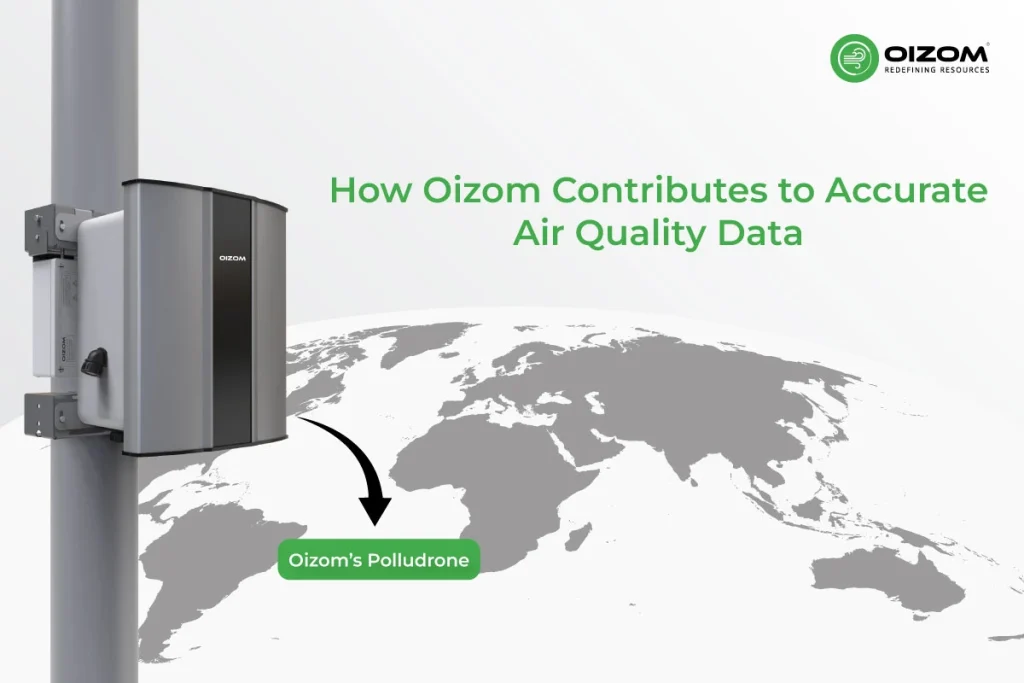
Oizom’s Polludrone is a smart device that helps measure air pollution accurately. It tracks harmful particles, including PM₂.₅ and PM₁₀, as well as gases such as NO₂, SO₂, and CO, all in real-time, alongside weather conditions.
What makes Polludrone special is its ability to operate in extreme outdoor conditions while still delivering reliable, consistent data. It adjusts itself over time (auto-calibration) and filters out noise to make sure the readings are as accurate as possible.
The device is easy to set up in cities, near factories, or in remote areas. And with its IoT and AI features, Polludrone is ready helping authorities and industries not just monitor pollution, but also take timely action when things go wrong.
Simply put, Polludrone helps people understand what’s in the air and what to do about it.
Conclusion
Air pollution is no longer just a local issue; it affects how we live, breathe, and plan for the future. As we’ve seen, countries like Chad, India, and Bangladesh continue to struggle with high pollution levels, while others, such as Iceland and Norway, are demonstrating what is possible with the right action.
To solve these problems, tools like Oizom’s Polludrone are helping governments, industries, and researchers make smarter decisions by providing reliable readings of PM, gases, and weather. This kind of data is essential for creating effective air quality policies, identifying pollution hotspots, and taking quick action when levels rise. The goal isn’t just to measure air pollution, it’s to prevent it through early warnings and data-driven planning.
Clean air is a basic need. With the right technology, collaboration, and awareness, we can move closer to a world where everyone can breathe easier.
FAQs
Bangladesh is the most polluted country in 2025, with extremely high AQI levels driven by dense urban emissions, industrial activity, and widespread fossil fuel use.
Iceland has the cleanest air in 2025, with consistently low AQI levels thanks to renewable energy use, low population density, and strict environmental protections.
Air pollution is measured using sensors that monitor pollutants like PM2.5, PM10, and harmful gases, which are then translated into the AQI for easier understanding.
Real-time air quality monitoring enables faster detection of pollution spikes, helping authorities take immediate action to reduce health risks and enforce regulations.